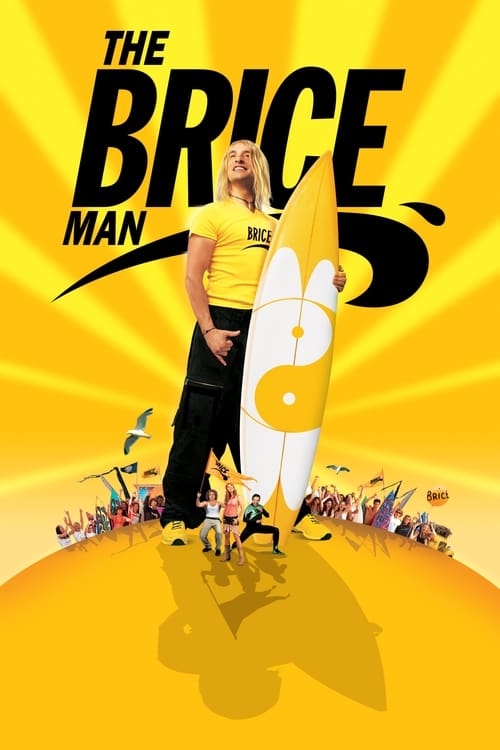
The Brice Man (2005)
Directed by James Huth
No — The Brice Man is not woke, scoring 7 out of 100 on our wokeness meter.
Brice de Nice arrives from 2005, a year in which a French comedian could build an entire feature around a wealthy man-child who mistakes the Mediterranean for the Pacific and waits, board in hand, for a wave that has no intention of arriving.
Consciousness Markers
Marius's giant single toes and Jeanne's concealed giant ears culminate in an acceptance subplot, but the physical difference is mined primarily for surreal slapstick.
Majority-white French cast with only incidental ethnic side characters (e.g. Babakar from Dakar) present as natural scenery, not as a representation statement.
Brice's child-like illiteracy and Marius's near-speechlessness read as comic simplification rather than a deliberate neurodivergence theme.
The Point Break vision's closing moral ('dreaming your life is not the same as living your dream') is a gentle personal lesson, not a social sermon.
Women serve as party decorations, seduction targets, or the literal dream girl; no feminist critique or agency is advanced.
The idle-rich lifestyle and a money-laundering father are comic plot devices rather than a systemic critique of wealth.
Ethnic identity appears only as place-of-origin gag nicknames; there is no engagement with race or racial justice.
No LGBTQ+ characters or themes; Brice's romantic arc is strictly a heterosexual mermaid fantasy.
Environmental concerns are wholly absent; the ocean is a playground for waiting on a wave, not a cause.
No rewriting of historical events; the film is a contemporary farce set on the French Riviera.
Why it received this score
Brice de Nice arrives from 2005, a year in which a French comedian could build an entire feature around a wealthy man-child who mistakes the Mediterranean for the Pacific and waits, board in hand, for a wave that has no intention of arriving. The film is a farce of pure idleness. Jean Dujardin's Brice parties in a villa, wins insult contests, seduces women he has no idea how to handle, and dreams of a mermaid. The satire, such as it is, points at the idle rich, though the money-laundering father and the repossessed belongings function as plot machinery, not as an argument about wealth. Class here is a stage set, not a thesis.
The film's one genuine brush with social themes is physical difference. Marius, a motorcycle thief with a single giant toe on each leg, and Jeanne, who conceals a pair of enormous ears, drift toward a mutual acceptance that the screenplay treats with surprising softness. It is still played for surreal laughs, and the resolution lands as a shrug more than a statement. Brice's illiteracy and Marius's struggle to speak read as comic simplification, not as any deliberate consideration of how minds work. A vision of the Bodhi character closes the story with a gentle lesson about living your dream instead of dreaming your life. It is a personal moral, delivered quietly, and it stays that way.
Elsewhere the ledger is thin. Ethnicity appears only in nicknames that announce a place of origin. Women are party decoration, seduction targets, or the literal girl of the dream. There is no romantic life outside the heterosexual mermaid fantasy, no environmental cause attached to the ocean, no rewriting of history. The film is a product of a comic tradition that felt no obligation to explain itself.
Analysis generated by our Consciousness Algorithm
Synopsis
A wannabe surfer parties on the French Riviera while awaiting the perfect wave.
Questions about The Brice Man
Is The Brice Man woke?
No — The Brice Man is not woke, scoring 7 out of 100 on our wokeness meter. That earns it a verdict of Ultra Based.
Does The Brice Man have any woke elements?
Very few. None of the 10 markers reaches 30, the level where a marker counts as present; the highest is Body Positivity at 22.
How does The Brice Man compare to other 2005 movies?
It ranks #103 of the 181 films from 2005 we've scored; their average is 13. The wokest is The Constant Gardener (72).
How is the Woke Score calculated?
An AI-assisted process researches the film and its reception, scores it 0–100 on ten markers, then combines those into one 0–100 Woke Score. It measures a specific set of 2020s cultural themes, not film quality.