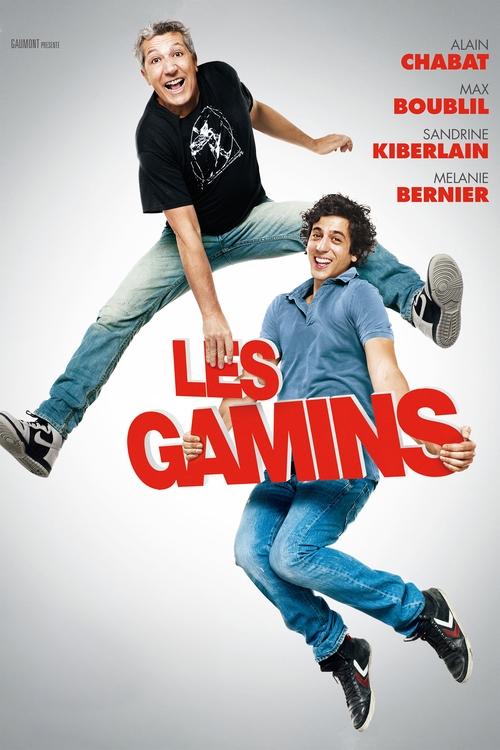
The Brats (2013)
Directed by Anthony Marciano
No — The Brats is not woke, scoring 4 out of 100 on our wokeness meter.
A 2013 French comedy about a man in his fifties who decides that thirty years of marriage have robbed him of a life, Les Gamins (released in English as The Brats) arrives at the classification desk with almost nothing to declare.
Consciousness Markers
The cast includes actors of North African and Middle Eastern descent (Arié Elmaleh, Kheiron, Elisa Sednaoui), but they appear as ordinary ensemble players with no commentary on their identity, which is standard French comedy casting rather than deliberate representation.
The premise is men bonding over escaping marriage and family obligation, with the women (Suzanne, Lola) functioning largely as the constraints to be fled; this is the opposite of a feminist agenda.
The film gestures at rejecting routine and material comfort in favor of freedom, but this is a personal-liberation fantasy rather than any critique of capitalism or wealth.
This is a light French comedy that plays its themes of freedom and regret for laughs rather than delivering any moralizing sermon to the audience.
No LGBTQ+ characters, themes, or subtext appear anywhere in this film about two men fleeing domestic life.
Race is never a subject of the film; the diverse cast members exist without any engagement with racial identity or politics.
No environmental or climate themes are present in this midlife-crisis comedy.
No body-positivity themes or messaging appear in the film.
No neurodivergent characters or themes are present.
The film is a contemporary fictional comedy with no historical subject matter to revise.
Why it received this score
A 2013 French comedy about a man in his fifties who decides that thirty years of marriage have robbed him of a life, Les Gamins (released in English as The Brats) arrives at the classification desk with almost nothing to declare. Gilbert, weary of Suzanne, of the furniture, of the routine, talks his future son-in-law Thomas out of marrying his daughter Lola, and the two men run off to chase adolescent dreams in a convertible. The film's thesis is that domestic commitment is a cage and that freedom is elsewhere. It is a thesis delivered with a shrug, not a manifesto.
The cast includes Arie Elmaleh, Kheiron, and Elisa Sednaoui, performers of North African and Middle Eastern descent who occupy ordinary comic roles. Their presence is a fact of French ensemble casting, not a statement, and race never enters the frame as a subject. Neither does sexuality, environment, body image, or neurological difference. The women in the story, Suzanne and Lola, exist chiefly as the obligations from which the men flee, which places the film at a comfortable distance from any contemporary feminist reading. There is a faint gesture toward rejecting material comfort, but it amounts to a personal-liberation fantasy. The movie wants us to envy the convertible, not to question who built the road.
The film is also, blessedly, in no hurry to instruct. Its themes of regret and freedom are played for laughs, and the laughs are the point. The result is a comedy that feels older than its release date, a relic from a moment when a French farce could be about two men behaving badly without anyone demanding an accounting. For those of us who tally cultural markers for a living, there is very little to measure. We log the entry, note the near-total absence of the current moral weather, and move on to the next title.
Analysis generated by our Consciousness Algorithm


Synopsis
Newly engaged, Thomas meets his future father-in-law Gilbert, who has been married for 30 years to Suzanne. Disillusioned Gilbert is convinced that his marriage has meant he's missed out on life. He persuades Thomas not to marry his daughter Lola and encourages him to drop everything else in his life as well. The two men then throw themselves into a new brats' life full of adventure, convinced that freedom is elsewhere. But at what cost do we rediscover our adolescent dreams?
Questions about The Brats
Is The Brats woke?
No — The Brats is not woke, scoring 4 out of 100 on our wokeness meter. That earns it a verdict of Ultra Based.
Does The Brats have any woke elements?
Very few. None of the 10 markers reaches 30, the level where a marker counts as present; the highest is Representation Casting at 12.
How does The Brats compare to other 2013 movies?
It ranks #210 of the 274 films from 2013 we've scored; their average is 14. The wokest is Belle (76).
How is the Woke Score calculated?
An AI-assisted process researches the film and its reception, scores it 0–100 on ten markers, then combines those into one 0–100 Woke Score. It measures a specific set of 2020s cultural themes, not film quality.