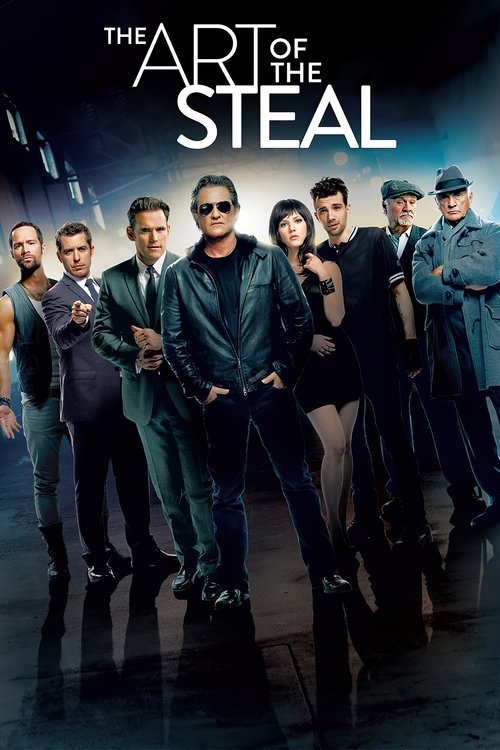
The Art of the Steal (2013)
Directed by Jonathan Sobol
No — The Art of the Steal is not woke, scoring 3 out of 100 on our wokeness meter.
The Art of the Steal arrives from 2013 with the placid confidence of a film that knows exactly what it is and has no interest in being anything else.
Consciousness Markers
The cast is overwhelmingly white and male, with no evident effort at inclusive or diverse casting; the few women present are incidental to a boys' club caper.
Katheryn Winnick's Lola is a capable charmer, but she functions as a standard femme-fatale-adjacent heist accessory rather than any statement of feminist intent.
No LGBTQ+ characters, relationships, or themes appear anywhere in the film.
The film engages no racial themes or commentary whatsoever; it is a thoroughly white crime comedy.
No environmental or climate content of any kind.
The plot is driven entirely by personal greed, double-crossing, and the pursuit of a big score; it celebrates the con rather than critiquing wealth or capital.
No body-positivity themes or messaging present.
No neurodivergent characters or themes are depicted.
The film is a fictional heist caper with no historical revisionism or reframing of real events.
The film offers no moralizing or didactic messaging; it is a lightweight, quippy caper with no agenda to preach.
Why it received this score
The Art of the Steal arrives from 2013 with the placid confidence of a film that knows exactly what it is and has no interest in being anything else. A Canadian heist comedy directed by Jonathan Sobol, it assembles Kurt Russell, Matt Dillon, Terence Stamp and Jay Baruchel for a caper involving a forged Gutenberg bible, a stolen Seurat, and a great deal of fraternal double-crossing. Reviewers at the time found it derivative of better heist pictures, and they were correct. The film borrows freely and returns nothing.
On the matter of representation, the ensemble is a boys' club of uniform complexion, and no effort has been made to suggest otherwise. Katheryn Winnick appears as Lola, a charmer who talks men into jobs and looks good doing it. She is competent and decorative, a heist accessory in the established tradition of the genre. There are no LGBTQ characters, no racial themes, no environmental concerns, no body-positivity messaging, no neurodivergent figures, and no reframing of real historical events. The film occupies a world in which such categories simply do not arise, and it never pauses to mourn their absence.
Its moral engine is greed. The plot turns on men betraying men for a larger cut, and the film regards this with amusement instead of judgment. A code of honor is invoked, something about protecting family and the defenseless, but it is a sentimental flourish, not an argument about wealth or capital. Nothing here lectures. No lessons are delivered, no consciousness is raised, no viewer is scolded for complicity. A vagina-shaped sculpture is used to smuggle a book, which is as close as the film comes to a thesis statement. It is a caper, content to be one, asking nothing of us beyond a modest attention span and a tolerance for quipping.
Analysis generated by our Consciousness Algorithm


Synopsis
Crunch Calhoun, a third-rate motorcycle daredevil and part-time art thief, teams up with his snaky brother to steal one of the most valuable books in the world. But it's not just about the book for Crunch — he's keen to rewrite some chapters of his own past as well.
Questions about The Art of the Steal
Is The Art of the Steal woke?
No — The Art of the Steal is not woke, scoring 3 out of 100 on our wokeness meter. That earns it a verdict of Ultra Based.
Does The Art of the Steal have any woke elements?
Very few. None of the 10 markers reaches 30, the level where a marker counts as present; the highest is Feminist Agenda at 5.
How does The Art of the Steal compare to other 2013 movies?
It ranks #239 of the 274 films from 2013 we've scored; their average is 14. The wokest is Belle (76).
How is the Woke Score calculated?
An AI-assisted process researches the film and its reception, scores it 0–100 on ten markers, then combines those into one 0–100 Woke Score. It measures a specific set of 2020s cultural themes, not film quality.