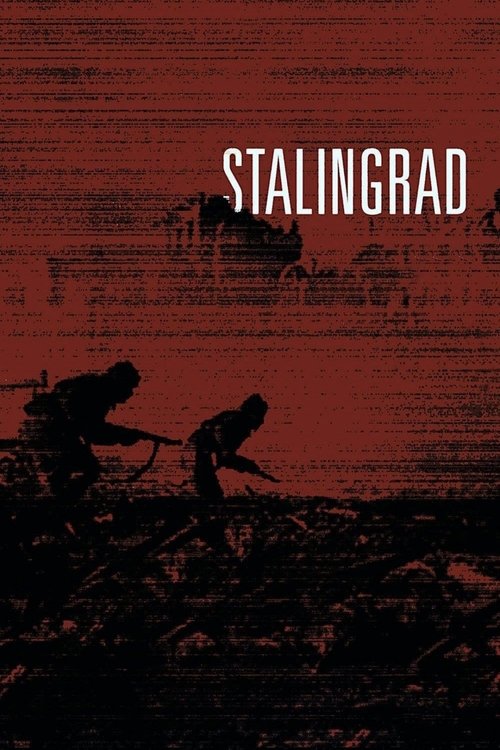
Stalingrad (1993)
Directed by Joseph Vilsmaier
No — Stalingrad is not woke, scoring 0 out of 100 on our wokeness meter.
Joseph Vilsmaier's Stalingrad, released in 1993, follows a German platoon from Italian leave to the frozen ruin of the Sixth Army, and it extends no comfort of any kind.
Consciousness Markers
Cast is entirely white European, with no deliberate inclusive casting; the female Soviet soldier is historically grounded, not a modern representation statement.
No LGBTQ+ characters or themes.
Features a female Soviet soldier, but she is not used to advance a feminist agenda; the film is focused on the brutality of war.
No exploration of racial identity or systemic racism.
No environmental or climate themes.
Critiques military hierarchy and war, not capitalism or wealth inequality.
No body positivity themes.
No neurodivergent characters or themes.
Presents a fictionalized German soldier's perspective on Stalingrad but does not revise history in a modern ideological sense.
Anti-war message is conveyed through visceral drama, not preachy modern lecturing.
Why it received this score
Joseph Vilsmaier's Stalingrad, released in 1993, follows a German platoon from Italian leave to the frozen ruin of the Sixth Army, and it extends no comfort of any kind. The men are decorated, shipped east, and ground down across a factory assault, a penal battalion, a firing squad, and finally a snowfield where the last two survivors freeze together in the drift. The camera lingers on mud, amputations, and frostbitten hands. This is an anti-war film in the oldest sense: it argues by showing, and it shows a great deal.
The cast is entirely European, drawn from Germany, Czechoslovakia, and Italy, with no inclusive reimagining of the historical record. Dana Vavrova appears as Irina, a Soviet soldier who is captured, tied to a bed, freed, and shot on the steppe; her presence is a fact of the Eastern Front, not a gesture toward contemporary gender politics. The film carries no interest in identity as a theme, no LGBTQ subtext, no racial reckoning, no environmental allegory, no body-positive register, no neurodivergent framing. Its anger is aimed at military hierarchy, at the sadistic Hauptmann Haller and the hoarded supplies in his cellar, not at capital as a system. The villain here is cruelty with a rank insignia.
What keeps the film from the modern sermon is its refusal to explain itself. Nobody turns to the camera to instruct us. The executions of civilians, including the boy Kolya, are staged as horror, not as a lesson plan. The result is a film of real moral weight that satisfies none of the contemporary markers we are obliged to tally. Zero, across the sheet. A grim, well-made zero.
Analysis generated by our Consciousness Algorithm
Synopsis
A German Platoon is explored through the brutal fighting of the Battle of Stalingrad. After half of their number is wiped out and they're placed under the command of a sadistic captain, the platoon lieutenant leads his men to desert. The platoon members attempt escape from the city, now surrounded by the Soviet Army.
Questions about Stalingrad
Is Stalingrad woke?
No — Stalingrad is not woke, scoring 0 out of 100 on our wokeness meter. That earns it a verdict of Ultra Based.
Does Stalingrad have any woke elements?
No. All 10 markers score zero.
How does Stalingrad compare to other 1993 movies?
It ranks #76 of the 97 films from 1993 we've scored; their average is 11. The wokest is Bound by Honor (60).
How is the Woke Score calculated?
An AI-assisted process researches the film and its reception, scores it 0–100 on ten markers, then combines those into one 0–100 Woke Score. It measures a specific set of 2020s cultural themes, not film quality.