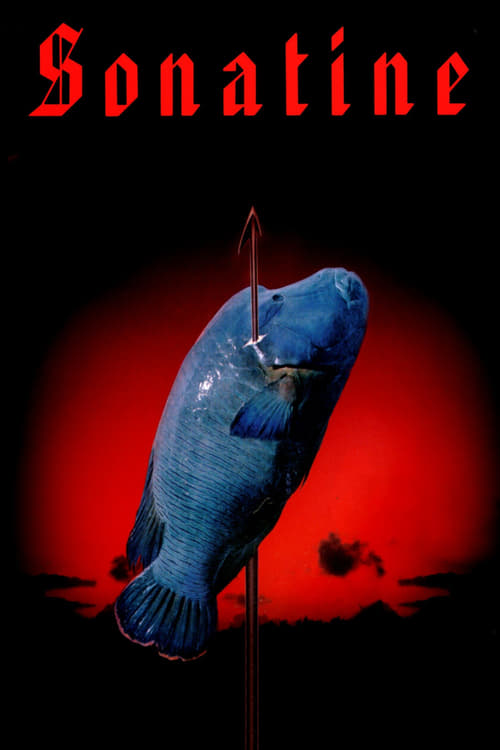
Sonatine (1993)
Directed by Takeshi Kitano
No — Sonatine is not woke, scoring 0 out of 100 on our wokeness meter.
Sonatine arrives from 1993, a decade before the cultural machinery that now greets every release would have known what to do with it.
Consciousness Markers
The cast is entirely Japanese, reflecting the film's natural setting and subject matter rather than any deliberate diversity-casting initiative.
There are no LGBTQ+ characters or themes anywhere in the film.
The lone significant female character, Miyuki, is defined largely as a rape victim and romantic attachment to the male protagonist; no feminist agenda is present.
The film engages with yakuza hierarchy and fatalism, not racial identity or racial justice.
No environmental or climate themes appear; the seaside setting is atmospheric, not ecological.
Gangster turf warfare and betrayal carry no eat-the-rich or anti-capitalist messaging.
No body-positivity themes are present.
No neurodivergence themes or characters are depicted.
The film is a fictional yakuza story with no historical revisionism.
Kitano's minimalist, contemplative style offers no didactic or preachy messaging.
Why it received this score
Sonatine arrives from 1993, a decade before the cultural machinery that now greets every release would have known what to do with it. Takeshi Kitano directs himself as Murakawa, an aging yakuza dispatched to Okinawa on what he correctly suspects is a suicide assignment. The plot is a delivery mechanism for four scenes, by Kitano's own account, and the space between them fills with men playing children's games on a beach while the tide of their own extinction creeps in. It is a gangster film in which almost nothing gangster-like happens for long stretches, and then everything does, briefly and without ceremony.
A search for the markers of contemporary social consciousness finds a clean surface. The cast is Japanese because the film is set in Japan among Japanese gangsters. Miyuki, the only woman of consequence, exists as a rape victim and then as a quiet attachment to the man who shoots her attacker; the film grants her no interiority and asks for none. There is no racial argument, no environmental sermon, no critique of capital, no vocabulary of identity at all. Kitano is interested in fatalism, in the flat affect of a man who has already decided how this ends, and in the peculiar comedy of grown killers tossing frisbees.
To classify such a work is to feel the classification apparatus shrug. It lectures no one. It represents no one. It observes a man walking toward a gunshot he has been walking toward since the first frame. The Russian roulette sequence, the dream of the loaded chamber, the final drive to the shore: these are the film's argument, and the argument is that there is no argument. This is not a failing. It is a kind of integrity that the current moment, so eager to be told what to think, has largely misplaced.
Analysis generated by our Consciousness Algorithm
Synopsis
Murakawa, an aging Tokyo yakuza tiring of gangster life, is sent by his boss to Okinawa along with a few of his henchmen to help end a gang war, supposedly as mediators between two warring clans. He finds that the dispute between the clans is insignificant and whilst wondering why he was sent to Okinawa at all, his group is attacked in an ambush. The survivors flee and make a decision to lay low at the beach while they await further instructions.
Questions about Sonatine
Is Sonatine woke?
No — Sonatine is not woke, scoring 0 out of 100 on our wokeness meter. That earns it a verdict of Ultra Based.
Does Sonatine have any woke elements?
No. All 10 markers score zero.
How does Sonatine compare to other 1993 movies?
It ranks #76 of the 97 films from 1993 we've scored; their average is 11. The wokest is Bound by Honor (60).
How is the Woke Score calculated?
An AI-assisted process researches the film and its reception, scores it 0–100 on ten markers, then combines those into one 0–100 Woke Score. It measures a specific set of 2020s cultural themes, not film quality.