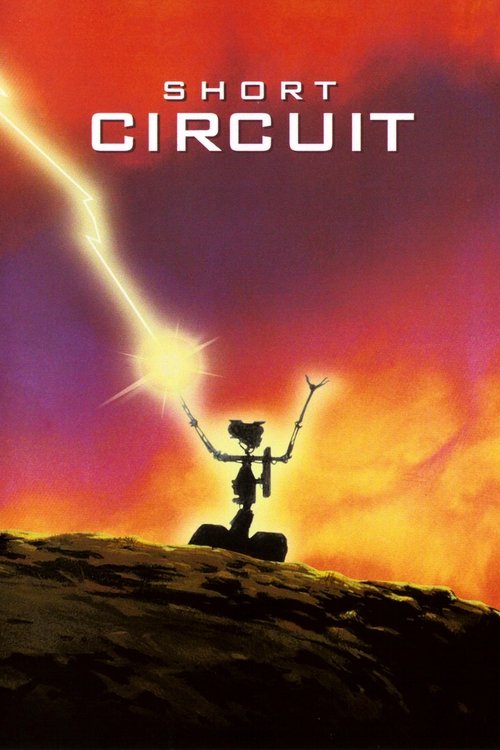
Short Circuit (1986)
Directed by John Badham
No — Short Circuit is not woke, scoring 6 out of 100 on our wokeness meter.
Short Circuit (1986) arrives from a gentler era of robot comedy.
Consciousness Markers
There is a mild anti-military-industrial streak: the NOVA corporation and its CEO want to disassemble the sentient robot to protect an $11 million investment, while Crosby prefers peaceful applications, but the satire is gentle and never systemic.
Ally Sheedy's Stephanie is a capable female lead who takes in the robot, but she functions as a conventional romantic/adventure partner rather than a vehicle for any feminist argument.
The film is a light, amiable family comedy that occasionally gestures at 'what makes something alive' but never stops to preach; reviewers called it 'too cute for its own good' rather than didactic.
The film is now chiefly cited as a case study in the opposite of representation casting: Jewish actor Fisher Stevens plays the Indian character Ben Jabituya in brownface makeup, darkened skin, and a put-on accent, a decision both director and actor have since regretted.
No LGBTQ+ characters, themes, or subtext appear anywhere in the film.
The film's treatment of race is a comedic ethnic caricature (the Ben Jabituya role) rather than any consciousness of racial justice; it is the source of the criticism, not a critique of it.
No environmental or climate themes are present; the robot's concerns are about his own survival and the military's pursuit.
No body-positivity themes or messaging of any kind.
Number 5's childlike learning and curiosity are framed as emergent machine sentience, not as a depiction of neurodivergence.
The film is a contemporary Cold War-era sci-fi comedy with no historical revisionism.
Why it received this score
Short Circuit (1986) arrives from a gentler era of robot comedy. Number 5 is zapped by lightning, escapes a military lab, befriends Ally Sheedy, and learns about death, dance, and the El DeBarge song on the radio. The film is amiable, well-scrubbed, and modest. Its cultural legacy, however, is not progressive. Fisher Stevens plays the Indian character Ben Jabituya in brownface makeup, darkened skin, and a put-on accent. That decision, regretted by both director and actor, makes the film a reference point for casting failure, not racial consciousness. This is the opposite of representation.
The film has a mild anti-corporate streak. NOVA's CEO wants to disassemble a sentient robot to protect an $11 million investment, while Crosby prefers peaceful applications. The satire is soft and never systemic. It does not indict capitalism. Ally Sheedy's Stephanie is capable, but she functions as a conventional romantic and adventure partner. No feminist argument develops around her. There are no LGBTQ themes, climate concerns, body positivity messages, neurodivergence depictions, or historical revisions. Number 5's childlike curiosity is machine sentience, not a metaphor for neurodivergence. The film asks what makes something alive, but it never stops to lecture. It is too cute for its own good, as Roger Ebert said. It has no sermon to deliver.
So the film sits near the bottom of our cultural ledger. It is not offensive in its intentions, but it is a product of 1986 studio instincts. The brownface performance is the elephant in the room. The anti-military-industrial gestures are faint. The female lead is likable but conventional. The result is a pleasant, shallow family comedy that avoids preaching because it avoids ideas. A relic, charming to some, instructive to others. We file it under low social consciousness and high nostalgia.
Analysis generated by our Consciousness Algorithm

Synopsis
After a lightning bolt zaps a robot named Number 5, the lovable machine starts to think he's human and escapes the lab. Hot on his trail is his designer, Newton, who hopes to get to Number 5 before the military does. In the meantime, a spunky animal lover mistakes the robot for an alien and takes him in, teaching her new guest about life on Earth.
Questions about Short Circuit
Is Short Circuit woke?
No — Short Circuit is not woke, scoring 6 out of 100 on our wokeness meter. That earns it a verdict of Ultra Based.
Does Short Circuit have any woke elements?
Very few. None of the 10 markers reaches 30, the level where a marker counts as present; the highest is Eat the Rich at 15.
How does Short Circuit compare to other 1986 movies?
It ranks #24 of the 62 films from 1986 we've scored; their average is 7. The wokest is Star Trek IV: The Voyage Home (42).
How is the Woke Score calculated?
An AI-assisted process researches the film and its reception, scores it 0–100 on ten markers, then combines those into one 0–100 Woke Score. It measures a specific set of 2020s cultural themes, not film quality.