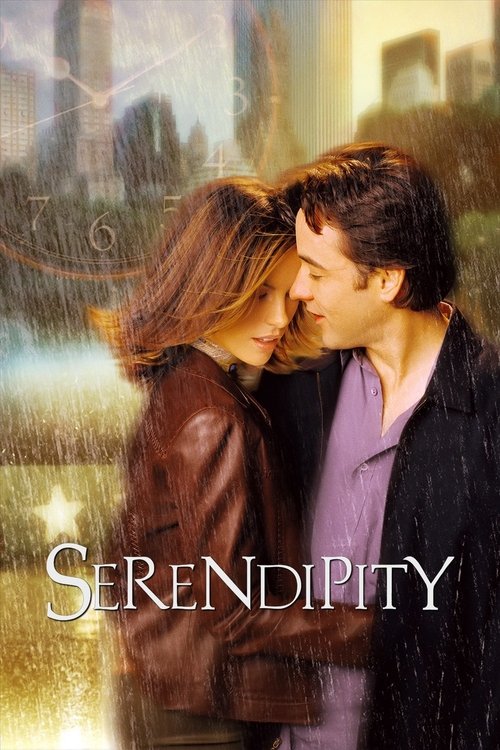
Serendipity (2001)
Directed by Peter Chelsom
No — Serendipity is not woke, scoring 0 out of 100 on our wokeness meter.
Serendipity arrives from the autumn of 2001, a romantic comedy in which two attractive people attempt to purchase the same pair of gloves and then spend the following ninety minutes allowing the universe to decide their romantic futures.
Consciousness Markers
The film features a predominantly white romantic-comedy cast, and any minority presence is incidental rather than a deliberate representational statement.
There are no LGBTQ+ characters, themes, or subtext in the film.
The film follows a conventional heterosexual romance plot without any feminist critique or agenda.
Race is not a theme, and the film does not engage with racial identity or systemic racial issues.
There is no environmental or climate-related content in the film.
Although set partly in department stores, the film does not critique capitalism or wealth inequality.
The film does not address body image, size diversity, or body-positivity themes.
There is no exploration or representation of neurodivergent characters or conditions.
The film is a contemporary romantic comedy and does not reinterpret historical events or figures.
The film is a light romantic comedy and does not contain preachy or didactic messaging.
Why it received this score
Serendipity arrives from the autumn of 2001, a romantic comedy in which two attractive people attempt to purchase the same pair of gloves and then spend the following ninety minutes allowing the universe to decide their romantic futures. John Cusack and Kate Beckinsale meet at Bloomingdale's, share dessert, and construct an elaborate cosmology of signs, five-dollar bills, and used paperback copies of Love in the Time of Cholera. Seven years pass. Engagements are made and abandoned. Snow falls on an ice rink. It is a film about destiny, and destiny, as this picture understands it, is a force that operates exclusively on behalf of the white, the solvent, and the conventionally photogenic.
Our classification apparatus finds nothing to engage with here. The cast is uniformly Caucasian, and nobody in the production appears to have considered this a matter requiring comment. There are no queer characters, no feminist argument, no racial reckoning, no environmental lament. The department store functions as a stage set for meet-cutes, not as a symbol of late capitalism awaiting its comeuppance. Nobody discusses their body. Nobody is neurodivergent. History goes unrevised. The film does not lecture, and it does not scold. It simply wants us to believe that a glove landing on a man's chest constitutes proof of cosmic design.
This is a movie that predates the cultural expectations now imposed on such material, and it makes no attempt to anticipate them. Its ambitions are modest: charm, coincidence, a B+ CinemaScore, and a profit margin that rescued its director from the wreckage of Town & Country. We record the results without complaint. Zero across every marker. The absence is total, unforced, and curiously restful.
Analysis generated by our Consciousness Algorithm


Synopsis
Although already in relationships, two strangers realize they have genuine chemistry after a chance encounter – but part company soon after. Years later, they each yearn to reunite, despite being destined for the altar. But to give true love a chance, they have to find one another again.
Questions about Serendipity
Is Serendipity woke?
No — Serendipity is not woke, scoring 0 out of 100 on our wokeness meter. That earns it a verdict of Ultra Based.
Does Serendipity have any woke elements?
No. All 10 markers score zero.
How does Serendipity compare to other 2001 movies?
It ranks #128 of the 148 films from 2001 we've scored; their average is 12. The wokest is Monster's Ball (60).
How is the Woke Score calculated?
An AI-assisted process researches the film and its reception, scores it 0–100 on ten markers, then combines those into one 0–100 Woke Score. It measures a specific set of 2020s cultural themes, not film quality.