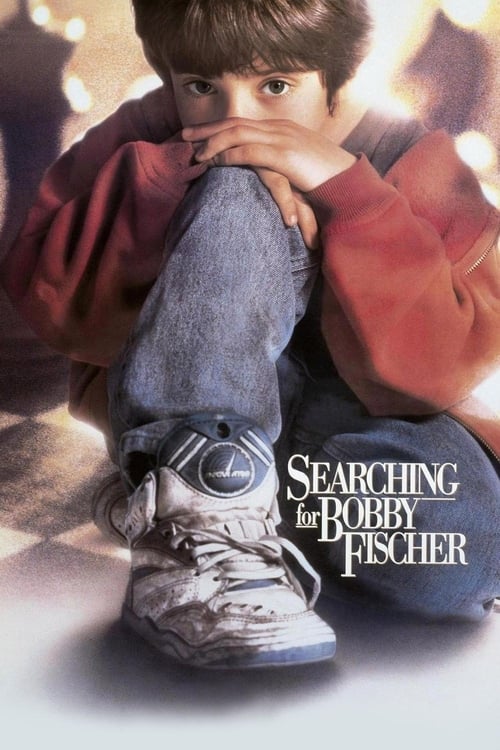
Searching for Bobby Fischer (1993)
Directed by Steven Zaillian
No — Searching for Bobby Fischer is not woke, scoring 0 out of 100 on our wokeness meter.
Searching for Bobby Fischer arrives from 1993, a year when a movie could still concern itself with a seven-year-old boy, a chessboard, and the slow corrosion of a father's patience.
Consciousness Markers
The film features a Black actor (Laurence Fishburne) as a chess hustler, but this is a natural character portrayal without modern identity-conscious casting or commentary.
No LGBTQ+ themes or characters are present.
The mother is a caring, sensible figure, but the film does not advance a feminist agenda or critique patriarchy.
Race is not a thematic concern; the Black mentor's role is not used to explore racial issues.
No environmental or climate-related themes.
The film does not critique capitalism or wealth inequality; it focuses on personal growth and family.
No body positivity themes or diverse body representation as a message.
The protagonist is a chess prodigy, but his giftedness is not framed as neurodivergence or a condition.
While based on a true story, the film is a standard dramatization and does not reinterpret history through a modern ideological lens.
The film offers humanist lessons about parenting and competition, but it does not preach modern social justice messages.
Why it received this score
Searching for Bobby Fischer arrives from 1993, a year when a movie could still concern itself with a seven-year-old boy, a chessboard, and the slow corrosion of a father's patience. Steven Zaillian directs his own adaptation of Fred Waitzkin's memoir with the patience of a man who has read the book twice and intends to honor it. The boy, Josh, learns the game in Washington Square Park among hustlers and park regulars, then is handed to a formal tutor who believes in discipline, and the tension between those two educations forms the spine of the picture. Laurence Fishburne appears as Vinnie, a park player who becomes the boy's informal mentor. He is a fully drawn person, not a symbol, and the film never pauses to explain him.
The film's moral questions are old ones. How much should a parent push. What does competition cost a child's affection for the thing he loves. Ben Kingsley's tutor is severe and eventually cruel, and the film condemns him on grounds of common decency, not ideology. Joan Allen's mother is sensible and warm, and her interventions are domestic, not political. Nobody in this story delivers a speech about the conditions that produced them. The lessons, such as they are, concern kindness and the preservation of joy in a pastime, and they arrive through events instead of monologues.
There is no identity-conscious casting, no critique of wealth, no environmental alarm, no revision of the historical record. The prodigy's gift is treated as a gift, not a diagnosis. Race is present because people of different races live in New York, and the film lets that fact sit unremarked. The result is a well-made drama about a child and his father, which is either a limitation or a relief depending on the viewer's appetite for sermons. This reviewer found it restful. A clean scorecard, and a film that trusts its audience to feel something without being told what to feel.
Analysis generated by our Consciousness Algorithm
Part of


Synopsis
A seven-year-old chess prodigy refuses to harden himself in order to become a champion like the famous but unlikable Bobby Fischer.
Questions about Searching for Bobby Fischer
Is Searching for Bobby Fischer woke?
No — Searching for Bobby Fischer is not woke, scoring 0 out of 100 on our wokeness meter. That earns it a verdict of Ultra Based.
Does Searching for Bobby Fischer have any woke elements?
No. All 10 markers score zero.
How does Searching for Bobby Fischer compare to other 1993 movies?
It ranks #76 of the 97 films from 1993 we've scored; their average is 11. The wokest is Bound by Honor (60).
How is the Woke Score calculated?
An AI-assisted process researches the film and its reception, scores it 0–100 on ten markers, then combines those into one 0–100 Woke Score. It measures a specific set of 2020s cultural themes, not film quality.