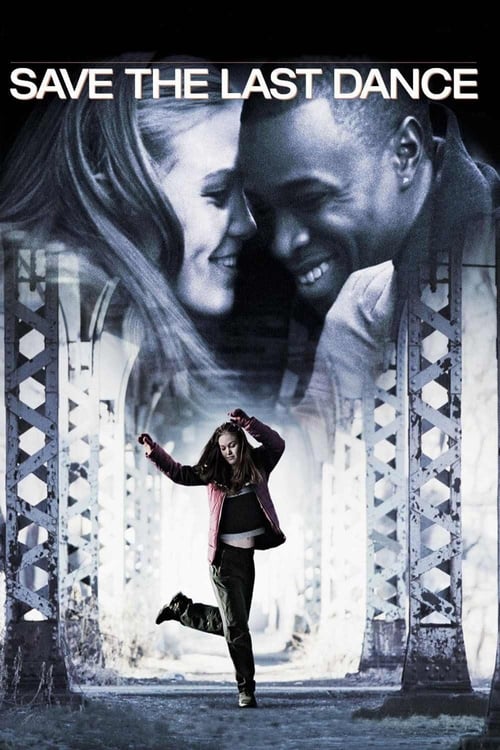
Save the Last Dance (2001)
Directed by Thomas Carter
No — Save the Last Dance is not especially woke, scoring 35 out of 100 on our wokeness meter.
Save the Last Dance arrived in January of 2001 with MTV Films money and a premise its own director seemed reluctant to press.
Consciousness Markers
A mainstream 2001 teen romance with a Black male romantic lead (Sean Patrick Thomas), Kerry Washington in support, and a predominantly Black ensemble populating the South Side setting — notable for its era, though the diversity is largely organic to the Chicago milieu.
The interracial relationship and the community's reaction to it — Chenille's candid resentment of a white girl dating her brother, Nikki's hostility — sit at the film's center, though critics faulted it for softening the harder edges of that conversation.
The film carries a mild 'after-school special' moralizing streak — speeches about race, responsibility, and Malakai's path — that critics like Wesley Morris flagged as preachy, though it never fully commits to the sermon.
Sara pursues her ballet ambition and Chenille is a self-possessed single mother, but the film's engine is a conventional romance rather than any explicit feminist argument.
No LGBTQ+ characters, themes, or subtext anywhere in the film.
No environmental or climate content of any kind.
Derek's Georgetown-and-pediatrician ambition is framed as admirable upward striving, not as a target of class critique.
No body-positivity themes; the film's physical focus is dance technique, not body acceptance.
No neurodivergent characters or themes present.
A contemporary fictional story with no historical revisionism.
Why it received this score
Save the Last Dance arrived in January of 2001 with MTV Films money and a premise its own director seemed reluctant to press. Julia Stiles plays Sara, a suburban ballet hopeful who loses her mother and lands on Chicago's South Side, where she falls for Derek, a Black classmate bound for Georgetown. The film puts a Black romantic lead and a largely Black ensemble at the center of a mainstream teen romance, which in that era was a genuine commercial gamble. Sean Patrick Thomas carries the picture with an authority the script does not fully earn. Kerry Washington, as Chenille, does more with a handful of scenes than the screenplay knows what to do with.
The interracial relationship governs everything, and the movie keeps circling the discomfort it creates. Chenille admits she resents a white girl dating her brother. Nikki throws punches. Then the film retreats, resolving the tension through a reconciliation speech and a dance number instead of sitting in the awkwardness. Critics at the time noticed the after-school-special streak, the small sermons about responsibility and Malakai's path, and wished the thing had the nerve to be as messy as its own premise. Sara's ballet ambition and Chenille's self-possession register, faintly, but the engine here is courtship, not argument.
On the remaining markers, the cupboard is bare. Derek's pediatrician dreams are treated as admirable striving, never as a target of anything. No environmental content of any kind. No body-acceptance themes, only dance technique. No neurodivergent characters. The film is a period piece now, and what dates it is not its politics but its timidity. A romance that wanted to say something and settled for saying a little.
Analysis generated by our Consciousness Algorithm


Synopsis
After the death of her mother, Sara moves to the South Side of Chicago to live with her father and gets transferred to a majority-black school. Her life takes a turn for the better when befriends Chenille and her brother Derek, who helps her with her dancing skills.
Questions about Save the Last Dance
Is Save the Last Dance woke?
No — Save the Last Dance is not especially woke, scoring 35 out of 100 on our wokeness meter. That earns it a verdict of Based.
Does Save the Last Dance have any woke elements?
2 of the 10 markers register at 30 or above, led by Racial Consciousness (60) and Representation Casting (60). On Racial Consciousness: The interracial relationship and the community's reaction to it — Chenille's candid resentment of a white girl dating her brother, Nikki's hostility — sit at the film's center, though critics faulted it for softening the harder edges of that conversation.
How does Save the Last Dance compare to other 2001 movies?
It ranks #11 of the 148 films from 2001 we've scored; their average is 12. The wokest is Monster's Ball (60).
How is the Woke Score calculated?
An AI-assisted process researches the film and its reception, scores it 0–100 on ten markers, then combines those into one 0–100 Woke Score. It measures a specific set of 2020s cultural themes, not film quality.