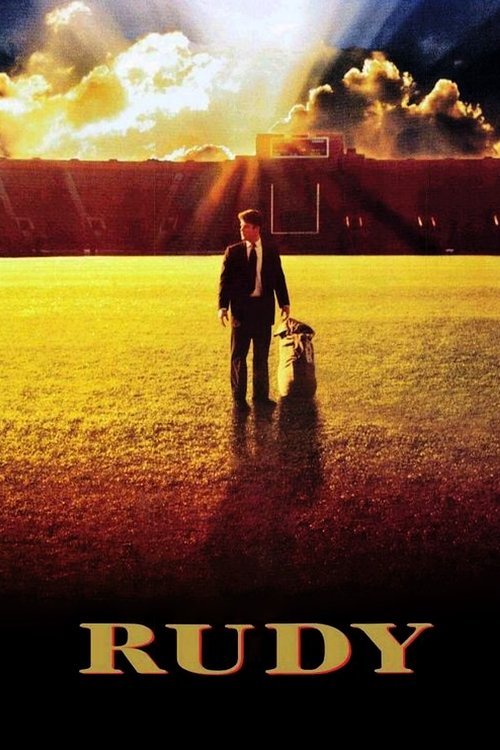
Rudy (1993)
Directed by David Anspaugh
No — Rudy is not especially woke, scoring 25 out of 100 on our wokeness meter.
Rudy arrives from 1993 with its heart pinned to its sleeve and its ambitions plainly stated.
Consciousness Markers
The film explicitly addresses Rudy's struggle with dyslexia, showing his hard work to overcome this specific learning disability.
The film includes a brief, specific moment of racial commentary through the groundskeeper, Fortune, who regrets being barred from playing due to his race.
Rudy is physically small and lacks athletic prowess, yet the film celebrates his spirit and determination despite his physical limitations.
The film features a standard, white, working-class male protagonist, offering no groundbreaking or challenging representation for the modern cultural landscape.
The film relies on emotional sentiment and dramatic action rather than didactic speeches or academic lectures to convey its message.
The female characters are primarily relegated to supportive romantic or familial roles, offering minimal commentary on gender dynamics or feminist issues.
While Rudy fights institutional rejection, the film operates entirely within the established framework of American collegiate sports and the pursuit of professional success.
The film takes significant dramatic liberties with historical events, such as the jersey scene, but does not attempt to revise a major accepted historical narrative.
There is no discernible presence of LGBTQ+ themes, characters, or subtext within the narrative or supporting cast.
The narrative focuses entirely on athletic ambition and personal struggle, with no reference to environmental concerns or climate change.
Why it received this score
Rudy arrives from 1993 with its heart pinned to its sleeve and its ambitions plainly stated. A steel mill town, a father who worships the Golden Dome, a small young man with poor grades and poorer athletic prospects. David Anspaugh directs with the earnestness of a church bulletin, and the result is a film that wants nothing more than to make us cry at the correct moment. It succeeds. This is craftsmanship of a specific and unadventurous kind, and it has aged into something close to a secular relic.
For the purposes of classification, the film offers a modest set of contemporary markers. The most substantial is its treatment of Rudy's dyslexia, discovered by a teaching assistant and overcome through sheer application. That is a genuine engagement with a learning disability, named and addressed, and it accounts for the bulk of the film's cultural awareness. Fortune, the groundskeeper, delivers a short confession about being barred from playing because of his race, a moment of racial commentary that lands and then departs, never to return. Rudy's small stature is framed as something to transcend, which gestures toward celebrating spirit over body, though the film's devotion to conventional athletic ideals keeps the gesture contained.
Elsewhere the cupboard is bare. Women exist to be supportive or to leave. There is no queerness, no climate anxiety, no critique of the institutions of collegiate sport or the money beneath them. The film takes real liberties with the historical record, most famously the jersey scene, which several players have since confirmed never happened, but it does so in service of drama, not ideology. Its lessons arrive through slow motion and brass, not through speeches. A period piece about persistence, competently made, culturally quiet, and unlikely to trouble anyone's syllabus.
Analysis generated by our Consciousness Algorithm


Synopsis
Rudy grew up in a steel mill town where most people ended up working, but wanted to play football at Notre Dame instead. There were only a couple of problems. His grades were a little low, his athletic skills were poor, and he was only half the size of the other players. But he had the drive and the spirit of 5 people and has set his sights upon joining the team.
Questions about Rudy
Is Rudy woke?
No — Rudy is not especially woke, scoring 25 out of 100 on our wokeness meter. That earns it a verdict of Based.
Does Rudy have any woke elements?
2 of the 10 markers register at 30 or above, led by Neurodivergence (55) and Racial Consciousness (30). On Neurodivergence: The film explicitly addresses Rudy's struggle with dyslexia, showing his hard work to overcome this specific learning disability.
How does Rudy compare to other 1993 movies?
It ranks #12 of the 97 films from 1993 we've scored; their average is 11. The wokest is Bound by Honor (60).
How is the Woke Score calculated?
An AI-assisted process researches the film and its reception, scores it 0–100 on ten markers, then combines those into one 0–100 Woke Score. It measures a specific set of 2020s cultural themes, not film quality.