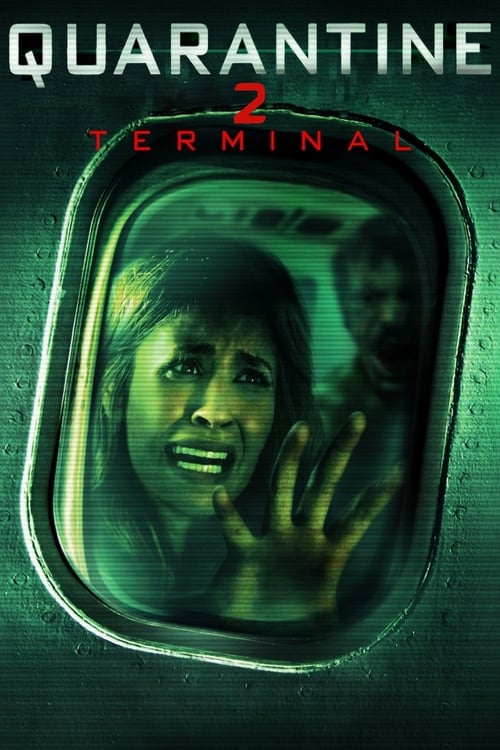
Quarantine 2: Terminal (2011)
Directed by John Pogue
No — Quarantine 2: Terminal is not woke, scoring 12 out of 100 on our wokeness meter.
Quarantine 2: Terminal arrives as a sequel to a remake, a lineage that promises nothing and delivers precisely that.
Consciousness Markers
The cast is moderately diverse (Mercedes Mason, Noree Victoria, Ignacio Serricchio, Lamar Stewart), but this is unremarkable ensemble casting with no commentary or emphasis on identity.
Jenny is a capable female survivor, but this is the standard horror 'final girl' convention rather than a feminist statement or agenda.
Exposition about the CBDT and bioterrorist plot is delivered as plot mechanics rather than moral lecturing to the audience.
No LGBTQ+ characters, themes, or subtext appear anywhere in the film.
Shilah Washington is a Black character who sacrifices herself, but the film makes no racial commentary or consciousness of any kind.
No environmental or climate themes are present; the threat is a man-made virus, not ecological.
The antagonist is a bioterrorist cult seeking to cull the population; there is no critique of capitalism or wealth.
No body-positive themes or messaging appear in the film.
No neurodivergent characters or themes are depicted.
The film is a fictional horror sequel with no historical revisionism.
Why it received this score
Quarantine 2: Terminal arrives as a sequel to a remake, a lineage that promises nothing and delivers precisely that. A mutant rabies virus boards a flight from Los Angeles, the plane lands, a terminal locks down, and a group of strangers sort themselves into the usual horror arithmetic of the bitten and the soon-to-be-bitten. The cast is a workmanlike spread of faces, and the film treats them as meat, which is the correct and honest approach for this genre. Jenny, our flight attendant turned survivor, carries the picture with competence and a wrench. This is the final girl convention doing its ancient job. It is not a statement. It is a job.
The villain is a bioterrorist cell intent on culling the human population, which sounds like it should open a door onto some larger argument about power, or greed, or the planet. It does not. The conspiracy is delivered as a plot mechanism, explained by a wounded officer who then shoots himself, and the movie moves on to the next dark corridor. No economic critique. No environmental sermon. No identity politics. The diverse ensemble simply exists, unremarked upon, and the screenplay appears unaware that anyone might expect otherwise. This is not a failure of nerve. It is a failure to have the nerve in the first place, which is its own kind of integrity.
What remains is a lean, handheld creature feature with decent effects and thin characters, exactly as the reviews of the day reported. It wants to scare you in a parking garage, and it does, modestly. The final image, an infected cat padding toward the Luxor, suggests the end of the world with the enthusiasm of a tourism advertisement. Nothing is being taught. Nobody is being scolded. The film has no message, no mission, and no interest in your politics. In 2011, that was simply a B-movie. Viewed from here, it is almost restful.
Analysis generated by our Consciousness Algorithm


Synopsis
A plane is taken over by a mysterious virus. When the plane lands it is placed under quarantine. Now a group of survivors must band together to survive the quarantine.
Questions about Quarantine 2: Terminal
Is Quarantine 2: Terminal woke?
No — Quarantine 2: Terminal is not woke, scoring 12 out of 100 on our wokeness meter. That earns it a verdict of Ultra Based.
Does Quarantine 2: Terminal have any woke elements?
Very few. None of the 10 markers reaches 30, the level where a marker counts as present; the highest is Representation Casting at 25.
How does Quarantine 2: Terminal compare to other 2011 movies?
It ranks #71 of the 245 films from 2011 we've scored; their average is 11. The wokest is Paul (68).
How is the Woke Score calculated?
An AI-assisted process researches the film and its reception, scores it 0–100 on ten markers, then combines those into one 0–100 Woke Score. It measures a specific set of 2020s cultural themes, not film quality.