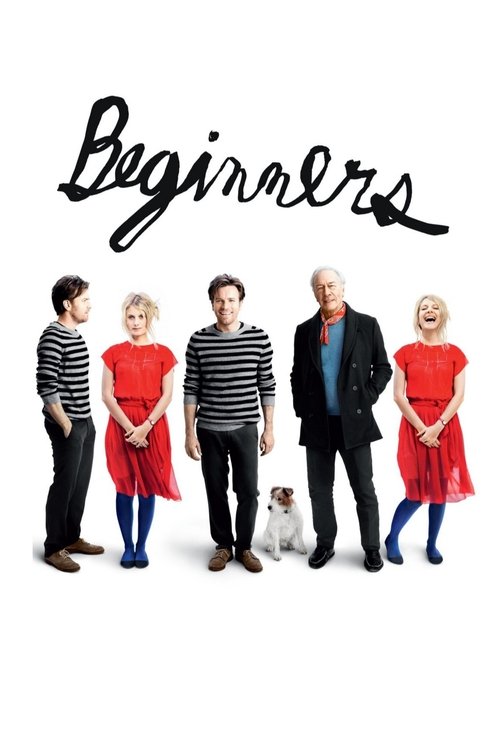
Beginners (2011)
Directed by Mike Mills
Yes — Beginners is woke, scoring 60 out of 100 on our wokeness meter.
Beginners arrives in 2010 with a premise that would later become a staple of prestige cinema: a widowed man of seventy-five comes out, takes a younger boyfriend, and dies of cancer while his son slowly learns to love.
Consciousness Markers
Coming out, gay identity, an older man's late-life gay romance, and involvement in the gay community are central to the story.
The film centers a gay father and his younger boyfriend, but the cast is largely white and the gay roles are played by straight actors.
Female characters have emotional depth, but the film is not structured around feminist critique or gender politics.
The film is reflective and emotional rather than preachy, with only mild moments of life-lesson voiceover.
There is no meaningful engagement with race or racial identity in the film.
Climate issues are absent from the story.
The film does not critique capitalism, wealth, or class structures.
Body image and body positivity are not themes in the film.
Neurodivergence is not represented or discussed.
The film is personal and autobiographical, but it does not revise or reinterpret historical narratives.
Why it received this score
Beginners arrives in 2010 with a premise that would later become a staple of prestige cinema: a widowed man of seventy-five comes out, takes a younger boyfriend, and dies of cancer while his son slowly learns to love. Mike Mills drew the material from his own father, which lends it a specificity that keeps the thing from drifting into the generic. Christopher Plummer won an Academy Award for the role, and the performance earns it, all twinkle and quiet dignity, a man discovering a life he had deferred for forty-four years of marriage.
The film's engagement with gay life is not decorative. Hal's coming out, his immersion in the local gay community, his romance with Andy, and the friction this creates with his son form the spine of the story. That said, the cast is overwhelmingly white, and the gay leads are played by straight actors, which places the film in a familiar early-2010s arrangement: sincere in subject, conventional in execution. The women here have interior lives, notably Melanie Laurent's Anna, but the film has no interest in gender politics as an argument. It is a romance about two people who cannot unpack their suitcases, literal and otherwise.
Elsewhere the film is silent. Race, class, climate, body image, and neurodivergence simply do not appear as concerns. The tone is reflective and soft-spoken, given to gentle voiceover observations about life, but it never mounts a pulpit. It is a personal, autobiographical work, and autobiography is not history, revisionist or otherwise. The result is a tender, well-made film that predates the era when such stories would be asked to carry an argument. It carries none, and seems content not to.
Analysis generated by our Consciousness Algorithm


Synopsis
Oliver meets the irreverent and unpredictable Anna only months after his father Hal Fields has passed away. This new love floods Oliver with memories of his father, who, following the death of his wife of 44 years, came out of the closet at age 75 to live a full, energized, and wonderfully tumultuous gay life – which included a younger boyfriend.
Questions about Beginners
Is Beginners woke?
Yes — Beginners is woke, scoring 60 out of 100 on our wokeness meter. That earns it a verdict of Woke.
What makes Beginners woke?
2 of the 10 markers register at 30 or above, led by LGBTQ+ Themes (90) and Representation Casting (40). On LGBTQ+ Themes: Coming out, gay identity, an older man's late-life gay romance, and involvement in the gay community are central to the story.
How does Beginners compare to other 2011 movies?
It ranks #2 of the 245 films from 2011 we've scored; their average is 11. The wokest is Paul (68).
How is the Woke Score calculated?
An AI-assisted process researches the film and its reception, scores it 0–100 on ten markers, then combines those into one 0–100 Woke Score. It measures a specific set of 2020s cultural themes, not film quality.