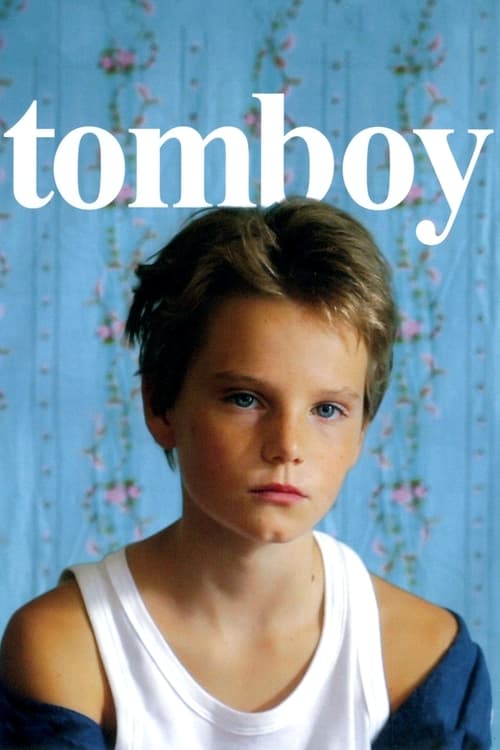
Tomboy (2011)
Directed by Céline Sciamma
Yes — Tomboy is woke, scoring 60 out of 100 on our wokeness meter.
Céline Sciamma's Tomboy arrives with the quiet confidence of a filmmaker who has no interest in telling us what to think.
Consciousness Markers
Centers a gender-nonconforming child exploring a male identity and a first crush on a girl; won the Teddy Award and was nominated for a GLAAD Media Award.
Critiques rigid gender roles and the pressure on girls to perform femininity, with a woman director and a narrative that validates a girl's rejection of traditional femininity.
Casts a young girl in a gender-nonconforming lead role and features a largely unknown ensemble, though racial diversity is minimal and unremarked.
The film is observational and ambiguous rather than preachy, though its gender-identity themes carry a clear social message.
No engagement with racial identity, racism, or racial consciousness.
No environmental or climate themes.
No critique of capitalism or wealth inequality.
No body-positivity themes; the body is central to gender presentation but not framed as a body-acceptance message.
No neurodivergence themes or characters.
Not a historical film and makes no revisionist historical claims.
Why it received this score
Céline Sciamma's Tomboy arrives with the quiet confidence of a filmmaker who has no interest in telling us what to think. A ten-year-old named Laure moves to a new Parisian neighborhood, is mistaken for a boy by a local girl, and spends a summer as Mickaël. The film watches. It does not announce. Zoé Héran plays the role with a stillness most adult performers would envy, and the camera stays close enough that we share the child's arithmetic of swim trunks, cut hair, and a clay prosthesis. This is a coming-of-age story told through small logistics.
The gender material is not subtext. It is the entire architecture. A child experiments with a male identity, develops a first crush on a girl named Lisa, and meets a community that polices the boundary with the usual cruelty. The Teddy Award jury at Berlin understood what they were watching, as did GLAAD. Sciamma, a woman directing her third feature, builds the film around the pressure on girls to perform femininity, and around a mother who reaches for a blue dress as a corrective. The screenplay validates the child's refusal. It declines to settle whether we are watching a tomboy, a trans boy, or something the language has not caught up to, and that refusal is deliberate.
What the film does not do is lecture, and it does not reach beyond its own narrow frame. Race, class, and money are absent as subjects. The neighborhood is simply a neighborhood. The body is central but never framed as a lesson in self-acceptance. Sciamma's restraint is the point: an observational style that trusts an audience to sit with discomfort instead of being instructed. The result is warm, unresolved, and mercifully free of sermonizing.
Analysis generated by our Consciousness Algorithm

Synopsis
Ten-year-old Laure isn't like most girls. She prefers football to dolls and sweaters to dresses. When Laure and her family move to a new neighbourhood, local girl Lisa mistakes Laure for a boy. Indulging in this exciting new identity, Laure becomes Mickaël, and so begins a summer of long sunny afternoons, playground games and first kisses. Yet with the school term fast approaching, and with suspicions arising amongst friends and family, Laure must face up to an uncertain future.
Questions about Tomboy
Is Tomboy woke?
Yes — Tomboy is woke, scoring 60 out of 100 on our wokeness meter. That earns it a verdict of Woke.
What makes Tomboy woke?
2 of the 10 markers register at 30 or above, led by LGBTQ+ Themes (95) and Feminist Agenda (70). On LGBTQ+ Themes: Centers a gender-nonconforming child exploring a male identity and a first crush on a girl; won the Teddy Award and was nominated for a GLAAD Media Award.
How does Tomboy compare to other 2011 movies?
It ranks #2 of the 245 films from 2011 we've scored; their average is 11. The wokest is Paul (68).
How is the Woke Score calculated?
An AI-assisted process researches the film and its reception, scores it 0–100 on ten markers, then combines those into one 0–100 Woke Score. It measures a specific set of 2020s cultural themes, not film quality.