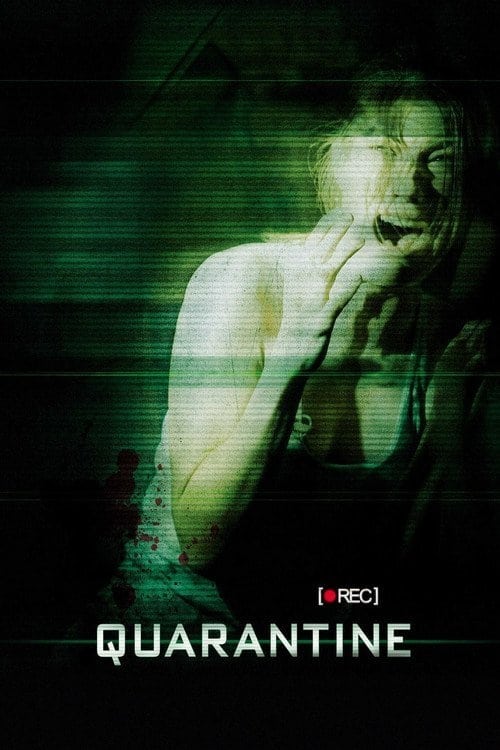
Quarantine (2008)
Directed by John Erick Dowdle
No — Quarantine is not woke, scoring 14 out of 100 on our wokeness meter.
Quarantine is a 2008 found footage zombie picture, a remake of REC, and it does exactly what it says on the tin: shaky camera, apartment building, rabies, CDC, screaming.
Consciousness Markers
The cast is notably multiethnic for a 2008 horror film, including Black, Latino, Middle Eastern, and Eastern European actors in a natural Los Angeles ensemble. However, there is no explicit inclusive-casting agenda or commentary.
A female reporter is the protagonist, but the film does not advance a feminist thesis or critique gender dynamics.
No LGBTQ+ characters, themes, or subtext are present.
The film features a diverse group of characters, but race is not addressed as a theme or social issue.
No climate or environmental themes are present.
The film has no anti-capitalist or eat-the-rich messaging.
No body-positivity themes or messaging are present.
No neurodivergence themes or representation are present.
The film is not historical and does not revise historical narratives.
Quarantine is a found-footage horror thriller with no didactic or lecture-style messaging.
Why it received this score
Quarantine is a 2008 found footage zombie picture, a remake of REC, and it does exactly what it says on the tin: shaky camera, apartment building, rabies, CDC, screaming. The film has no musical score, which is admirable, and no interest in explaining itself beyond a doomsday cult in the attic. It is lean, mean, and largely uninterested in the culture wars. The cast is notably multiethnic for a horror film of its era. Black, Latino, Middle Eastern, and Eastern European faces fill the building, and nobody makes a speech about it. This is diversity as ordinary Los Angeles texture, not as a platform. That earns a flicker of recognition from the social-consciousness ledger, but the film never develops racial themes. Race is simply present, then eaten.
The protagonist is a female television reporter, played by Jennifer Carpenter with a useful mix of professional cheer and mounting panic. This is a woman at the center of the frame, and the film does not punish her for ambition. It also does not argue anything about gender. She is not a symbol. She is a camera operator's subject who becomes a survivor and then a meal. The film has no feminist thesis, no critique of patriarchy, no closing speech about the male gaze. It has a night-vision sequence and a lot of biting. A female lead is not the same as a feminist agenda, and Quarantine seems content to let that distinction stand.
Elsewhere, the ledger is blank. There are no LGBTQ characters or subtext, no climate warnings, no eat-the-rich satire, no body-positivity messaging, no neurodivergent representation, no revisionist history. The film is not historical. It is not preachy. It is a remake with a virus, a quarantine, and a bad ending in the dark. It wants to scare you and then roll credits. As cultural commentary, it is a shrug with a pulse. As a specimen of 2008 horror, it is efficient, derivative, and almost entirely innocent of the modern sermon. We can respect that.
Analysis generated by our Consciousness Algorithm


Synopsis
A television reporter and her cameraman are trapped inside a building quarantined by the CDC after the outbreak of a mysterious virus which turns humans into bloodthirsty killers.
Questions about Quarantine
Is Quarantine woke?
No — Quarantine is not woke, scoring 14 out of 100 on our wokeness meter. That earns it a verdict of Ultra Based.
Does Quarantine have any woke elements?
1 of the 10 markers register at 30 or above, led by Representation Casting (30). On Representation Casting: The cast is notably multiethnic for a 2008 horror film, including Black, Latino, Middle Eastern, and Eastern European actors in a natural Los Angeles ensemble.
How does Quarantine compare to other 2008 movies?
It ranks #68 of the 212 films from 2008 we've scored; their average is 12. The wokest is Milk (68).
How is the Woke Score calculated?
An AI-assisted process researches the film and its reception, scores it 0–100 on ten markers, then combines those into one 0–100 Woke Score. It measures a specific set of 2020s cultural themes, not film quality.