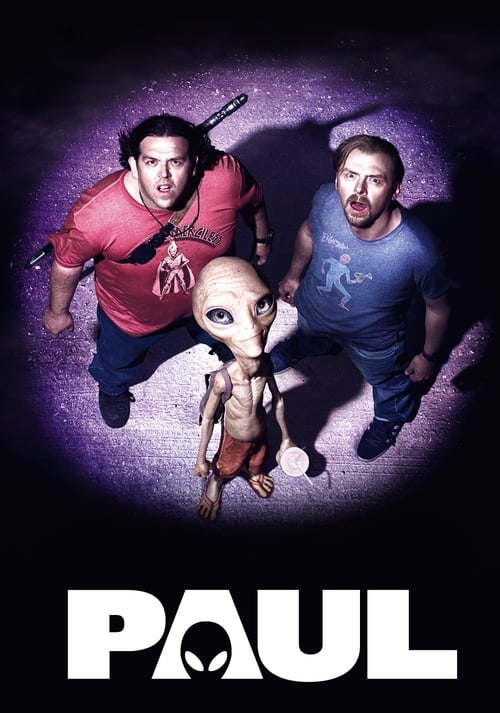
Paul (2011)
Directed by Greg Mottola
Yes · Woke
How we score movies →Consciousness Markers
Paul is fundamentally a vehicle for philosophical instruction on atheism, sexual liberation, and religious skepticism. The film frequently pauses comedic momentum for Paul to explain why certain beliefs are wrong.
Paul is explicitly bisexual and comes from a society where sexual orientation is presented as irrelevant and enlightened. This is a central theme, though treated more as philosophical superiority than character depth.
The cast includes women and LGBTQ+ representation, though characters of color are minimal and largely peripheral. The main ensemble is predominantly white and male.
Kristen Wiig's character Ruth is present and eventually embraces progressive values, but she exists primarily as a vessel for conversion rather than as an agent with her own agency or arc.
The film playfully engages with sci-fi and UFO conspiracy lore, reimagining Area 51 and government cover-ups, though this is more comedic than genuinely revisionist.
The film mocks government and military institutional structures, but this is more about exposing incompetence than critiquing capitalism or economic systems.
The film shows no meaningful engagement with racial themes or issues. The cast is predominantly white, and minority characters have minimal presence or development.
There is no evidence of climate consciousness or environmental themes in the film.
There is no evidence of body positivity themes or commentary on body standards in the film.
There is no evidence of neurodivergence representation or themes in the film.


Synopsis
For the past 60 years, a space-traveling smart-ass named Paul has been locked up in a top-secret military base, advising world leaders about his kind. But when he worries he's outlived his usefulness and the dissection table is drawing uncomfortably close, Paul escapes on the first RV that passes by his compound in Area 51. Fortunately, it contains the two earthlings who are most likely to rescue and harbor an alien on the run.
Why it received this score
Paul arrives as a peculiar artifact of early 2010s progressive sensibilities, a film so earnest in its desire to challenge conservative American values that it mistakes preachiness for satire. The eponymous alien, voiced by Seth Rogen, functions less as a comedic character than as a philosophical avatar, existing primarily to deliver lectures about sexual liberation, atheism, and the folly of religious faith to a Christian woman who must be deprogrammed for her own good. The film treats this conversion narrative with the gravity typically reserved for actual moral instruction, never quite grasping that the audience might find the heavy-handedness amusing rather than persuasive.
What distinguishes Paul from more nuanced progressive storytelling is its refusal to engage with actual complexity. The Christian character exists not to challenge the film's worldview but to validate it through her eventual capitulation. Paul himself is bisexual, a detail presented as evidence of his moral and intellectual superiority rather than simply part of who he is. The aliens have evolved beyond such petty concerns as monogamy and religious constraint, you understand, and their wisdom must be imparted to the simple earthlings. The film wraps this missionary zeal in a road comedy wrapper, but the mechanics remain transparent: watch as enlightenment is dispensed by a wisecracking extraterrestrial.
The supporting cast, including Kristen Wiig and Bill Hader as comic relief government agents, functions within this framework of moral instruction. There is no genuine disagreement, only varying degrees of ignorance to be overcome. By the standards of 2011, this represented a certain boldness, a willingness to mock religious faith and heteronormative assumptions in a mainstream comedy. By the standards of actual social consciousness, it represents something closer to a tract, dressed up in CGI and road-trip hijinks. The film means well, which may be the most damning thing we can say about it.
Analysis generated by our Consciousness Algorithm
Critic Reviews
“The film -- lame of title but big on fun.”
“Graeme and Clive, representatives of a nation of nonbelievers in UFOs and big dinner portions, come to the psychic capital of a country that wants to believe, and they're transformed. In Paul, Simon Pegg and Nick Frost do likewise, in celebration of what the Spielbergian cosmos is all about.”
“Broader and more accessible than either "Shaun Of The Dead" or "Hot Fuzz," Paul is pure Pegg and Frost - clever, cheeky and very, very funny. You'll never look at E. T. in the same way again.”
“British satire loses something when it's handled by Americans: You miss the perspective that a foreign culture brings, so instead of wit and humor, you end up trafficking in self-congratulatory clichés and sentiment. ”