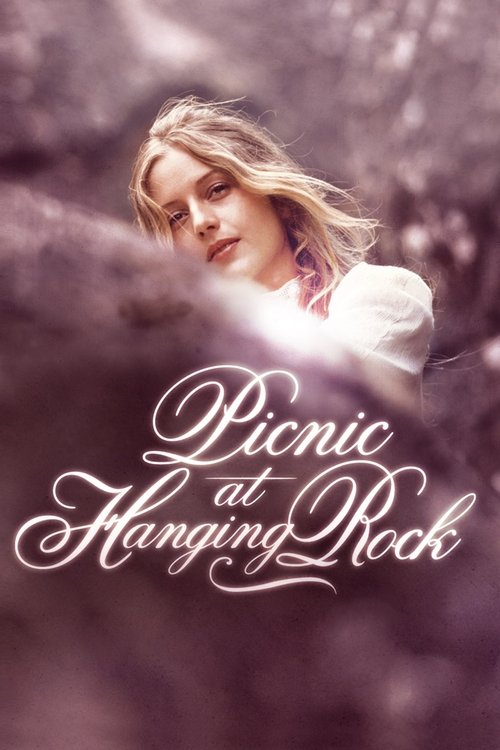
Picnic at Hanging Rock (1975)
Directed by Peter Weir
No — Picnic at Hanging Rock is not woke, scoring 15 out of 100 on our wokeness meter.
Peter Weir's Picnic at Hanging Rock arrives from 1975, which is to say from an era before the current vocabulary existed, and it conducts itself accordingly.
Consciousness Markers
The film centers entirely on women and is widely read as a critique of Victorian patriarchal repression and female sexual awakening within a punitive institution run by a tyrannical headmistress.
The girls' boarding-school setting carries a well-documented atmosphere of repressed homoerotic desire, with the intense romantic bond between Miranda and Sara and the eroticized trances commonly read as same-sex undercurrent.
The theme of European settlers being swallowed by an ancient, unknowable land gestures obliquely at a colonial/Indigenous chasm, but it is abstract subtext rather than explicit racial consciousness.
The school's tuition struggles and financial collapse provide mild class commentary, but there is no anti-wealth or eat-the-rich thesis.
An almost entirely white cast of European-Australian settlers; no minority or diverse casting markers present.
Nature and the Hanging Rock formation function as a mystical, dreamlike force; there is no ecological or climate-crisis messaging whatsoever.
Corsets and stockings mark Victorian bodily constraint, but the film offers no body-positivity message or celebration of body diversity.
Sara is depicted as a withdrawn, grieving orphan, not as a neurodivergent character; no relevant themes present.
A period mystery set in 1900 that makes no attempt to revise or reinterpret historical narratives through a modern ideological lens.
The film is famously enigmatic and atmospheric, deliberately refusing to explain or moralize; it has essentially no didactic impulse.
Why it received this score
Peter Weir's Picnic at Hanging Rock arrives from 1975, which is to say from an era before the current vocabulary existed, and it conducts itself accordingly. Three schoolgirls and a mathematics teacher walk into a volcanic crevice on Valentine's Day, 1900, and do not walk out. The film declines to explain this. What it offers instead is an atmosphere so thick you could spread it on scones: veiled lenses, pan flute, corsets, and the slow suffocation of an institution run by a headmistress who mistakes cruelty for order. The entire narrative belongs to women, and the reading of it as an indictment of Victorian repression and female awakening inside a punitive school is a fair one. The film earns that reading without ever announcing it.
The boarding school setting supplies the customary undercurrent of repressed desire, and this film has been read that way for fifty years. Miranda and Sara share a bond that runs hotter than friendship, the girls drift into eroticized trances at the Rock, and the camera lingers on white fabric and bare feet with a reverence that borders on the religious. None of it is stated. The film lets the longing sit there, unspoken, which is the only way a 1975 Australian production was ever going to let it sit.
Elsewhere the cupboard is bare, and we report this without cruelty. There is no ecological sermon at the Rock, no celebration of bodily variety, no diagnosis of anyone's neurology, no reworking of the historical record. The chasm between European settlers and an ancient land exists as a mood, not an argument. Class enters only through unpaid tuition and a school sliding toward insolvency. Above all, the film refuses to lecture. It withholds the solution, the moral, and the lesson, and American distributors reportedly threw coffee at the screen over it. A mystery that declines to solve itself is, in this critic's ledger, the least preachy thing ever committed to celluloid. We score it as what it is: a beautiful, withholding ghost story with progressive sympathies it never bothers to explain.
Analysis generated by our Consciousness Algorithm


Synopsis
In the early 1900s, Miranda attends a girls boarding school in Australia. One Valentine's Day, the school's typically strict headmistress treats the girls to a picnic field trip to an unusual but scenic volcanic formation called Hanging Rock. Despite rules against it, Miranda and several other girls venture off. It's not until the end of the day that the faculty realizes the girls and one of the teachers have disappeared mysteriously.
Questions about Picnic at Hanging Rock
Is Picnic at Hanging Rock woke?
No — Picnic at Hanging Rock is not woke, scoring 15 out of 100 on our wokeness meter. That earns it a verdict of Ultra Based.
Does Picnic at Hanging Rock have any woke elements?
1 of the 10 markers register at 30 or above, led by Feminist Agenda (45). On Feminist Agenda: The film centers entirely on women and is widely read as a critique of Victorian patriarchal repression and female sexual awakening within a punitive institution run by a tyrannical headmistress.
How does Picnic at Hanging Rock compare to other 1975 movies?
It ranks #9 of the 22 films from 1975 we've scored; their average is 15. The wokest is Dog Day Afternoon (62).
How is the Woke Score calculated?
An AI-assisted process researches the film and its reception, scores it 0–100 on ten markers, then combines those into one 0–100 Woke Score. It measures a specific set of 2020s cultural themes, not film quality.