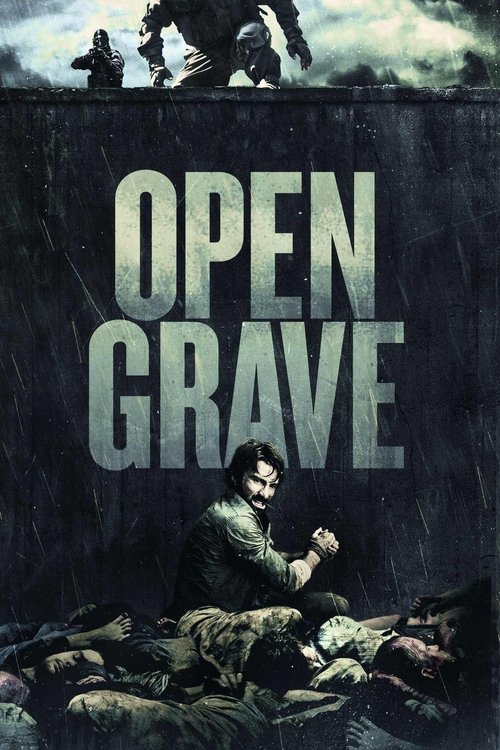
Open Grave (2013)
Directed by Gonzalo López-Gallego
No — Open Grave is not woke, scoring 8 out of 100 on our wokeness meter.
Open Grave opens with a man climbing out of a pit full of corpses, which is as efficient a summary of the 2013 horror landscape as any.
Consciousness Markers
The cast is led by white actors with one Hong Kong actress (Josie Ho) in a supporting role as a mute who functions as a plot device. This is incidental international casting rather than a diversity-driven statement.
Erin Richards's Sharon is a doctor with flashes of agency (she wields a shotgun, writes the survival letter), but she is ultimately a dying plot mechanism rather than a vessel for any feminist argument.
The film delivers its premise through creeping mystery and violence rather than moral lecturing or explicit social messaging.
No LGBTQ+ characters, relationships, or themes appear anywhere in the film.
The film contains no engagement with race as a theme; the Asian character's muteness is treated purely as a narrative obstacle, not a subject of commentary.
The apocalypse here is a rage virus, not an environmental collapse; there is no climate messaging whatsoever.
A government cover-up and a search-and-destroy military team feature in the plot, but these are conventional horror-thriller devices with no economic-justice or anti-wealth critique.
No body-positivity themes or diverse body representation with commentary are present.
Amnesia is used as a horror-mystery device, not as a portrayal or advocacy of neurodivergence.
The film is a fictional viral-outbreak survival story with no revisionist retelling of history.
Why it received this score
Open Grave opens with a man climbing out of a pit full of corpses, which is as efficient a summary of the 2013 horror landscape as any. The amnesia conceit does the heavy lifting: five strangers, no memories, a mute woman who knows more than she lets on, and a forest full of rage-infected ghouls. It is a machine for generating suspicion, and it runs on fumes by the second act. The screenplay teases its revelations with the patience of a film that has not decided what they are.
The cast is a mostly white ensemble, with Josie Ho as the mute, a character who exists to be a key to survival, not a person. She weeps, she gestures, she is immune. That is the whole of her interior life. Erin Richards comes closest to agency as Sharon, a doctor who fires a shotgun and writes the letter that explains the plot, though she is dead by the final reel so the letter can be ignored. The film has no interest in race, no interest in the climate, and despite a government cover-up and a search-and-destroy squad, no interest in the economics of anything. The virus is a rage virus. That is all.
No queer characters appear. No bodies are celebrated. Amnesia is a horror device, not a portrait of a mind. History is not revised, merely abandoned. The film lectures barely at all, preferring creeping dread to sermonizing, which in 2013 passed for restraint. It holds a 19 percent approval rating. The critics were not wrong, but they were also not the point. This is a film with nothing on its mind except the pit, and the pit, at least, is memorable.
Analysis generated by our Consciousness Algorithm


Synopsis
A man awakes -- without memory -- in a pit full of bodies and must figure out if the people who rescued him are the killers, or if he is the murderer.
Questions about Open Grave
Is Open Grave woke?
No — Open Grave is not woke, scoring 8 out of 100 on our wokeness meter. That earns it a verdict of Ultra Based.
Does Open Grave have any woke elements?
Very few. None of the 10 markers reaches 30, the level where a marker counts as present; the highest is Representation Casting at 15.
How does Open Grave compare to other 2013 movies?
It ranks #137 of the 274 films from 2013 we've scored; their average is 14. The wokest is Belle (76).
How is the Woke Score calculated?
An AI-assisted process researches the film and its reception, scores it 0–100 on ten markers, then combines those into one 0–100 Woke Score. It measures a specific set of 2020s cultural themes, not film quality.