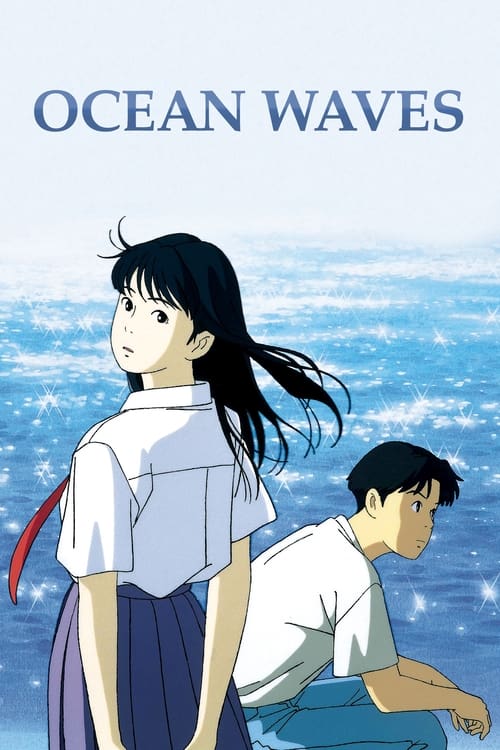
Ocean Waves (1993)
Directed by Tomomi Mochizuki
No — Ocean Waves is not woke, scoring 2 out of 100 on our wokeness meter.
Ocean Waves arrived in 1993 as a television film, a Studio Ghibli experiment handed to the younger staff with instructions to work quickly and cheaply.
Consciousness Markers
Rikako is a headstrong, academically gifted transfer student who defends herself and drives the plot, but the film frames this as personal temperament rather than a feminist statement.
The cast is entirely Japanese, which is the natural default for a Japanese production set in Kōchi; there is no deliberate diversity casting or commentary on representation.
The love triangle is strictly heterosexual and no LGBTQ+ themes or characters appear anywhere in the story.
No engagement with race, racism, or racial identity; the film is a small-scale coming-of-age romance.
No environmental or climate themes; the sea of the title is a romantic motif, not an ecological one.
No critique of wealth, class, or capitalism; money appears only as a minor plot device (a borrowed loan).
No body-positivity themes or messaging present.
No neurodivergent characters or themes are depicted or discussed.
A contemporary-set fictional romance with no historical revisionism of any kind.
The film is a quiet, understated slice-of-life drama that never lectures or moralizes to the audience.
Why it received this score
Ocean Waves arrived in 1993 as a television film, a Studio Ghibli experiment handed to the younger staff with instructions to work quickly and cheaply. They went over budget and over schedule, and the director reportedly developed an ulcer. The result is a small, humid story about a love triangle in Kōchi, a transfer student from Tokyo, a borrowed sixty thousand yen, and a great deal of unspoken feeling. It runs seventy-two minutes and contains no villains, no speeches, and no lessons.
Rikako Muto is the closest thing here to a thesis. She is academically gifted, athletic, arrogant, and willing to slap a classmate and be slapped in return. She drives the plot by sheer force of temperament. The film observes this without commentary, treating her volatility as weather instead of argument. A viewer hunting for a statement about girlhood will find only a girl, which is its own quiet achievement.
The inventory of modern social consciousness comes up empty across the board. The cast is Japanese because the story is Japanese. The romance is heterosexual. Nobody discusses the body, the climate, the economy, or the nervous system. Money appears once, as a loan, and is repaid. The sea in the title is a romantic motif, not an ecological one. The closing image of a train platform, where two people finally wait for each other, offers no thesis at all. The residue is a modest, melancholy piece of animation about three teenagers who mishandle each other and then grow up. It scores, by our accounting, near zero. It is also rather good, which is a separate ledger entirely.
Analysis generated by our Consciousness Algorithm


Synopsis
At Kichijōji Station, Tokyo, Taku Morisaki glimpses a familiar woman on the platform opposite boarding a train. Later, her photo falls from a shelf as he exits his apartment before flying to Kōchi Prefecture. Picking it up, he looks at it briefly before leaving. As the aeroplane takes off, he narrates the events that brought her into his life...
Questions about Ocean Waves
Is Ocean Waves woke?
No — Ocean Waves is not woke, scoring 2 out of 100 on our wokeness meter. That earns it a verdict of Ultra Based.
Does Ocean Waves have any woke elements?
Very few. None of the 10 markers reaches 30, the level where a marker counts as present; the highest is Feminist Agenda at 10.
How does Ocean Waves compare to other 1993 movies?
It ranks #69 of the 97 films from 1993 we've scored; their average is 11. The wokest is Bound by Honor (60).
How is the Woke Score calculated?
An AI-assisted process researches the film and its reception, scores it 0–100 on ten markers, then combines those into one 0–100 Woke Score. It measures a specific set of 2020s cultural themes, not film quality.