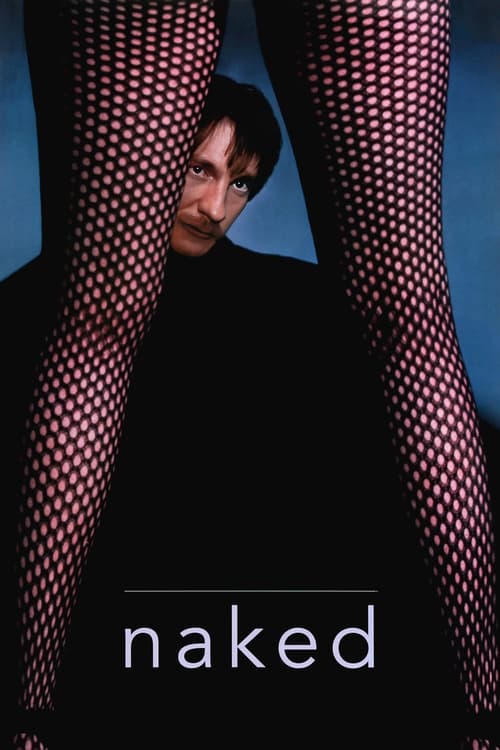
Naked (1993)
Directed by Mike Leigh
No — Naked is not woke, scoring 11 out of 100 on our wokeness meter.
Mike Leigh's Naked arrives from 1993 with a reputation for cruelty and a complete absence of contemporary identity politics.
Consciousness Markers
The film is steeped in Thatcherite-era disaffection, unemployment, and the 'new underclass,' and Johnny rails against modern consumer culture. This is a diffuse social critique rather than an explicit eat-the-rich program.
Johnny delivers relentless intellectual harangues and apocalyptic conspiracy monologues to anyone who will listen, giving the film substantial speechifying energy — though his lectures are nihilistic rather than socially progressive.
The film centers on a misogynist who commits sexual violence, and critics (Suzanne Moore) attacked it for surrounding him with passive women. It depicts misogyny as subject matter rather than advancing a feminist agenda, so only a faint trace registers.
The cast is almost entirely white British, assembled through Leigh's improvisational method with no evident effort at diverse or representative casting. No marker present.
No LGBTQ+ characters, themes, or subtext appear anywhere in the film.
Race is entirely absent as a theme; the film is a study of white British urban alienation with no racial consciousness.
No environmental or climate themes whatsoever.
No body-positivity themes; the film's treatment of bodies is bleak and sexualized rather than affirming.
Johnny's instability is framed as misanthropy, egotism, and self-destruction, not as neurodivergence in any modern sense.
No historical revisionism; the film is a contemporary character study set in early-1990s London.
Why it received this score
Mike Leigh's Naked arrives from 1993 with a reputation for cruelty and a complete absence of contemporary identity politics. Its cast is uniformly white British, assembled through Leigh's improvisational method, and the film makes no gesture toward representation as a virtue. There are no LGBTQ characters or themes. Race never enters the frame as a subject. Climate anxiety, body positivity, and neurodivergence are equally foreign to its concerns. This is a film about Thatcherite disaffection, male rage, and the wreckage of urban loneliness, and it treats those matters with a cold eye. The only faint progressive trace is a diffuse anti-capitalist grumble: Johnny rails against consumer culture and the deadening routines of modern England, but he offers no program, no solidarity, no eat-the-rich catharsis. His politics are apocalyptic and personal, not collective.
Johnny himself is the film's engine. He is intelligent, eloquent, and abusive. His instability reads as misanthropy and egotism, not as a modern diagnosis. He lectures strangers, flatmates, security guards, and poster men with conspiracy theories and intellectual bullying. That gives the film a strong speechifying energy, though the speeches are nihilistic, not socially improving. On gender, the film depicts misogyny and sexual violence without organizing itself around a feminist agenda. Critics at the time split precisely over this: Suzanne Moore accused Leigh of surrounding a misogynist with passive women, while others argued the film was exposing the horror instead of endorsing it. The women are not written as symbols of empowerment. They are casualties of the same rootless world Johnny inhabits.
Nothing here is revisionist history. The film is a contemporary character study set in early-1990s London, and its historical imagination extends only to the millennium and the end of the world. Bodies are treated with bleak sexualization, not affirmation. The result is a serious, often brilliant work of social observation that belongs to an older tradition of British miserablism. It has no interest in the modern cultural checklist, and that absence is not a flaw in the filmmaking. It is simply the weather of the piece. Naked remains a time capsule of pre-millennium anxiety, and its social consciousness, such as it is, points backward to Thatcher and forward to nothing at all.
Analysis generated by our Consciousness Algorithm


Synopsis
An unemployed Brit vents his rage on unsuspecting strangers as he embarks on a nocturnal London odyssey.
Questions about Naked
Is Naked woke?
No — Naked is not woke, scoring 11 out of 100 on our wokeness meter. That earns it a verdict of Ultra Based.
Does Naked have any woke elements?
Very few. None of the 10 markers reaches 30, the level where a marker counts as present; the highest is Eat the Rich at 20.
How does Naked compare to other 1993 movies?
It ranks #33 of the 97 films from 1993 we've scored; their average is 11. The wokest is Bound by Honor (60).
How is the Woke Score calculated?
An AI-assisted process researches the film and its reception, scores it 0–100 on ten markers, then combines those into one 0–100 Woke Score. It measures a specific set of 2020s cultural themes, not film quality.