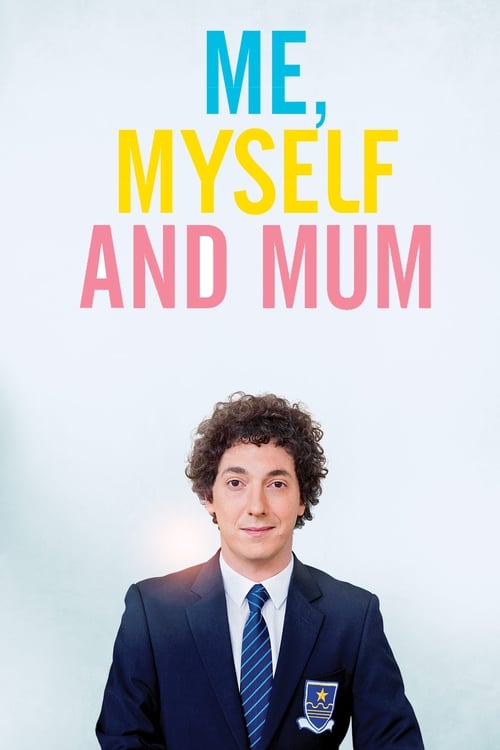
Me, Myself and Mum (2013)
Directed by Guillaume Gallienne
Yes — Me, Myself and Mum is woke, scoring 60 out of 100 on our wokeness meter.
Me, Myself and Mum is a 2013 French autobiographical comedy in which Guillaume Gallienne writes, directs, and stars as both himself and his mother.
Consciousness Markers
This is the film's primary focus, exploring effeminacy, sexual confusion, and the eventual conflict between personal identity and familial acceptance.
The film centers entirely on the complex internal journey of a protagonist navigating gender and sexual identity, making the casting and focus highly relevant to modern identity politics.
The film does not engage in a systemic critique of patriarchy; the mother is a conflicted character whose reactions are personal rather than ideological.
While the protagonist struggles with gender identity, the film frames this as a coming-of-age crisis rather than a clinical exploration of neurodivergence.
The film addresses social issues through character interaction and comedy, avoiding the didactic, academic tone often associated with high lecture energy.
There is no exploration of race, ethnicity, or racial dynamics within the narrative or character development.
The film is a domestic, personal drama and contains no commentary or imagery related to environmental issues.
The conflicts presented are deeply personal and familial, lacking any engagement with economic or systemic critiques of capitalism.
The narrative focuses on gender expression and sexuality rather than a broad celebration of diverse body types.
As an autobiographical piece, it recounts personal history, but it does not attempt to revise established historical facts or narratives.
Why it received this score
Me, Myself and Mum is a 2013 French autobiographical comedy in which Guillaume Gallienne writes, directs, and stars as both himself and his mother. That dual performance is the film's central gambit and its main claim to representational significance. The story follows a boy whose effeminacy is mistaken for homosexuality, whose mother treats his identity as a project, and whose adult life becomes a negotiation between family expectation and self-definition. The film's engagement with sexual identity is not incidental. It is the plot, the joke, and the wound. In that sense, its casting and its subject matter place it firmly within contemporary conversations about gender performance and queer experience, even as it insists on the specificity of a single man's remembered life.
Other progressive markers are largely absent. Race is not a concern. The environment does not enter the frame. Economic critique is nowhere to be found. The mother is a vivid and conflicted figure, but the film does not mount a systemic feminist argument. Body diversity is not on its mind. Neurodivergence appears only as a vague adolescent crisis, not as a clinical or political subject. Historical revision is not attempted. The film is also not preachy. Its ideas arrive through embarrassment, therapy, boarding school, a Bavarian spa, and a disastrous nightclub encounter. The comedy does the arguing. The audience is trusted to keep up.
Released during France's debates over same-sex marriage, the film was read by some as socially timely. Its actual temperament is more intimate. It is a domestic tragicomedy about a man who loves women, including his mother, perhaps too much. The César wins confirm its cultural standing, but they do not turn it into a treatise. It remains a well-mannered provocation: a film about identity that prefers laughter to lecturing, and family to ideology.
Analysis generated by our Consciousness Algorithm

Synopsis
How to become a man when your mother and your closed circle have decided otherwise? This is the challenge Guillaume took up. The film recounts Guillaume's tragicomic battle from the young age of eight, as he adopts the role of a girl then of a homosexual... until, aged 30, he meets the woman who, after his mother, will become the other woman in his life. Beyond this story of a heterosexual coming-out, the film tells the tale of an actor who never stopped loving women, maybe even a little too much.
Questions about Me, Myself and Mum
Is Me, Myself and Mum woke?
Yes — Me, Myself and Mum is woke, scoring 60 out of 100 on our wokeness meter. That earns it a verdict of Woke.
What makes Me, Myself and Mum woke?
2 of the 10 markers register at 30 or above, led by LGBTQ+ Themes (90) and Representation Casting (80). On LGBTQ+ Themes: This is the film's primary focus, exploring effeminacy, sexual confusion, and the eventual conflict between personal identity and familial acceptance.
How does Me, Myself and Mum compare to other 2013 movies?
It ranks #5 of the 274 films from 2013 we've scored; their average is 14. The wokest is Belle (76).
How is the Woke Score calculated?
An AI-assisted process researches the film and its reception, scores it 0–100 on ten markers, then combines those into one 0–100 Woke Score. It measures a specific set of 2020s cultural themes, not film quality.