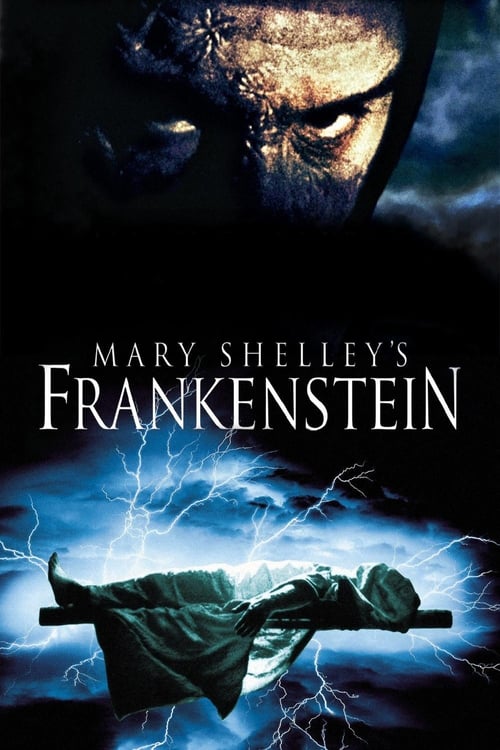
Mary Shelley's Frankenstein (1994)
Directed by Kenneth Branagh
No — Mary Shelley's Frankenstein is not woke, scoring 3 out of 100 on our wokeness meter.
Kenneth Branagh's 1994 adaptation arrives with the full weight of the novel's 1818 reputation behind it, and Branagh, who directs and also plays Victor, treats the material as Shakespeare with lightning.
Consciousness Markers
The film carries Shelley's philosophical musings on death and playing God, but delivers them as operatic melodrama rather than modern moral instruction.
The Creature is rejected for his hideous appearance, but this is Gothic horror about monstrosity and rejection, not a modern body-acceptance message.
Elizabeth and Justine exist as Gothic victims and romantic figures rather than vehicles for a feminist argument; the film makes no gendered critique of its 1794 setting.
The cast is a uniformly white British and American ensemble (Branagh, De Niro, Bonham Carter, Holm, Cleese); no color-conscious or diversity-driven casting is present.
No LGBTQ+ characters, relationships, or subtext appear in this Gothic adaptation.
The film engages no racial themes or commentary whatsoever.
No environmental or climate themes are present.
The story is a philosophical tragedy about creation and abandonment, not a critique of wealth, class, or capitalism.
The Creature's outsider status and slow acquisition of language are framed as Gothic pathos, not as neurodivergent representation.
The film is a period-faithful adaptation of an 1818 novel set in 1794; it makes no revisionist claims about historical events.
Why it received this score
Kenneth Branagh's 1994 adaptation arrives with the full weight of the novel's 1818 reputation behind it, and Branagh, who directs and also plays Victor, treats the material as Shakespeare with lightning. The creature is stitched from corpses, given life, and then abandoned by a maker who cannot bear to look at him. Robert De Niro plays the Creation with a stroke victim's diction and a wounded patience. The film is loud, wet, and operatic, which is precisely what its own screenwriter later complained about. The ambition is real. So is the fatigue that trails behind it.
The cast is a uniformly white British and American ensemble, drawn from the familiar repertory of the period drama. Nothing here reaches for a broader social argument. Elizabeth and Justine exist as Gothic victims and romantic furniture, and the film offers no gendered critique of its 1794 setting. There is no racial commentary, no environmental anxiety, no indictment of wealth or class. The creature's ugliness earns him a mob and a burning farmhouse, but the film reads this as monstrosity and rejection, not as instruction about accepting bodies. His slow acquisition of language is pathos, not diagnosis.
Where the film does carry an argument, it is Shelley's own: the danger of playing God, the loneliness of the made thing. Branagh delivers these ideas as melodrama, with torches, screaming, and a reanimated bride who sets herself on fire. The sermonizing is eighteenth-century in flavor, not twenty-first. What remains is a handsome, frantic near-miss of a picture, sincere in its gloom and entirely of its own century.
Analysis generated by our Consciousness Algorithm


Synopsis
Victor Frankenstein is a promising young doctor who, devastated by the death of his mother during childbirth, becomes obsessed with bringing the dead back to life. His experiments lead to the creation of a monster, which Frankenstein has put together with the remains of corpses. It's not long before Frankenstein regrets his actions.
Questions about Mary Shelley's Frankenstein
Is Mary Shelley's Frankenstein woke?
No — Mary Shelley's Frankenstein is not woke, scoring 3 out of 100 on our wokeness meter. That earns it a verdict of Ultra Based.
Does Mary Shelley's Frankenstein have any woke elements?
Very few. None of the 10 markers reaches 30, the level where a marker counts as present; the highest is Lecture Energy at 10.
How does Mary Shelley's Frankenstein compare to other 1994 movies?
It ranks #71 of the 86 films from 1994 we've scored; their average is 10. The wokest is On Deadly Ground (75).
How is the Woke Score calculated?
An AI-assisted process researches the film and its reception, scores it 0–100 on ten markers, then combines those into one 0–100 Woke Score. It measures a specific set of 2020s cultural themes, not film quality.