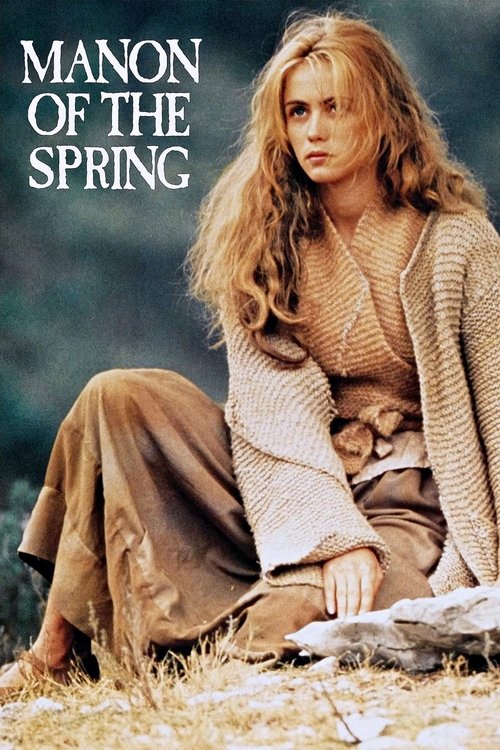
Manon of the Spring (1986)
Directed by Claude Berri
No — Manon of the Spring is not woke, scoring 6 out of 100 on our wokeness meter.
Claude Berri's Manon of the Spring arrives as the second half of a diptych, a Provençal revenge tragedy adapted from Marcel Pagnol's two-volume novel, and it conducts itself with the unhurried gravity of a fable carved into limestone.
Consciousness Markers
Manon is a fierce, agency-driven female protagonist, but her vengeance is a classic literary device rather than a contemporary feminist thesis.
The Soubeyrans' greed over land and water carries a faint critique of avarice, but it is timeless moral fable rather than modern anti-capitalist polemic.
The storytelling is dramatic and moralistic in a classical sense, with no overt preaching to the audience.
Largely homogeneous white French rural cast drawn from the period setting; no discernible casting choices made with representation in mind.
No LGBTQ+ characters or themes whatsoever in this Provençal revenge drama.
The village's prejudice against Jean concerns him being an outsider and hunchbacked, not race; no racial consciousness is engaged.
Water and the spring are central, but as a plot mechanism for revenge, not as ecological advocacy.
No body positivity themes; the deformity motif functions as tragic prejudice, not a body-acceptance message.
No neurodivergent characters or framing present.
A faithful literary period adaptation, not a revisionist reframing of history.
Why it received this score
Claude Berri's Manon of the Spring arrives as the second half of a diptych, a Provençal revenge tragedy adapted from Marcel Pagnol's two-volume novel, and it conducts itself with the unhurried gravity of a fable carved into limestone. Manon, grown into a shepherdess, finds the underground source that feeds her village and stops it, letting the farmers choke on their own complicity. It is a story about water, greed, and the slow arithmetic of guilt. The film holds no interest in the cultural preoccupations of a later decade, and we should not pretend otherwise.
On the matter of representation, the cast is uniformly white and rural, drawn from the period and the region with no casting gesture toward inclusion. There is no queer presence, no racial reckoning, no climate advocacy despite all that water, no neurodivergent framing, and no body-acceptance message attached to the hunchback motif that haunts the plot. Emmanuelle Béart's Manon is a fierce, self-directed young woman who engineers her own justice, which earns a modest nod toward feminist agency, though her vengeance is literary machinery, not a thesis. The Soubeyrans' avarice invites a faint murmur against greed, the sort of moralizing that predates any modern economic polemic by several centuries. The film lectures no one. It simply lets the water stop.
A period adaptation faithful to its source, it reframes nothing and revises no history. What remains is craft: Yves Montand's ruined patriarch, the cruel symmetry of the final revelation, a village that knew and said nothing. The sommelier's verdict is a dry, austere vintage, low in modern additives, and entirely content to be so.
Analysis generated by our Consciousness Algorithm


Synopsis
In this, the sequel to Jean de Florette, Manon has grown into a beautiful young shepherdess living in the idyllic Provencal countryside. She plots vengeance on the men who greedily conspired to acquire her father's land years earlier.
Questions about Manon of the Spring
Is Manon of the Spring woke?
No — Manon of the Spring is not woke, scoring 6 out of 100 on our wokeness meter. That earns it a verdict of Ultra Based.
Does Manon of the Spring have any woke elements?
Very few. None of the 10 markers reaches 30, the level where a marker counts as present; the highest is Feminist Agenda at 12.
How does Manon of the Spring compare to other 1986 movies?
It ranks #24 of the 62 films from 1986 we've scored; their average is 7. The wokest is Star Trek IV: The Voyage Home (42).
How is the Woke Score calculated?
An AI-assisted process researches the film and its reception, scores it 0–100 on ten markers, then combines those into one 0–100 Woke Score. It measures a specific set of 2020s cultural themes, not film quality.