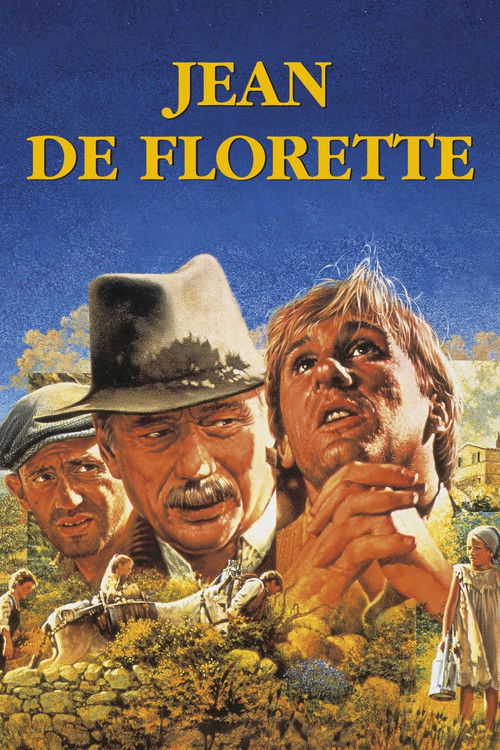
Jean de Florette (1986)
Directed by Claude Berri
No — Jean de Florette is not woke, scoring 2 out of 100 on our wokeness meter.
Claude Berri's 1986 adaptation of Marcel Pagnol's novel concerns two Provençal farmers who seal a spring with cement and then watch, with patient malice, as the city man who inherits the land above it fails to keep his crops alive.
Consciousness Markers
The cast is entirely white European, with no racial or ethnic diversity as a thematic or casting element.
No LGBTQ+ characters, relationships, or themes appear.
Female characters are present but the film does not advance a feminist agenda or critique patriarchy.
No engagement with racial identity, racism, or racial justice.
Water scarcity and drought are plot mechanics of greed, not a climate-change crusade.
Themes of greed and property are personal and rural, not a systemic anti-capitalist critique.
Jean's hunchback is a physical trait, not used to promote body positivity.
No neurodivergent characters or themes.
A period drama set in the 1920s, but it does not revise or reinterpret history for ideological ends.
The film tells its story dramatically without preaching or lecturing the audience.
Why it received this score
Claude Berri's 1986 adaptation of Marcel Pagnol's novel concerns two Provençal farmers who seal a spring with cement and then watch, with patient malice, as the city man who inherits the land above it fails to keep his crops alive. The newcomer is hunchbacked, earnest, and doomed. He drags water two kilometres by hand, digs a well, buys dynamite, and dies under a flying rock. The film is a study in avarice conducted at the pace of a dry summer. Nobody learns anything. The men who did it get the land.
The classification work here is mercifully brief. The cast is entirely European, and the film makes no gesture toward casting as statement. There is no LGBTQ+ presence, no engagement with racial identity, and no feminist argument, though women do appear: Aimée, the former opera singer; Manon, the daughter; Baptistine, whom the villagers call a witch. They are characters, not positions. The drought is a mechanic of greed, not an environmental crusade. The greed itself is personal and rural, two men and a hidden spring, and it indicts no system. Jean's hunchback is a physical fact and a source of pathos, not a brief for body acceptance. No neurodivergent characters appear, and the period setting is rendered with care but without ideological reinterpretation.
Most notably, the film never lectures. It plants carnations, stops a spring, and lets a man die of exhaustion and dynamite. Roger Ebert wrote of the relentlessness of human greed, and the picture trusts us to arrive there unassisted. There is no sermon, no explanatory scene, no character who exists to voice the theme aloud. That restraint is what makes it a fine film and an empty ledger for the purposes of this tally. The scores sit at the floor, and they sit there honestly.
Analysis generated by our Consciousness Algorithm


Synopsis
In a rural French village, an old man and his only remaining relative cast their covetous eyes on an adjoining vacant property. They need its spring water for growing their flowers, and are dismayed to hear that the man who has inherited it is moving in. They block up the spring and watch as their new neighbour tries to keep his crops watered from wells far afield through the hot summer. Though they see his desperate efforts are breaking his health and his wife and daughter's hearts, they think only of getting the water.
Questions about Jean de Florette
Is Jean de Florette woke?
No — Jean de Florette is not woke, scoring 2 out of 100 on our wokeness meter. That earns it a verdict of Ultra Based.
Does Jean de Florette have any woke elements?
No. All 10 markers score zero.
How does Jean de Florette compare to other 1986 movies?
It ranks #45 of the 62 films from 1986 we've scored; their average is 7. The wokest is Star Trek IV: The Voyage Home (42).
How is the Woke Score calculated?
An AI-assisted process researches the film and its reception, scores it 0–100 on ten markers, then combines those into one 0–100 Woke Score. It measures a specific set of 2020s cultural themes, not film quality.