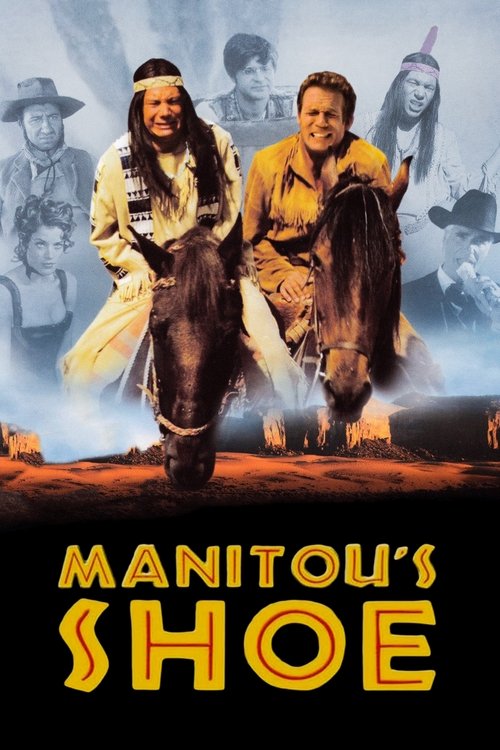
Manitou's Shoe (2001)
Directed by Michael Herbig
No — Manitou's Shoe is not woke, scoring 15 out of 100 on our wokeness meter.
Der Schuh des Manitu arrives from the year 2001, a German spoof of the Karl May Winnetou pictures, and it conducts itself with the cheerful indifference of a film that has no interest in being measured against contemporary virtue.
Consciousness Markers
Abahachi's twin brother Winnetouch is an openly effeminate gay proprietor of an all-pink beauty ranch, a prominent recurring character, though rendered as a broad comedic stereotype rather than a dignified portrayal.
The villain Santa Maria is a swindling real-estate con man, echoing the Karl May 'greedy white man' motif, but this is a plot device rather than an anti-capitalist argument.
Native American characters are central, but the film spoofs Karl May's romanticized clichés rather than engaging any modern racial consciousness or critique.
The cast is deliberately, comically 'miscast' — Spanish extras as Indians, an East Indian as the Shoshone chief, a Turkish-German as the Mexican Hombre — but this is parody for laughs, not modern inclusive casting intent.
Uschi is a singer and love interest who exists mainly to be captured, tattooed with a map, and impregnated; no feminist agency or commentary is present.
As a slapstick comedy built on puns and anachronisms, the film has essentially no didactic or preachy energy.
No environmental themes or climate messaging appear anywhere in the film.
No body-positivity themes or messaging are present.
No neurodivergence themes or characters are present.
The film is a genre parody, not a revisionist retelling of history or a corrective to historical narratives.
Why it received this score
Der Schuh des Manitu arrives from the year 2001, a German spoof of the Karl May Winnetou pictures, and it conducts itself with the cheerful indifference of a film that has no interest in being measured against contemporary virtue. The plot concerns a tribal debt, a swindling real estate agent named Santa Maria, and a treasure hidden inside a shoe-shaped rock. Along the way we meet Abahachi's twin brother Winnetouch, an effeminate proprietor of an all-pink beauty ranch who rides side-saddle and scolds his horse. That character is played for broad laughs, and the film never pauses to interrogate the stereotype it is deploying. The result is a comedic presence that registers as notable without ever aspiring to dignity or representation.
The casting is a study in deliberate incongruity. The Apache are largely played by Spanish extras, the Shoshone chief by an East Indian actor, and the Mexican henchman by a Turkish-German performer. None of this is inclusion. It is the opposite, a joke about the artifice of the genre, and the film wears its absurdity openly. Native characters sit at the center of the story, yet the screenplay spoofs Karl May's romanticized clichés instead of engaging any modern racial critique. The villain's land swindle gestures toward the greedy white man motif of the source novels, though the film treats it as a plot engine, not an argument. Uschi, the singer and love interest, is captured, tattooed with a map, and impregnated, and the film offers no comment on any of it.
In the end, this is a slapstick machine built on puns, anachronisms, and references to Leone, Bond, and Indiana Jones. There is no sermon here, no environmental parable, no meditation on the body or the mind. It is a comedy that wants only to amuse, and it does so with a Bavarian accent and a folding chair standing in for a hatchet. We can admire the honesty of a film so thoroughly uninterested in instructing us. The classification is straightforward, and the sommelier may set down his glass.
Analysis generated by our Consciousness Algorithm
Synopsis
Abahachi, Chief of the Apache Indians, and his blood brother Ranger maintain peace and justice in the Wild West. One day, Abahachi needs to take up a credit from the Shoshone Indians to finance his tribe's new saloon. Unfortunately Santa Maria, who sold the saloon, betrays Abahachi, takes the money and leaves. Soon, the Shoshones are on the warpath to get their money back, and Abahachi is forced to organize it quickly.
Questions about Manitou's Shoe
Is Manitou's Shoe woke?
No — Manitou's Shoe is not woke, scoring 15 out of 100 on our wokeness meter. That earns it a verdict of Ultra Based.
Does Manitou's Shoe have any woke elements?
1 of the 10 markers register at 30 or above, led by LGBTQ+ Themes (50). On LGBTQ+ Themes: Abahachi's twin brother Winnetouch is an openly effeminate gay proprietor of an all-pink beauty ranch, a prominent recurring character, though rendered as a broad comedic stereotype rather than a dignified portrayal.
How does Manitou's Shoe compare to other 2001 movies?
It ranks #36 of the 148 films from 2001 we've scored; their average is 12. The wokest is Monster's Ball (60).
How is the Woke Score calculated?
An AI-assisted process researches the film and its reception, scores it 0–100 on ten markers, then combines those into one 0–100 Woke Score. It measures a specific set of 2020s cultural themes, not film quality.