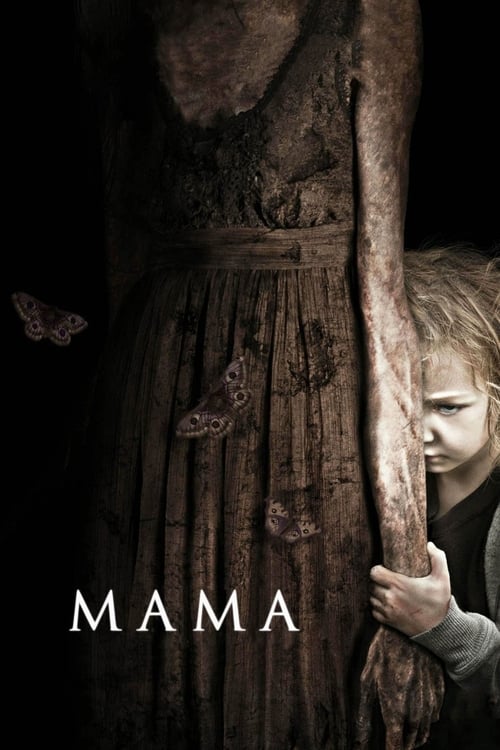
Mama (2013)
Directed by Andy Muschietti
No — Mama is not woke, scoring 6 out of 100 on our wokeness meter.
Two small girls are left in a forest cabin after their father's breakdown, survive five years on whatever a possessive spirit provides, and are recovered feral, bespectacled, and only partly housebroken.
Consciousness Markers
The film centers on a reluctant mother figure (Annabel) and a maternal ghost, giving it a woman-driven emotional core, but it treats motherhood as a horror motif rather than advancing any feminist argument.
The cast is overwhelmingly white, led by Jessica Chastain and Nikolaj Coster-Waldau, with no notable diverse or inclusive casting choices made for representation's sake.
There are no LGBTQ+ characters, relationships, or themes anywhere in the film.
No racial themes, commentary, or consciousness appear in the story.
There is no environmental or climate-related content in the film.
The father's ruin in the 2008 financial crisis is a brief plot device to motivate his madness, not a critique of capitalism or wealth.
The film contains no body-positive messaging or diverse body representation.
The feral children and the asylum-patient backstory are horror tropes, not neurodivergence representation or advocacy.
The film makes no revisionist claims about history; the 1800s asylum backstory is fictional horror lore.
Mama is a straightforward supernatural thriller that aims to scare rather than to preach or deliver social messaging.
Why it received this score
Two small girls are left in a forest cabin after their father's breakdown, survive five years on whatever a possessive spirit provides, and are recovered feral, bespectacled, and only partly housebroken. Jessica Chastain plays Annabel, a bassist who inherits the children when their uncle lands in a coma, and who spends the second act negotiating with a ghost over custody. Andy Muschietti's 2013 debut, expanded from his own short film with Guillermo del Toro's name on the poster and moths on the windowsill, is competently frightening and entirely indifferent to the cultural questions of the present moment.
A census of the film's social content returns very little. The 2008 financial crisis serves only to explain why a stockbroker murders his colleagues, which is motive, not argument. The feral children come out of the Gothic cupboard, not from any contemporary conversation about development or diagnosis. Edith Brennan, the asylum patient, is invented folklore about maternal grief, staged as a ghost story instead of a case study. Nobody lectures. Nobody explains what the audience ought to feel about markets, bodies, or the weather. The camera follows a woman through a dark hallway and lets a shadow do the rest.
The one item of mild interest is the film's emotional architecture. Annabel is a reluctant mother, and the ghost is a mother who will not let go, which places a woman at each pole and makes maternal love itself the monster. That is a horror motif and nothing more, though a more eager production might have converted it into a thesis. Chastain, frayed and unglamorous, holds the whole contraption together. The result is an efficient, unsanctimonious scare machine, and our instruments, calibrated for a noisier decade, register almost nothing.
Analysis generated by our Consciousness Algorithm


Synopsis
Guillermo del Toro presents Mama, a supernatural thriller that tells the haunting tale of two little girls who disappeared into the woods the day that their parents were killed. When they are rescued years later and begin a new life, they find that someone or something still wants to come tuck them in at night.
Questions about Mama
Is Mama woke?
No — Mama is not woke, scoring 6 out of 100 on our wokeness meter. That earns it a verdict of Ultra Based.
Does Mama have any woke elements?
Very few. None of the 10 markers reaches 30, the level where a marker counts as present; the highest is Feminist Agenda at 10.
How does Mama compare to other 2013 movies?
It ranks #181 of the 274 films from 2013 we've scored; their average is 14. The wokest is Belle (76).
How is the Woke Score calculated?
An AI-assisted process researches the film and its reception, scores it 0–100 on ten markers, then combines those into one 0–100 Woke Score. It measures a specific set of 2020s cultural themes, not film quality.