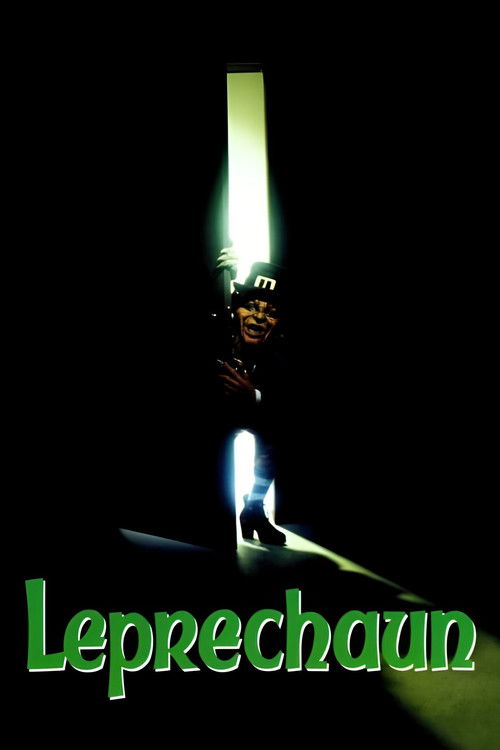
Leprechaun (1993)
Directed by Mark Jones
No — Leprechaun is not woke, scoring 0 out of 100 on our wokeness meter.
Leprechaun arrived in 1993 with modest ambitions and a budget just under a million dollars, which is roughly what Trimark spent on the go-kart the title creature steals.
Consciousness Markers
The cast is overwhelmingly white, and Warwick Davis's title role is a monstrous leprechaun rather than a deliberate representation statement. No modern inclusive casting agenda is present.
There are no LGBTQ+ characters, themes, or subtext in the film.
Jennifer Aniston's Tory is a conventional horror protagonist, but the film contains no feminist critique or agenda.
The film does not engage with race, racism, or racial identity in any meaningful way.
There is no environmental or climate-related theme in the film.
The leprechaun's obsession with gold suggests a vague anti-greed moral, but it is not framed as an anti-capitalist or eat-the-rich statement.
The film contains no body-positive messaging or celebration of diverse body types.
Ozzie is portrayed as dim-witted for comic effect, but this is not framed as neurodivergence or neurodiversity advocacy.
The film is a contemporary horror-comedy fantasy and does not revise or reinterpret historical events.
Leprechaun is a campy slasher comedy with no preachy or didactic social messaging.
Why it received this score
Leprechaun arrived in 1993 with modest ambitions and a budget just under a million dollars, which is roughly what Trimark spent on the go-kart the title creature steals. The premise is elemental: a small Irish monster wants his gold back, and a group of young people in North Dakota would prefer he did not have it. Warwick Davis plays the role with visible relish, having negotiated a tonal shift from straight horror into something more comic, and Jennifer Aniston appears in what she has since described as a source of embarrassment. As a text for cultural classification, the film offers almost nothing to work with. It is a slasher comedy about a man in green makeup chasing teenagers through a farmhouse, and it commits to that premise without apology or subtext.
The cast is white, the humor is slapstick, and the moral, insofar as there is one, concerns the dangers of taking what does not belong to you. Critics at the time found the film neither scary nor funny, and several noted the characters behave like people who flunked kindergarten. That is a fair description of Ozzie, the dim-witted contractor's friend who swallows a gold coin and spends the third act as a hostage of his own digestion. His stupidity exists for laughs, not for advocacy. No argument is made about how society treats him, and no larger claim is staked about the world he inhabits.
The film's only recognizable idea is an old one: greed invites ruin, and a creature who counts his coins will count them forever. That sentiment predates the modern cultural vocabulary by several centuries and carries no contemporary charge. What remains is a cheap, efficient, occasionally charming monster movie that spawned six sequels and a reboot. It is a relic of a time when a horror film could simply be a horror film, and there is something almost restful about that.
Analysis generated by our Consciousness Algorithm


Synopsis
A demonic leprechaun terrorizes a group of young people whom he believes stole his gold.
Questions about Leprechaun
Is Leprechaun woke?
No — Leprechaun is not woke, scoring 0 out of 100 on our wokeness meter. That earns it a verdict of Ultra Based.
Does Leprechaun have any woke elements?
No. All 10 markers score zero.
How does Leprechaun compare to other 1993 movies?
It ranks #76 of the 97 films from 1993 we've scored; their average is 11. The wokest is Bound by Honor (60).
How is the Woke Score calculated?
An AI-assisted process researches the film and its reception, scores it 0–100 on ten markers, then combines those into one 0–100 Woke Score. It measures a specific set of 2020s cultural themes, not film quality.