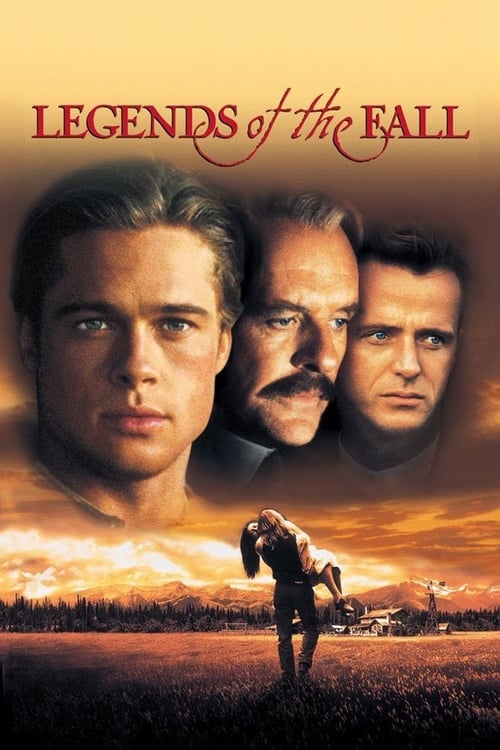
Legends of the Fall (1994)
Directed by Edward Zwick
No — Legends of the Fall is not woke, scoring 9 out of 100 on our wokeness meter.
Edward Zwick's Legends of the Fall arrives from 1994, a year when a film could still spend three hours on a Montana ranch and call the result an epic.
Consciousness Markers
The story acknowledges U.S. government betrayals of Native Americans and includes interracial relationships, but treats these as historical backdrop rather than a modern racial-justice lecture.
The film includes Native American actors in supporting roles such as One Stab and Pet, but they function as natural period characters rather than a modern representation-casting statement.
Tristan's postwar trauma and grief are depicted, but they are not framed through a modern neurodivergence lens.
The film is melodramatic rather than preachy; any moral themes are embedded in the story rather than delivered as a lecture.
No LGBTQ+ themes or characters are present.
The female lead is primarily defined by her romantic attachments; no feminist agenda or critique is present.
No environmental or climate-crusade themes are present.
No eat-the-rich or anti-capitalist critique is present.
No body-positivity themes or messaging are present.
The film is a fictional family saga based on a novella and does not engage in historical revisionism.
Why it received this score
Edward Zwick's Legends of the Fall arrives from 1994, a year when a film could still spend three hours on a Montana ranch and call the result an epic. It won an Academy Award for cinematography, which is fair, since John Toll's camera performs most of the emotional labor while the script busies itself with scalpings, a heart cut from a dead brother, and a great deal of weeping near grave sites. The picture is handsome, sprawling, and about as socially conscious as a taxidermied elk.
Native characters populate the story throughout: One Stab, Pet, Isabel Two. Gordon Tootoosis, Tantoo Cardinal and Karina Lombard play them with dignity, and they function as period furniture, present because the frontier had them, not because the film has anything to say about them. Colonel Ludlow's disgust with the government's treatment of Native peoples is stated once and then folded neatly into the scenery. Tristan's postwar trauma receives the same handling. His grief is real and it is loud, but the film frames it as romantic torment, the sort that photographs well in a wheat field at dusk, not as anything we would now recognize as a clinical condition. There is no sermonizing here. The film prefers to brood.
Elsewhere the ledger is bare. Susannah is defined entirely by which brother she is waiting for. The bootlegging subplot glances at Prohibition without ever glancing at the money. Nobody questions their body, the climate, or the moral architecture of the American West. What remains is a melodrama of handsome men, tragic women, and a bear that appears at the end to settle accounts. It is not a film with a message. It is a film with a soundtrack.
Analysis generated by our Consciousness Algorithm


Synopsis
In early 20th-century Montana, Col. William Ludlow lives on a ranch in the wilderness with his sons, Alfred, Tristan, and Samuel. Eventually, the unconventional but close-knit family are bound by loyalty, tested by war, and torn apart by love, as told over the course of several decades in this epic saga.
Questions about Legends of the Fall
Is Legends of the Fall woke?
No — Legends of the Fall is not woke, scoring 9 out of 100 on our wokeness meter. That earns it a verdict of Ultra Based.
Does Legends of the Fall have any woke elements?
Very few. None of the 10 markers reaches 30, the level where a marker counts as present; the highest is Racial Consciousness at 25.
How does Legends of the Fall compare to other 1994 movies?
It ranks #25 of the 86 films from 1994 we've scored; their average is 10. The wokest is On Deadly Ground (75).
How is the Woke Score calculated?
An AI-assisted process researches the film and its reception, scores it 0–100 on ten markers, then combines those into one 0–100 Woke Score. It measures a specific set of 2020s cultural themes, not film quality.