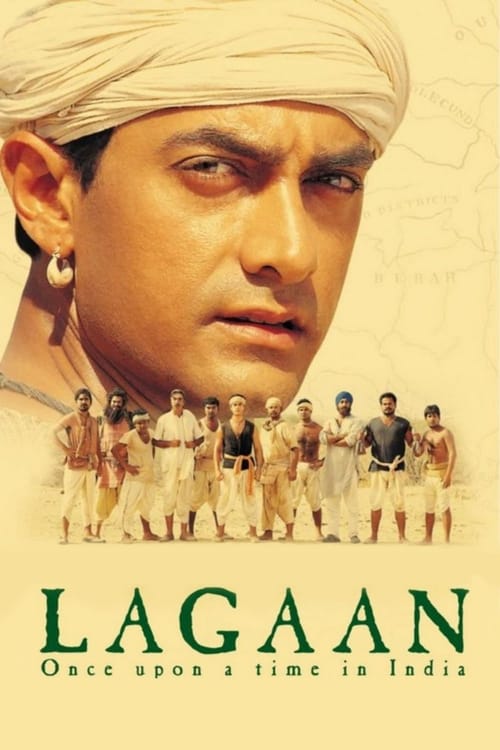
Lagaan: Once Upon a Time in India (2001)
Directed by Ashutosh Gowariker
Partly — Lagaan: Once Upon a Time in India is somewhat woke, scoring 43 out of 100 on our wokeness meter.
Lagaan arrives as a sturdy, sunbaked sports drama from 2001, and it knows how to make a crowd roar.
Consciousness Markers
The film is centrally concerned with British colonial oppression and includes a subplot about caste discrimination against the untouchable Kachra, making racial and colonial consciousness a major theme.
The ensemble includes a low-caste untouchable, a Sikh ex-sepoy, a mute drummer, and other villagers, giving representation to marginalized groups within the Indian social hierarchy.
The story critiques colonial taxation and exploitation, but its target is British imperialism rather than capitalism or wealth inequality as such.
The film delivers patriotic and anti-colonial speeches, but they are woven into a mainstream sports-drama narrative rather than functioning as a sustained lecture.
Elizabeth defies her brother and covertly coaches the village team, showing some agency, but the film's female characters remain largely defined by romantic roles and the narrative does not advance a feminist agenda.
There are no LGBTQ+ characters, relationships, or themes in the film.
A drought serves as a plot device to heighten the villagers' desperation, but the film contains no environmental or climate-change message.
There is no engagement with body positivity or body-image themes.
Bagha is mute, but his condition is not framed as neurodivergence or used to explore neurodiversity themes.
The film is a fictional sports drama set during the British Raj and does not attempt to revise or reinterpret documented historical events.
Why it received this score
Lagaan arrives as a sturdy, sunbaked sports drama from 2001, and it knows how to make a crowd roar. A sadistic British officer wagers land tax on a cricket match, forcing a village to learn an alien game. The film's social conscience targets imperial arrogance and caste hierarchy. Kachra, an untouchable, becomes a bowling hero. A Sikh ex-sepoy, a mute drummer, and other villagers fill out the eleven. That ensemble gives space to marginalized figures within the Indian social order, though their differences mostly fuel the underdog machine. There is no LGBTQ content, no body-image inquiry, and no framing of the mute drummer as neurodivergent. A drought is a plot device, not an environmental plea.
The feminist current is modest. Elizabeth, the officer's sister, defies her brother and secretly coaches the team, which grants her agency and moral courage. Her reward is unrequited love. The film's economic anger is aimed at colonial taxation, not at capital itself. Racial and colonial consciousness is the main event. The caste subplot gives the victory a sharper social edge. The speeches are patriotic and anti-colonial, but they sit inside a mainstream sports narrative. The sermonizing comes in bursts, never as a full lecture.
Lagaan does not rewrite documented history. It invents a miraculous match and then admits the event vanished from the record. It champions the underdog, condemns colonial cruelty, and asks its audience to cheer for teamwork. It does not interrogate identity in the modern sense, nor does it offer a program for social transformation beyond winning the game. The film's heart is generous, its politics are broad, and its sense of justice is as tidy as a final-over six. We are left with a grand folk epic that earns its tears and cheers, even if its cultural awareness remains rooted in an older anti-imperial tradition. The drought breaks, the tax is canceled, and the empire takes a black eye.
Analysis generated by our Consciousness Algorithm


Synopsis
The year is 1893 and India is under British occupation. In a small village, the tyrannical Captain Russell has imposed an unprecedented land tax on its citizens. Outraged, Bhuvan, a rebellious farmer, rallies the villagers to publicly oppose the tax. Russell offers a novel way to settle the dispute: he challenges Bhuvan and his men to a game of cricket, a sport completely foreign to India. If Bhuvan and his men can defeat Russell's team, the tax will be repealed.
Questions about Lagaan: Once Upon a Time in India
Is Lagaan: Once Upon a Time in India woke?
Partly — Lagaan: Once Upon a Time in India is somewhat woke, scoring 43 out of 100 on our wokeness meter. That earns it a verdict of Woke-Adjacent.
What makes Lagaan: Once Upon a Time in India woke?
4 of the 10 markers register at 30 or above, led by Racial Consciousness (70), Representation Casting (55) and Eat the Rich (35). On Racial Consciousness: The film is centrally concerned with British colonial oppression and includes a subplot about caste discrimination against the untouchable Kachra, making racial and colonial consciousness a major theme.
How does Lagaan: Once Upon a Time in India compare to other 2001 movies?
It ranks #9 of the 148 films from 2001 we've scored; their average is 12. The wokest is Monster's Ball (60).
How is the Woke Score calculated?
An AI-assisted process researches the film and its reception, scores it 0–100 on ten markers, then combines those into one 0–100 Woke Score. It measures a specific set of 2020s cultural themes, not film quality.