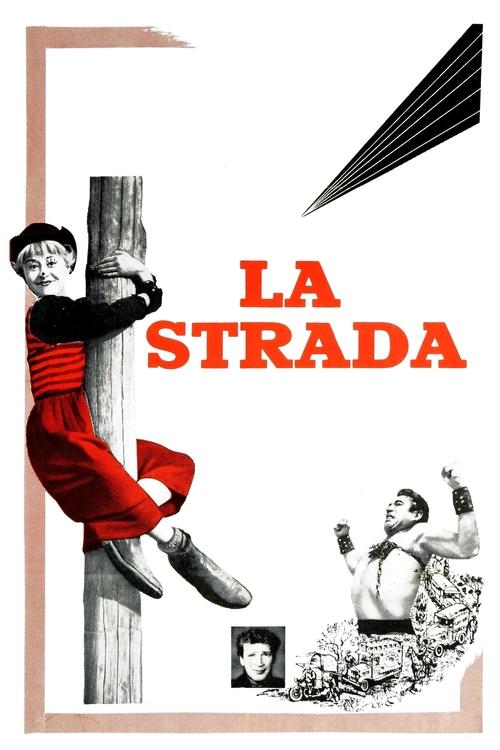
La Strada (1954)
Directed by Federico Fellini
No — La Strada is not woke, scoring 4 out of 100 on our wokeness meter.
La Strada arrives from 1954, a road tragedy in black and white, and it carries almost none of the cultural freight we now expect to find in a serious film.
Consciousness Markers
Gelsomina is written and played as naive and 'simple-minded,' and her antic, childlike inner world is treated with dignity and tenderness, but this is a 1950s conception of innocence rather than a modern framing of neurodivergence as identity.
Il Matto's philosophy that everything has a purpose, 'even a pebble,' and the nun's quiet parallel carry a faint didactic charge, but the film shows rather than preaches and never lectures the audience.
Gelsomina is a female protagonist whose suffering under a brutish man is rendered with compassion, but the film offers no feminist critique or consciousness of gendered oppression as a theme; her endurance is presented as tragic fate, not political statement.
The opening transaction in which Gelsomina is bought for 10,000 lire signals the destitution and commodification of the poor, but this is existential tragedy rather than a systemic indictment of capitalism or class warfare.
The cast is drawn almost entirely from the Italian film industry of the period, with Anthony Quinn the lone American import. No casting choices reflect modern representational intent.
No LGBTQ+ characters, themes, or subtext of any kind appear in this 1954 road tragedy.
The story unfolds in a homogeneous postwar Italian milieu with no exploration of race or racial dynamics whatsoever.
No environmental themes or concerns are present in this itinerant circus narrative.
No engagement with body image, size, or physical self-acceptance as a theme.
The film makes no revisionist claims about historical events or figures; it is a wholly fictional fable.
Why it received this score
La Strada arrives from 1954, a road tragedy in black and white, and it carries almost none of the cultural freight we now expect to find in a serious film. The cast is drawn from the Italian industry of the moment, with Anthony Quinn the lone American import, and nobody involved appears to have been thinking about representation as a project. The story is a fable, invented wholesale, so there is no history to revise and no real events to reinterpret. Gelsomina is bought from her mother for ten thousand lire and taken on the road by a strongman who breaks chains for coins. This is destitution rendered as fate, not an argument about systems. The transaction stings because it is sad, not because it is a thesis.
There is compassion here for Gelsomina, and she is the film's center, but her endurance is presented as tragedy, not grievance. She suffers under a brutish man, and the camera loves her for it, which is not the same as a critique of the arrangement. Her naivety and her antic inner life are treated with real tenderness, though the conception of her simplicity belongs to the 1950s, a vision of innocence instead of an identity to be named and defended. The nun she meets suggests a shared purpose in suffering, and Il Matto offers his philosophy that everything has a purpose, even a pebble, even her. This is the closest the film comes to preaching. It stays quiet about it. Fellini shows the pebble. He does not stand beside it and explain the pebble to us.
What we are left with is a melancholy fable about two people who stay together although it will be fatal, and who do not know why. It is a catalogue of a director's private mythology, and it goes about its business without instruction. The road is long, the trumpet plays the same tune, and nobody learns anything useful. We have classified it. We move on.
Analysis generated by our Consciousness Algorithm


Synopsis
When Gelsomina, a naïve young woman, is purchased from her impoverished mother by brutish circus strongman Zampanò to be his wife and partner, she loyally endures her husband's coldness and abuse as they travel the Italian countryside performing together. Soon Zampanò must deal with his jealousy and conflicted feelings about Gelsomina when she finds a kindred spirit in Il Matto, the carefree circus fool, and contemplates leaving Zampanò.
Questions about La Strada
Is La Strada woke?
No — La Strada is not woke, scoring 4 out of 100 on our wokeness meter. That earns it a verdict of Ultra Based.
Does La Strada have any woke elements?
Very few. None of the 10 markers reaches 30, the level where a marker counts as present; the highest is Neurodivergence at 10.
How does La Strada compare to other 1954 movies?
It ranks #5 of the 14 films from 1954 we've scored; their average is 4. The wokest is Seven Brides for Seven Brothers (12).
How is the Woke Score calculated?
An AI-assisted process researches the film and its reception, scores it 0–100 on ten markers, then combines those into one 0–100 Woke Score. It measures a specific set of 2020s cultural themes, not film quality.