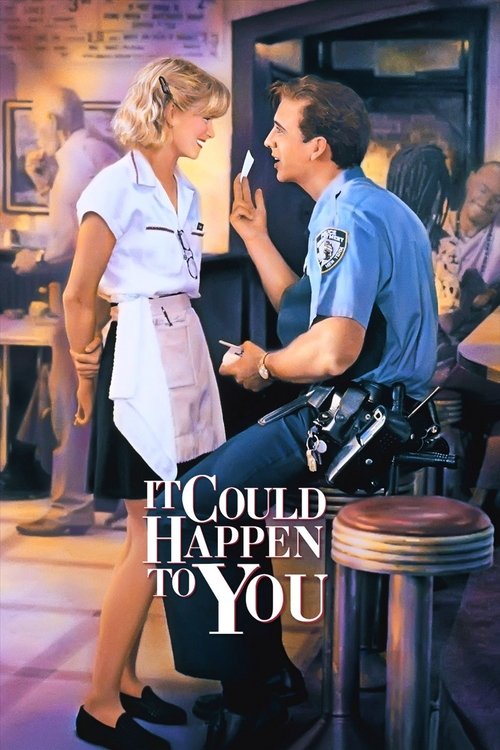
It Could Happen to You (1994)
Directed by Andrew Bergman
No — It Could Happen to You is not woke, scoring 10 out of 100 on our wokeness meter.
It Could Happen to You arrives from 1994, a year when a New York cop could offer half a lottery ticket in place of a tip and the culture treated this as a charming premise.
Consciousness Markers
The cast includes Black and Latino performers (Wendell Pierce, Isaac Hayes, Rosie Perez, Víctor Rojas) in natural supporting roles, but their presence is unremarked upon and reflects ordinary 1990s ensemble casting rather than a deliberate representation agenda.
The film contrasts individual greed (Muriel, the con-artist Jack Gross) with personal generosity, and includes a free-meal table for the hungry, but it frames this as private virtue rather than a systemic critique of capitalism.
The film carries a gentle moral about kindness and keeping one's word, but it delivers this through plot and character rather than preachy sermonizing.
The film's women are largely defined by greed (Muriel) or romantic devotion (Yvonne); if anything, the materialistic wife is a cautionary caricature rather than a feminist statement.
There are no LGBTQ+ characters, themes, or subtext anywhere in the film.
Race is never a subject of the film; the story is a colorblind romantic fable about generosity with no racial consciousness whatsoever.
No environmental or climate themes appear in the film.
No body-positivity themes or messaging are present.
No neurodivergent characters or themes are depicted.
The film is loosely inspired by a real 1984 lottery story but makes no attempt to revise or reinterpret history; it is a fictional romance built on a true premise.
Why it received this score
It Could Happen to You arrives from 1994, a year when a New York cop could offer half a lottery ticket in place of a tip and the culture treated this as a charming premise. Andrew Bergman directs the material with a soft glow, letting Nicolas Cage and Bridget Fonda perform decency as a low-key virtue. The film has a multiracial supporting cast, including Wendell Pierce, Isaac Hayes, Rosie Perez, and Víctor Rojas, and it never pauses to congratulate itself for that fact. Race is simply not the subject. The story remains a colorblind romantic fable, which is either a limitation or a relief depending on your patience for identity as plot device.
The moral engine is generosity, and the film contrasts it with greed. Muriel, the wife, is a cartoon of acquisitive vanity, while Yvonne is defined by romantic devotion and a charitable table for the hungry. This is private virtue, not a systemic critique. The film does not argue that capitalism is broken. It argues that some individuals are nice and others are not. There are no LGBTQ characters or themes, no climate concerns, no body-positivity messaging, and no neurodivergent representation. The women are not offered a feminist program. If anything, the materialistic wife functions as a cautionary caricature, punished by a con artist and sent back to the Bronx.
The film is inspired by a real 1984 lottery story, but it makes no attempt to revise history. It invents a romance around the premise and lets the facts sit in the credits. Its sermonizing is mild. Kindness matters, keep your word, and do not marry someone who will sue you for lottery money. The film delivers this through plot and character, not lectures. The result is a gentle, dated confection with a modest social conscience and almost no interest in the cultural battles that would later consume the discourse. It wants to be liked, and it mostly succeeds. In the taxonomy of contemporary virtue signaling, this is a museum piece: pleasant, harmless, and entirely of its time.
Analysis generated by our Consciousness Algorithm


Synopsis
Charlie Lang is a simple, kindhearted New York City cop. When he realizes he has no money to tip waitress Yvonne Biasi, Lang offers her half the winnings of his lottery ticket. Amazingly, the ticket happens to be a winner, in the sum of $4 million. True to his word, Lang proceeds to share the prize money with Biasi, which infuriates his greedy wife, Muriel. Not content with the arrangement, Muriel begins scheming to take all the money.
Questions about It Could Happen to You
Is It Could Happen to You woke?
No — It Could Happen to You is not woke, scoring 10 out of 100 on our wokeness meter. That earns it a verdict of Ultra Based.
Does It Could Happen to You have any woke elements?
Very few. None of the 10 markers reaches 30, the level where a marker counts as present; the highest is Representation Casting at 22.
How does It Could Happen to You compare to other 1994 movies?
It ranks #22 of the 86 films from 1994 we've scored; their average is 10. The wokest is On Deadly Ground (75).
How is the Woke Score calculated?
An AI-assisted process researches the film and its reception, scores it 0–100 on ten markers, then combines those into one 0–100 Woke Score. It measures a specific set of 2020s cultural themes, not film quality.