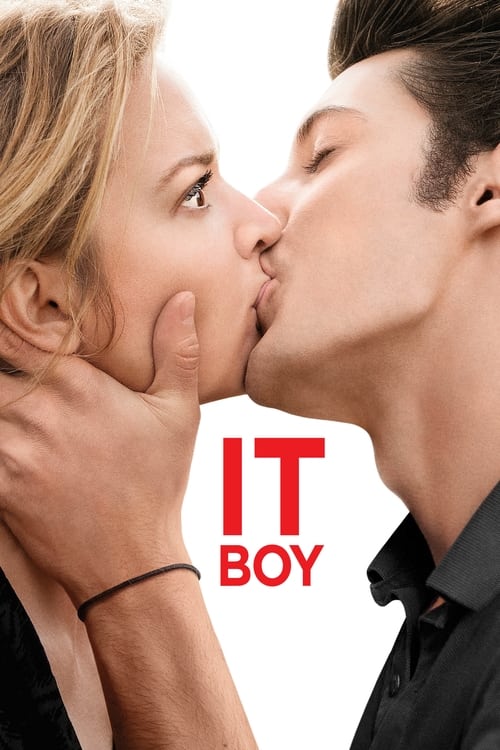
It Boy (2013)
Directed by David Moreau
No — It Boy is not woke, scoring 8 out of 100 on our wokeness meter.
It Boy, known in its native France as 20 ans d'écart, is a 2013 romantic comedy about a 38-year-old magazine editor who feigns a relationship with a 20-year-old to improve her professional image.
Consciousness Markers
The premise of a 38-year-old woman chasing a magazine editorship and romancing a man twenty years her junior mildly inverts the standard age-gap trope, but the film treats it as farce rather than a feminist statement.
A largely white French ensemble with a few actors of North African descent in minor roles; casting is unremarkable and carries no representational commentary.
A light French rom-com that preaches nothing; any messaging is incidental to the gags.
No LGBTQ+ characters, themes, or subtext appear anywhere in this heterosexual workplace romance.
Race is never a subject, theme, or point of commentary in the film.
No environmental themes or content of any kind.
The fashion-magazine setting is played for glamour and office comedy, with no critique of wealth or capitalism.
No body-positivity themes; the magazine world's beauty standards go unexamined.
No neurodivergent characters or themes.
A contemporary romantic comedy with no historical subject matter to revise.
Why it received this score
It Boy, known in its native France as 20 ans d'écart, is a 2013 romantic comedy about a 38-year-old magazine editor who feigns a relationship with a 20-year-old to improve her professional image. It is a film of modest ambitions and even more modest cultural reach. The director, David Moreau, has assembled a competent cast led by Virginie Efira and Pierre Niney, and the result is a pleasant, forgettable diversion that asks nothing of its audience beyond a willingness to tolerate contrivance.
On the various indices of contemporary social consciousness, the film is a barren landscape. Racial themes are absent. Environmental concerns do not intrude. The fashion-magazine setting, which might in other hands invite a critique of wealth or beauty standards, is instead played for glamour and light office comedy. There is no LGBTQ+ representation, no neurodivergent character, no historical revisionism. The casting is predominantly white, with a few North African actors in minor roles, but the film makes no comment on this. The only faint stirrings of progressive sensibility come from the central premise: a woman in her late thirties pursuing both a promotion and a younger man. This mildly inverts the standard age-gap dynamic, but the film treats it as farce, not as a statement. The lecture energy is minimal; the film preaches nothing.
We are left with a French romantic comedy that does exactly what it says on the tin. It is not offensive, nor is it enlightening. It exists in a cultural vacuum, untouched by the debates of its time. For those who track such things, it is a zero on almost every axis, with only the faintest blip of gender inversion to note. A sommelier of social messaging would find this vintage thin, almost water. But as a harmless diversion, it serves its purpose. It Boy is a film that will not change your mind about anything, which may be its only distinguishing feature.
Analysis generated by our Consciousness Algorithm
Synopsis
38-year-old Alice has everything to become the next editor-in-chief of Rebelle magazine except for her uptight image. But when the young and charming Balthazar, barely 20, crosses Alice's path, she realizes that he holds the key to her promotion.
Questions about It Boy
Is It Boy woke?
No — It Boy is not woke, scoring 8 out of 100 on our wokeness meter. That earns it a verdict of Ultra Based.
Does It Boy have any woke elements?
Very few. None of the 10 markers reaches 30, the level where a marker counts as present; the highest is Feminist Agenda at 22.
How does It Boy compare to other 2013 movies?
It ranks #137 of the 274 films from 2013 we've scored; their average is 14. The wokest is Belle (76).
How is the Woke Score calculated?
An AI-assisted process researches the film and its reception, scores it 0–100 on ten markers, then combines those into one 0–100 Woke Score. It measures a specific set of 2020s cultural themes, not film quality.