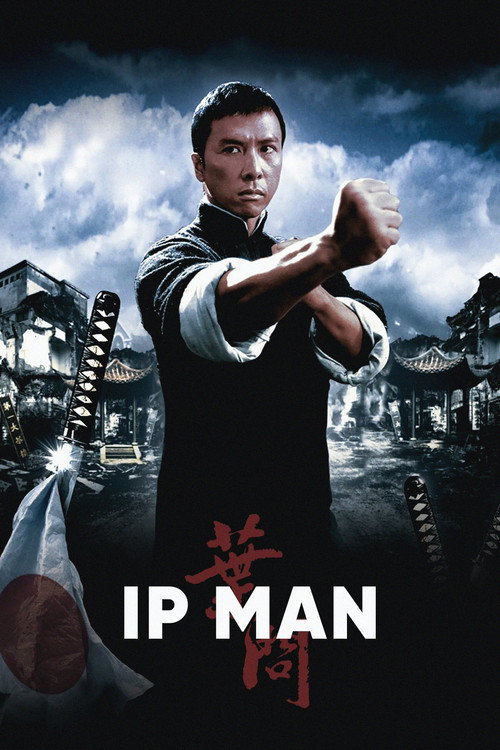
Ip Man (2008)
Directed by Wilson Yip
No — Ip Man is not woke, scoring 0 out of 100 on our wokeness meter.
Hong Kong, 2008.
Consciousness Markers
There is some patriotic sermonizing about Chinese dignity and resisting the occupiers, but it is nationalist rather than woke-lecture material.
The predominantly Chinese cast is natural to a Hong Kong/Chinese production about a Chinese martial-arts figure, not a deliberate representation-casting statement.
No LGBTQ+ characters, themes, or subtext are present.
Women appear mainly in traditional wife/mother roles; the film does not advance a feminist agenda.
The Chinese-versus-Japanese conflict is a historical nationalist/occupation narrative, not modern racial-justice consciousness.
No environmental or climate themes.
Wartime poverty and Japanese exploitation appear, but there is no anti-capitalist or eat-the-rich thesis.
No body-positivity themes or messaging.
No neurodivergence themes or characters.
It is a semi-biographical dramatization, but it does not reinterpret history through a modern ideological lens.
Why it received this score
Hong Kong, 2008. Wilson Yip assembles Donnie Yen, Sammo Hung, and a reconstructed cotton mill, and the result is a martial arts picture of unusual restraint. The camera respects the choreography, the pacing respects the audience, and nobody halts the narrative to explain what we ought to feel. Ip Man is a semi-biographical account of the Wing Chun grandmaster in Foshan across the 1930s and the Japanese occupation, and it carries itself like a period drama that happens to contain some of the finest screen combat of its decade.
The cultural inventory here is thin, and the thinness is honest. The predominantly Chinese cast reflects a Chinese production about a Chinese figure, not a casting statement. Women occupy the wife and mother positions and are handed no thesis to advance. The Chinese-versus-Japanese conflict is an occupation narrative, rooted in a specific historical grievance, and it makes no appeal to contemporary racial-justice vocabulary. Wartime poverty and a collaborator's shame are dramatized without any argument about capital. There is no environmental parable, no body-positive messaging, no neurodivergent character, no whisper of same-sex subtext. The film dramatizes a life. It does not reinterpret the past to flatter the present.
What remains is a low hum of patriotic sermonizing. General Miura wants to crush the Chinese spirit, Ip refuses to train the occupiers, and the crowd rises. The sentiment is nationalist and period-appropriate, which keeps it well clear of the modern progressive register. It is a film about dignity, rice, and fists. We classify it accordingly, and we do so without complaint.
Analysis generated by our Consciousness Algorithm
Part of


Synopsis
A semi-biographical account of Yip Man, the first martial arts master to teach the Chinese martial art of Wing Chun. The film focuses on events surrounding Ip that took place in the city of Foshan between the 1930s to 1940s during the Second Sino-Japanese War. Directed by Wilson Yip, the film stars Donnie Yen in the lead role, and features fight choreography by Sammo Hung.
Questions about Ip Man
Is Ip Man woke?
No — Ip Man is not woke, scoring 0 out of 100 on our wokeness meter. That earns it a verdict of Ultra Based.
Does Ip Man have any woke elements?
Very few. None of the 10 markers reaches 30, the level where a marker counts as present; the highest is Lecture Energy at 10.
How does Ip Man compare to other 2008 movies?
It ranks #175 of the 212 films from 2008 we've scored; their average is 12. The wokest is Milk (68).
Is Ip Man the most woke Ip Man movie?
No. It ranks #4 of the 4 Ip Man films we've scored; the wokest is Ip Man 2 (31).