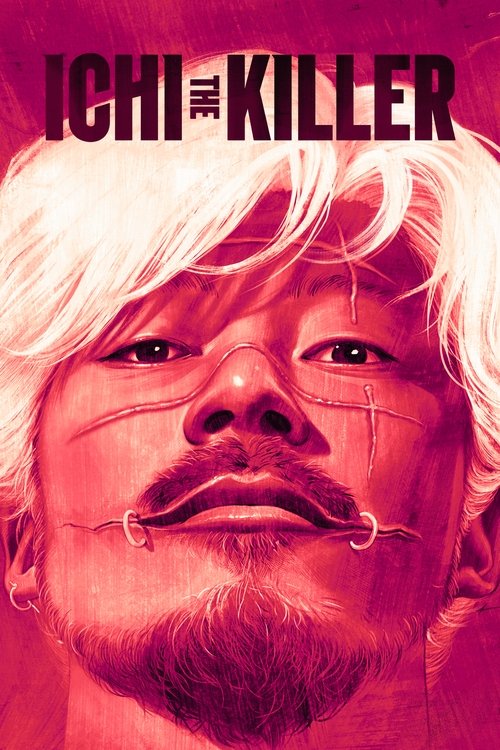
Ichi the Killer (2001)
Directed by Takashi Miike
No — Ichi the Killer is not woke, scoring 0 out of 100 on our wokeness meter.
Takashi Miike's Ichi the Killer arrives from 2001 with a reputation it has done nothing to shed: a yakuza splatter film adapted from Hideo Yamamoto's manga, concerning a psychologically damaged young man manipulated into butchering rival gang members while a sadomasochistic enforcer named Kakihara pursues him with something like devotion.
Consciousness Markers
The cast is entirely Japanese, drawn from the domestic industry with no attempt at diverse or representative casting in the modern sense. Ethnic homogeneity of the production is total.
No LGBTQ+ characters, themes, or subtext. Sadomasochistic dynamics between men are framed as violent pathology, not queer identity or romance.
The film is aggressively misogynistic in content: prostitutes are beaten, raped, and murdered, and the BBFC specifically cited 'scenes of mutilated, raped or savagely beaten women.' This is the opposite of a feminist agenda.
No engagement with racial consciousness or racial justice themes whatsoever; the story is confined to the Japanese yakuza underworld.
No environmental or climate themes present.
The criminal underworld setting is not framed as a critique of capitalism or wealth inequality; the yakuza are depicted as a violent subculture, not as an economic class parable.
No body positivity themes; bodies are sites of mutilation, torture, and gore rather than acceptance or celebration.
Ichi's psychosis and psychological damage are portrayed as monstrous and horrifying, not as an affirming or destigmatizing depiction of neurodivergence. This is exploitation, not advocacy.
No historical revisionism; the film is a contemporary fictional crime narrative with no historical subject matter to revise.
Miike deliberately refuses to moralize or chastise, leaving the audience to draw its own conclusions about violence. The film provokes rather than preaches, so lecture energy is essentially absent.
Why it received this score
Takashi Miike's Ichi the Killer arrives from 2001 with a reputation it has done nothing to shed: a yakuza splatter film adapted from Hideo Yamamoto's manga, concerning a psychologically damaged young man manipulated into butchering rival gang members while a sadomasochistic enforcer named Kakihara pursues him with something like devotion. The cast is entirely Japanese, drawn from the domestic industry, and the story confines itself to the criminal underworld of Kabukicho. There is no broader social canvas here, no argument about who ought to be represented on screen, and no interest in making any.
The film's treatment of women is not incidental to its brutality; it is a structural feature. Prostitutes are beaten, raped and killed, and the British Board of Film Classification cited scenes of mutilated, raped or savagely beaten women when it demanded cuts. Bodies here exist to be pierced, dismembered and displayed. That is the opposite of a celebration of physical self-acceptance. Ichi's psychosis is rendered as monstrosity, not as a condition deserving dignity or accommodation, and the sadomasochistic currents between the men are framed as pathology, never as identity. The yakuza are a violent subculture, not an economic parable about wealth and its discontents. There is no climate anxiety, no racial reckoning, no historical revisionism, because the film has no historical subject to revise.
Miike's refusal to scold is the film's one remaining virtue. He provokes, implicates and withdraws, leaving the audience to sit with what it has watched. Critics have argued this amounts to a sophisticated critique of the violent image itself, delivered without a single line of sermonizing. A sommelier would call this a difficult vintage, aggressively unpalatable and entirely free of the fortifying additives that make modern productions go down smoothly. We score it accordingly.
Analysis generated by our Consciousness Algorithm


Synopsis
As sadomasochistic yakuza enforcer Kakihara searches for his missing boss he comes across Ichi, a repressed and psychotic killer who may be able to inflict levels of pain that Kakihara has only dreamed of.
Questions about Ichi the Killer
Is Ichi the Killer woke?
No — Ichi the Killer is not woke, scoring 0 out of 100 on our wokeness meter. That earns it a verdict of Ultra Based.
Does Ichi the Killer have any woke elements?
No. All 10 markers score zero.
How does Ichi the Killer compare to other 2001 movies?
It ranks #128 of the 148 films from 2001 we've scored; their average is 12. The wokest is Monster's Ball (60).
How is the Woke Score calculated?
An AI-assisted process researches the film and its reception, scores it 0–100 on ten markers, then combines those into one 0–100 Woke Score. It measures a specific set of 2020s cultural themes, not film quality.