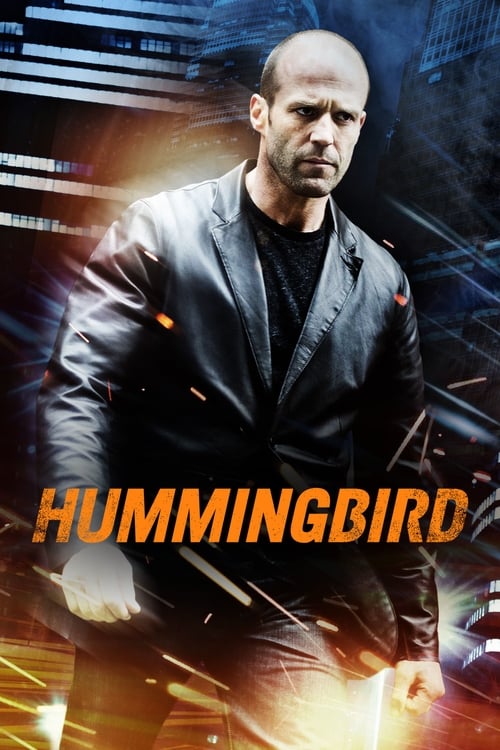
Hummingbird (2013)
Directed by Steven Knight
No — Hummingbird is not woke, scoring 17 out of 100 on our wokeness meter.
Steven Knight's 2013 directorial debut arrives dressed as a Jason Statham action vehicle and mostly behaves like one, which is to say that a damaged ex-special forces veteran wanders London's night streets punching his way toward a private absolution.
Consciousness Markers
The cast includes Benedict Wong, Agata Buzek, and Youssef Kerkour, and the story naturally incorporates a Chinese crime syndicate and a Polish nun, but these are organic to the London underworld setting rather than a deliberate diversity showcase.
The film contrasts homeless Londoners with a wealthy photographer's luxury flat and depicts human trafficking for profit, offering mild class critique, though it never becomes an explicit anti-capitalist polemic.
Joseph suffers from PTSD with hallucinations of hanged men and drones, and the production researched veterans' mental health, giving the film a genuine but non-didactic engagement with psychological trauma.
Sister Cristina has a backstory of childhood sexual abuse and killing her abuser, and Madame Choy wields criminal authority, but the film is a male-driven revenge thriller with no feminist thesis.
Themes of redemption and vengeance are dramatized through action rather than delivered as moral instruction, keeping the film's lecturing to a minimum.
The Chinese mafia and immigrant trafficking subplot touch on marginalized communities, but the film treats these as crime-genre texture rather than engaging racial consciousness as a theme.
Joseph briefly claims to be Damon's boyfriend to deflect neighborly suspicion, but this is a throwaway cover story rather than any genuine LGBTQ+ theme or representation.
There is no environmental or climate-related content in the film.
No body positivity themes or content are present.
The film is a fictional story with no historical revisionism.
Why it received this score
Steven Knight's 2013 directorial debut arrives dressed as a Jason Statham action vehicle and mostly behaves like one, which is to say that a damaged ex-special forces veteran wanders London's night streets punching his way toward a private absolution. Joseph Smith sleeps rough, breaks into an absent photographer's flat, and assumes the man's identity with the casual efficiency of a man who has nothing left to lose. He befriends a Polish nun who runs a soup kitchen, takes work with a Chinese crime syndicate, and hunts the man who killed a homeless friend. The film is grim, nocturnal, and sincere about the wreckage of its protagonist's mind.
The cultural awareness on display is real but modest. Knight casts Benedict Wong, Agata Buzek, and Youssef Kerkour without ceremony, letting the immigrant texture of the London underworld stand on its own. The nun, Sister Cristina, carries a history of childhood abuse and a body she has learned to distrust, and Madame Choy runs her trafficking operation with unquestioned authority. None of this amounts to a thesis. The camera belongs to Statham, and the movie knows it. Where the film does show unexpected care is in its portrait of trauma: the hallucinations of hanged men and hovering drones, the research into veterans' mental health, the refusal to make the suffering tidy or instructive.
Elsewhere the ledger is thin. There is no environmental conscience here, no interest in bodies as sites of affirmation, no renegotiation of the historical record. The class critique stays at the level of a homeless man in a rich man's apartment, which is a contrast, not an argument. The whole enterprise stays watchable because it resists the pulpit. Redemption, vengeance, and guilt are staged as action and silence, and the sermon never arrives. A modest, moody piece, then, with a conscience it declines to lecture us about.
Analysis generated by our Consciousness Algorithm


Synopsis
Homeless and on the run from a military court martial, a damaged ex-special forces soldier navigating London's criminal underworld seizes an opportunity to assume another man's identity, transforming into an avenging angel in the process.
Questions about Hummingbird
Is Hummingbird woke?
No — Hummingbird is not woke, scoring 17 out of 100 on our wokeness meter. That earns it a verdict of Ultra Based.
Does Hummingbird have any woke elements?
1 of the 10 markers register at 30 or above, led by Representation Casting (35). On Representation Casting: The cast includes Benedict Wong, Agata Buzek, and Youssef Kerkour, and the story naturally incorporates a Chinese crime syndicate and a Polish nun, but these are organic to the London underworld setting rather than a deliberate diversity showcase.
How does Hummingbird compare to other 2013 movies?
It ranks #76 of the 274 films from 2013 we've scored; their average is 14. The wokest is Belle (76).
How is the Woke Score calculated?
An AI-assisted process researches the film and its reception, scores it 0–100 on ten markers, then combines those into one 0–100 Woke Score. It measures a specific set of 2020s cultural themes, not film quality.