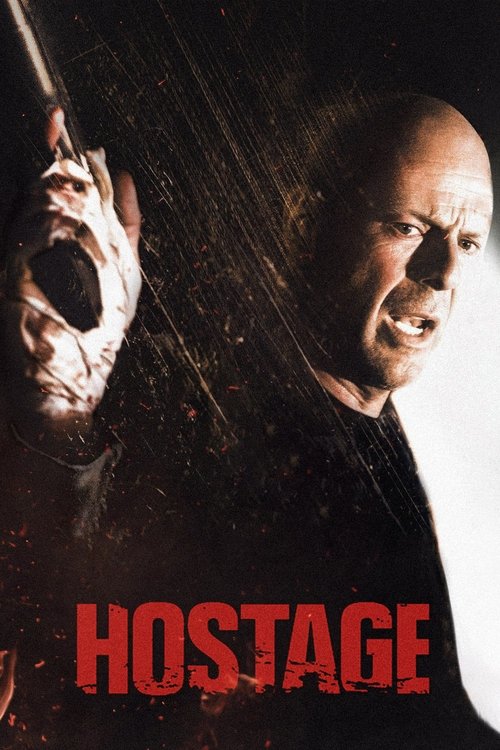
Hostage (2005)
Directed by Florent-Emilio Siri
No — Hostage is not woke, scoring 0 out of 100 on our wokeness meter.
Hostage arrives from 2005, a year in which a studio could still release an action thriller about a guilt-ridden negotiator, three teenage home invaders, and a mysterious syndicate without anyone pausing to ask what it all meant.
Consciousness Markers
The cast is predominantly white and male, with no meaningful representation casting choices or diverse leads.
No LGBTQ+ characters, themes, or subtext appear in the film.
Female characters are largely hostages or family members in peril; the film does not advance a feminist agenda.
The film contains no racial consciousness themes or commentary on race relations.
There is no environmental or climate-related message in the story.
The villains are criminals and a money-laundering accountant, but the film does not critique capitalism or wealth inequality.
No body positivity themes or diverse body representations are present.
The antagonist is portrayed as a psychopathic killer, not as a neurodivergent character in a modern representational sense.
The film is a straightforward adaptation of a crime novel and does not revise or reinterpret historical events.
The film is an action thriller with no preachy or lecture-like messaging.
Why it received this score
Hostage arrives from 2005, a year in which a studio could still release an action thriller about a guilt-ridden negotiator, three teenage home invaders, and a mysterious syndicate without anyone pausing to ask what it all meant. Bruce Willis plays Jeff Talley, a former Los Angeles negotiator haunted by a standoff that ended with three bodies. He relocates to a quiet Ventura County town, where a botched robbery promptly deposits him back into the same nightmare. Florent Siri directs with the grim efficiency of a man who has studied his genre closely and intends to honor its customs.
The film's cultural ledger is remarkably clean. Its cast is white and male in the manner of its era, with female characters confined to hostage and family roles. There is no racial commentary, no environmental anxiety, no critique of the wealthy accountant whose money laundering funds the whole mess. The villain, Mars, is a psychopath of the traditional kind, a young man who kills his accomplices and immolates himself for the camera. We are not asked to understand him, only to fear him. No sermon follows the violence. No lesson is extracted from the wreckage.
This is not a failing. It is a classification. Hostage does the work of a mid-budget thriller competently, earns its money, and disappears into the home video market where it apparently thrived. It offers no argument about how we ought to live. It simply locks a family in a panic room and lets the sprinklers do their work. There is something almost restful in a film so thoroughly unconcerned with improving its audience.
Analysis generated by our Consciousness Algorithm


Synopsis
When a mafia accountant is taken hostage on his beat, a police officer – wracked by guilt from a prior stint as a negotiator – must negotiate the standoff, even as his own family is held captive by the mob.
Questions about Hostage
Is Hostage woke?
No — Hostage is not woke, scoring 0 out of 100 on our wokeness meter. That earns it a verdict of Ultra Based.
Does Hostage have any woke elements?
No. All 10 markers score zero.
How does Hostage compare to other 2005 movies?
It ranks #160 of the 181 films from 2005 we've scored; their average is 13. The wokest is The Constant Gardener (72).
How is the Woke Score calculated?
An AI-assisted process researches the film and its reception, scores it 0–100 on ten markers, then combines those into one 0–100 Woke Score. It measures a specific set of 2020s cultural themes, not film quality.