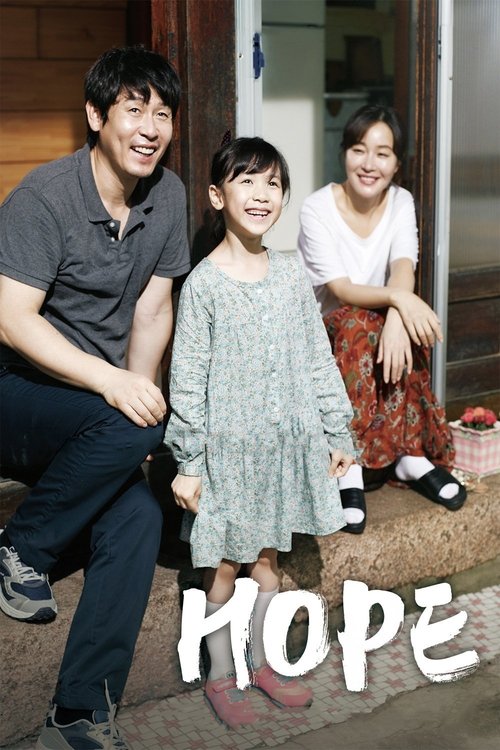
Hope (2013)
Directed by Lee Joon-ik
No — Hope is not woke, scoring 0 out of 100 on our wokeness meter.
Hope is a powerful, if somewhat exhausting, exercise in domestic tragedy.
Consciousness Markers
The film carries a gentle social message about the justice system's failures and the importance of community support for victims, but it delivers this through heartfelt drama rather than preachy lecturing.
The cast is entirely Korean, which is the natural and appropriate choice for a Korean-language film based on a Korean true story. There is no deliberate diverse or color-conscious casting agenda at play.
There are no LGBTQ+ characters, themes, or subtext anywhere in the film.
While the story centers on a young female victim and her mother, it is a humanist family drama about healing and grief, not a vehicle for feminist messaging or gender-justice commentary.
The film contains no racial themes, commentary, or consciousness. It is a domestic Korean story with no engagement with racial politics.
There is no environmental or climate-related content in the film whatsoever.
The film critiques the leniency of the justice system and the intrusiveness of the media, but it does not frame these as capitalist exploitation or advance an eat-the-rich narrative.
The protagonist's colostomy bag and physical injuries are treated as medical trauma to be endured and healed, not as a body-positivity or body-acceptance statement.
The film depicts PTSD and psychological trauma in a realistic clinical manner, but it does not frame this as neurodivergence or neurodiversity advocacy.
The film is a faithful dramatization of the real Cho Doo-soon case rather than a revisionist reframing of history. It does not reinterpret events to serve an ideological narrative.
Why it received this score
Hope is a powerful, if somewhat exhausting, exercise in domestic tragedy. It is a South Korean story that has received the requisite accolades, confirming its status as a notable piece of cinema. We view it not as a progressive cultural statement, but as a somber family chronicle. The narrative grounds itself entirely in the lived experience of a survivor and her immediate circle, a choice that limits its reach beyond the scope of localized social concern. The film provides a deeply moving look at recovery, grief, and the systemic failure of the justice apparatus, but it does so without deploying any of the more specific cultural markers that define modern progressive sensibilities.
Its focus remains squarely on healing and the difficult path to resuming a normal life. We see the complexities of family support and the heavy burden of trauma, but the story refuses to engage with broader, systemic issues concerning gender justice or marginalized identities. The characters exist within a traditional framework of familial devotion, and the film avoids the contemporary need to foreground intersectional politics. It is a heartfelt drama, which means it is decidedly unfashionable in this particular cultural landscape.
However, the film manages to deliver its message with a clear sense of purpose. It makes its case regarding the state of public policy and institutional empathy. The social message is present, a measured call for community intervention when the legal system falters. Yet, this critique arrives through the lens of earnest drama rather than through direct ideological instruction. It is a measured approach to heavy material, allowing the emotional weight of the plot to carry the film instead of relying on explicit thematic declarations.
Analysis generated by our Consciousness Algorithm

Synopsis
After 8-year-old So-won narrowly survives a brutal sexual assault, her family labors to help her heal while coping with their own rage and grief.
Questions about Hope
Is Hope woke?
No — Hope is not woke, scoring 0 out of 100 on our wokeness meter. That earns it a verdict of Ultra Based.
Does Hope have any woke elements?
Very few. None of the 10 markers reaches 30, the level where a marker counts as present; the highest is Lecture Energy at 10.
How does Hope compare to other 2013 movies?
It ranks #249 of the 274 films from 2013 we've scored; their average is 14. The wokest is Belle (76).
How is the Woke Score calculated?
An AI-assisted process researches the film and its reception, scores it 0–100 on ten markers, then combines those into one 0–100 Woke Score. It measures a specific set of 2020s cultural themes, not film quality.