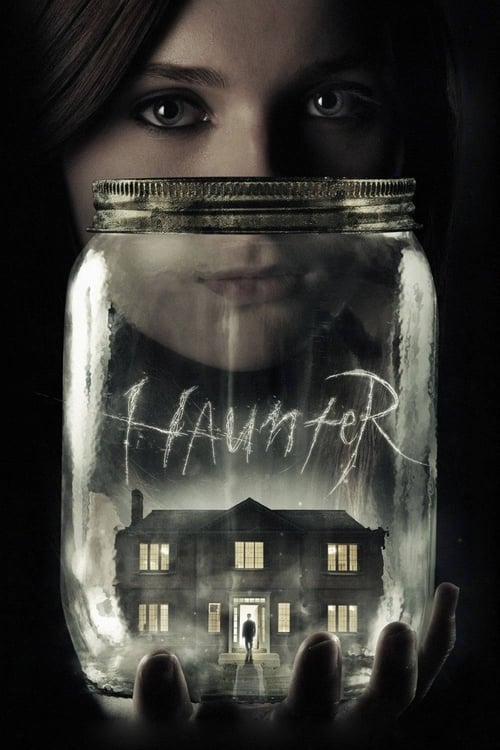
Haunter (2013)
Directed by Vincenzo Natali
No — Haunter is not woke, scoring 11 out of 100 on our wokeness meter.
Haunter is a 2013 Canadian supernatural horror film from director Vincenzo Natali, starring Abigail Breslin as Lisa Johnson, a teenager trapped in a 1985 time loop with her family.
Consciousness Markers
A teenage girl drives the narrative, outwits a male serial killer, and rallies the spirits of his female victims to defeat him — a modest girl-powered YA framing, though it is never explicitly ideological.
The cast is overwhelmingly white, with Abigail Breslin as the lead; there is no meaningful diverse or non-traditional casting to speak of.
The film is a genre mystery that tells its story rather than preaching; any thematic content is delivered through plot, not sermon.
No LGBTQ+ characters, themes, or subtext appear anywhere in the film.
The film engages no racial themes or commentary whatsoever.
No environmental or climate content is present.
There is no economic critique or class commentary in the story.
The film makes no statements about body image or size acceptance.
No neurodivergent characters or themes are depicted.
The film is a fictional ghost story with no historical revisionism.
Why it received this score
Haunter is a 2013 Canadian supernatural horror film from director Vincenzo Natali, starring Abigail Breslin as Lisa Johnson, a teenager trapped in a 1985 time loop with her family. They are dead and do not know it. A pale serial killer, Edgar Mullins, possesses the fathers of subsequent families in the same house, and Lisa must reach across timelines to stop him. The premise is clever enough, the budget is thin, and the result is a modest genre curio that never pretends to be more than a ghost story with rules.
The film's social consciousness is faint. The cast is overwhelmingly white, with Breslin at the center and no meaningful diverse or nontraditional casting to report. There are no LGBTQ themes, no racial commentary, no climate concerns, no economic critique, no body-positive messaging, no neurodivergent characters, and no revisionist history. The only mild point of interest is gender. Lisa is a teenage girl who outwits a male killer and summons his female victims to help destroy him. That gives the film a girl-powered YA shape, but it never becomes an explicit ideological project. The story uses her gender as narrative fuel, not as a sermon.
Lecture energy is nearly absent. Haunter tells its mystery through haunted-house mechanics, duct tape, and ghostly possession. It does not pause to educate the viewer or address the audience directly. In the current cultural taxonomy, this is a quiet artifact from a time when a horror film could be about ghosts, grief, and a furnace without also being a curriculum. It is not a landmark. It is a competent, low-budget exercise with a few clever turns and almost no interest in the culture wars. For those keeping score at home, the needle barely moves.
Analysis generated by our Consciousness Algorithm


Synopsis
A teenager is stuck in a time loop that is not quite the same each time. She must uncover the truth but her actions have consequences for herself and others.
Questions about Haunter
Is Haunter woke?
No — Haunter is not woke, scoring 11 out of 100 on our wokeness meter. That earns it a verdict of Ultra Based.
Does Haunter have any woke elements?
1 of the 10 markers register at 30 or above, led by Feminist Agenda (30). On Feminist Agenda: A teenage girl drives the narrative, outwits a male serial killer, and rallies the spirits of his female victims to defeat him — a modest girl-powered YA framing, though it is never explicitly ideological.
How does Haunter compare to other 2013 movies?
It ranks #111 of the 274 films from 2013 we've scored; their average is 14. The wokest is Belle (76).
How is the Woke Score calculated?
An AI-assisted process researches the film and its reception, scores it 0–100 on ten markers, then combines those into one 0–100 Woke Score. It measures a specific set of 2020s cultural themes, not film quality.