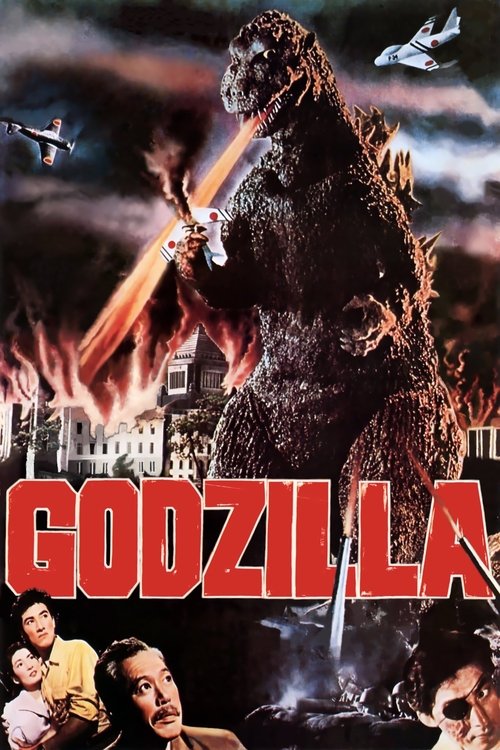
Godzilla (1954)
Directed by Ishirō Honda
No — Godzilla is not woke, scoring 2 out of 100 on our wokeness meter.
Godzilla arrives in 1954 as a document of national grief dressed in rubber and miniature.
Consciousness Markers
The film is full of solemn, earnest debate about nuclear weapons and the scientist's responsibility, but this is 1950s moral seriousness rather than modern preachy messaging.
The cast is entirely Japanese because this is a Japanese production made in Japan for Japanese audiences; this is natural casting, not the deliberate diversity-driven casting the marker describes.
No LGBTQ+ characters, themes, or subtext appear anywhere in the film.
Emiko breaks off an arranged engagement, but this is a conventional 1950s melodramatic subplot rather than any feminist thesis; the film's concerns are nuclear, not gendered.
The film's anti-nuclear anger is aimed at the United States' hydrogen bomb testing, but this is a national trauma allegory, not the modern racial-consciousness framework.
The threat is nuclear radiation, not climate change; no environmental crusade is present.
There is mild hand-wringing about government and military priorities, but no anti-capitalist or eat-the-rich argument.
No body-positivity themes or messaging of any kind.
No neurodivergence themes or characters.
The film is a fictional allegory for the atomic bombings and the Lucky Dragon No. 5 incident, not a revisionist reframing of documented history.
Why it received this score
Godzilla arrives in 1954 as a document of national grief dressed in rubber and miniature. A fishing vessel is destroyed, an island is trampled, and Tokyo is reduced to ash under an atomic breath that any Japanese viewer of the era would recognize immediately. The film's anger is real and it is aimed squarely at hydrogen bomb testing, with the Lucky Dragon No. 5 still fresh in the public memory. This is moral seriousness of an older vintage, born of fire and survivor's guilt, and it carries no interest in the cultural vocabulary that would arrive decades later.
Between the destruction, the film stages earnest debate. Scientists and officials argue about whether to study the creature or kill it. A young woman, Emiko, breaks an arranged engagement for love, a melodramatic complication that occupies its era's conventions without pressing any gendered thesis. The cast is Japanese throughout, as we would expect from a Japanese production made by Japanese filmmakers for a Japanese audience. There is no comment on this. There is no need for any.
The film's solemnity occasionally tips into sermonizing. Characters deliver grave speeches about the responsibility of science and the horror of the bomb, and the closing warning that more monsters may come lingers with the weight of a eulogy. That is the extent of its lecturing, and it belongs to 1954, not to us. The whole enterprise is haunted and mournful, angry and enduring. It is not, however, a product of contemporary progressive messaging, and we should not pretend otherwise. It simply grieves.
Analysis generated by our Consciousness Algorithm


Synopsis
Japan is thrown into a panic after several ships are sunk near Odo Island. An expedition to the island led by Dr. Kyohei Yamane soon discover something far more devastating than imagined in the form of a 50 meter tall monster whom the natives call Gojira. Now the monster begins a rampage that threatens to destroy not only Japan, but the rest of the world as well.
Questions about Godzilla
Is Godzilla woke?
No — Godzilla is not woke, scoring 2 out of 100 on our wokeness meter. That earns it a verdict of Ultra Based.
Does Godzilla have any woke elements?
Very few. None of the 10 markers reaches 30, the level where a marker counts as present; the highest is Lecture Energy at 15.
How does Godzilla compare to other 1954 movies?
It ranks #12 of the 14 films from 1954 we've scored; their average is 4. The wokest is Seven Brides for Seven Brothers (12).
How is the Woke Score calculated?
An AI-assisted process researches the film and its reception, scores it 0–100 on ten markers, then combines those into one 0–100 Woke Score. It measures a specific set of 2020s cultural themes, not film quality.