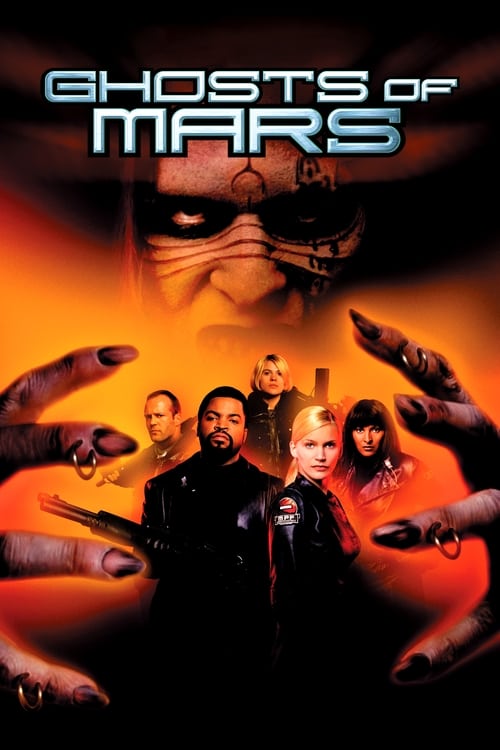
Ghosts of Mars (2001)
Directed by John Carpenter
No — Ghosts of Mars is not woke, scoring 14 out of 100 on our wokeness meter.
Ghosts of Mars is John Carpenter's 2001 excursion into red dust, mining outposts, and heavy metal possession.
Consciousness Markers
The cast is notably diverse for 2001 — Ice Cube as the co-lead, Pam Grier and Joanna Cassidy in command roles, Clea DuVall in support — but the diversity is presented naturally without commentary or statement-making.
The film posits a matriarchal Martian society and centers on a female lieutenant (Henstridge) alongside a female captain and commander, but this is world-building texture rather than a feminist thesis.
The Martian 'ghosts' reclaiming their planet from human colonizers carries a faint indigenous-dispossession allegory, but the film never engages race as a theme and the cast's diversity is unremarked.
A corporate mining colony provides the backdrop, but the film has no interest in critiquing capital; the villains are possessed miners, not executives.
Carpenter's film is a lean action-horror exercise with no preachy monologues or moral instruction; it delivers gore and heavy metal, not sermons.
No LGBTQ+ characters, themes, or subtext of any kind.
Terraforming and a mining outpost are present as sci-fi setting, not as environmental advocacy.
No body-positivity themes or messaging.
No neurodivergence themes or characters.
No historical revisionism; the film is pure pulp sci-fi set in 2176.
Why it received this score
Ghosts of Mars is John Carpenter's 2001 excursion into red dust, mining outposts, and heavy metal possession. The cast is more diverse than the era's average: Ice Cube shares top billing, Pam Grier and Joanna Cassidy occupy command positions, and Clea DuVall provides grounded support. The film presents this arrangement without commentary, which leaves the representation as a natural feature of the ensemble instead of a statement. The matriarchal Martian society and the female lieutenant at the center are texture, not thesis. There are no LGBTQ themes, no body positivity, no neurodivergence, and no historical revisionism on display. The result is a modest, unforced diversity that stops short of self-congratulation.
Mars itself supplies a faint allegory. The ghosts are original inhabitants reclaiming a planet from human colonizers, a premise that brushes against indigenous dispossession. The film does not engage race as a theme, and the cast's diversity goes unremarked. A corporate mining colony sits in the background, but the villains are possessed miners, not executives, so the film has no appetite for anti-capitalist sermonizing. Terraforming exists as science-fiction furniture, not environmental advocacy. The possessed miners commit ritual self-mutilation, which keeps the tone in horror territory and away from any broader social argument.
Carpenter keeps the proceedings lean and nasty, with gore, train chases, and a score built for maximum riffage. The film has no preachy monologues and no moral instruction. It wants to be pulp, and it succeeds at being pulp. The progressive textures are incidental, embedded in B-movie architecture and never promoted to a platform. Ice Cube has since complained about the effects, and the critical consensus was unkind, but the film's low ambitions are clear. This is a film that would rather show a severed head on a spike than deliver a lecture, and that restraint is its most consistent virtue.
Analysis generated by our Consciousness Algorithm


Synopsis
In 2176, a Martian police unit is sent to pick up a highly dangerous criminal at a remote mining post. Upon arrival, the cops find the post deserted and something far more dangerous than any criminal — the original inhabitants of Mars, hellbent on getting their planet back.
Questions about Ghosts of Mars
Is Ghosts of Mars woke?
No — Ghosts of Mars is not woke, scoring 14 out of 100 on our wokeness meter. That earns it a verdict of Ultra Based.
Does Ghosts of Mars have any woke elements?
2 of the 10 markers register at 30 or above, led by Representation Casting (35) and Feminist Agenda (30). On Representation Casting: The cast is notably diverse for 2001 — Ice Cube as the co-lead, Pam Grier and Joanna Cassidy in command roles, Clea DuVall in support — but the diversity is presented naturally without commentary or statement-making.
How does Ghosts of Mars compare to other 2001 movies?
It ranks #44 of the 148 films from 2001 we've scored; their average is 12. The wokest is Monster's Ball (60).
How is the Woke Score calculated?
An AI-assisted process researches the film and its reception, scores it 0–100 on ten markers, then combines those into one 0–100 Woke Score. It measures a specific set of 2020s cultural themes, not film quality.