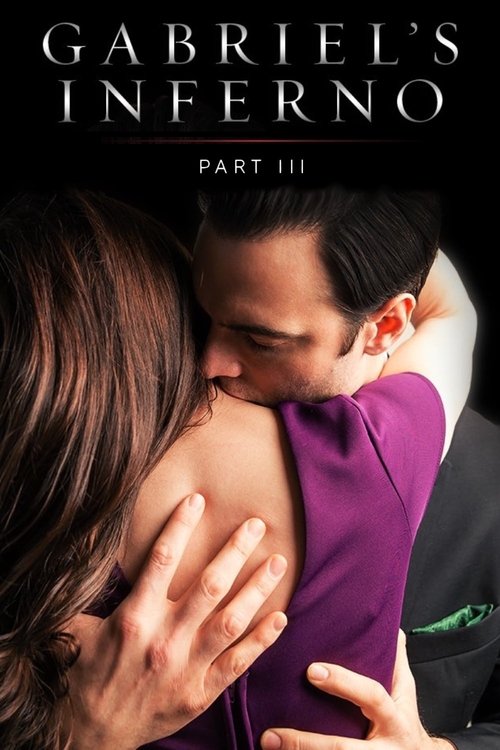
Gabriel's Inferno: Part III (2020)
Directed by Tosca Musk
No — Gabriel's Inferno: Part III is not woke, scoring 0 out of 100 on our wokeness meter.
Gabriel's Inferno: Part III closes a trilogy adapted from an anonymous Canadian author's erotic romance novels, and it does so with the solemnity of a passion project that has no interest in trend-chasing.
Consciousness Markers
The cast appears to be predominantly white with no deliberate race-conscious or diversity-focused casting evident in the film's content or marketing.
No LGBTQ+ characters, relationships, or themes are present in this heterosexual romance.
The film follows a traditional erotic romance narrative centered on a possessive male lead and a submissive female lead, without a feminist agenda.
No exploration of racial issues, systemic racism, or racial identity.
No environmental or climate change themes.
No critique of capitalism, wealth inequality, or economic systems.
No body positivity themes or celebration of diverse body types.
No neurodivergent characters or themes.
No revisionist historical narrative; it is a contemporary romance with literary references.
No preachy social justice messaging or lecture-like advocacy.
Why it received this score
Gabriel's Inferno: Part III closes a trilogy adapted from an anonymous Canadian author's erotic romance novels, and it does so with the solemnity of a passion project that has no interest in trend-chasing. The cast is attractive, the locations are European, and the emotional register is possessive longing. There is no race-conscious casting, no queer subplot, no feminist reworking of the genre's older power imbalances. The male lead broods and dominates. The female lead yields and forgives. This is not a flaw in the film's design. It is the design.
The film also declines every other invitation from contemporary social consciousness. Climate anxiety does not intrude on the candlelit interiors. Wealth inequality is not interrogated, even when the characters move through museums and academic corridors. Body positivity does not revise the slender leads. Neurodivergence is absent. Historical revisionism never enters the frame, despite the Dante references. The source material is treated as sacred text, not as a site for modern correction. There is no lecture. No sermon. No moment where the narrative stops to explain what we should think.
For a 2020 release, this makes the film a curious specimen. It is a romance of a pre-2015 temperament, or perhaps a romance outside time altogether. It wants to make its audience swoon, not educate them. That single-mindedness is almost admirable in its refusal to address the cultural moment. It will not be studied for its progressive interventions. It will be studied, if at all, for its fidelity to a very specific fantasy of surrender and redemption. The sommelier finds no modern additives in the bottle. Just oak, alcohol, and yearning.
Analysis generated by our Consciousness Algorithm


Synopsis
The final part of the film adaption of the erotic romance novel Gabriel's Inferno written by an anonymous Canadian author under the pen name Sylvain Reynard.
Questions about Gabriel's Inferno: Part III
Is Gabriel's Inferno: Part III woke?
No — Gabriel's Inferno: Part III is not woke, scoring 0 out of 100 on our wokeness meter. That earns it a verdict of Ultra Based.
Does Gabriel's Inferno: Part III have any woke elements?
No. All 10 markers score zero.
How does Gabriel's Inferno: Part III compare to other 2020 movies?
It ranks #210 of the 227 films from 2020 we've scored; their average is 21. The wokest is One Night in Miami... (83).
Is Gabriel's Inferno: Part III the most woke Gabriel's Inferno movie?
Yes. It scores highest of the 3 Gabriel's Inferno films we've scored.