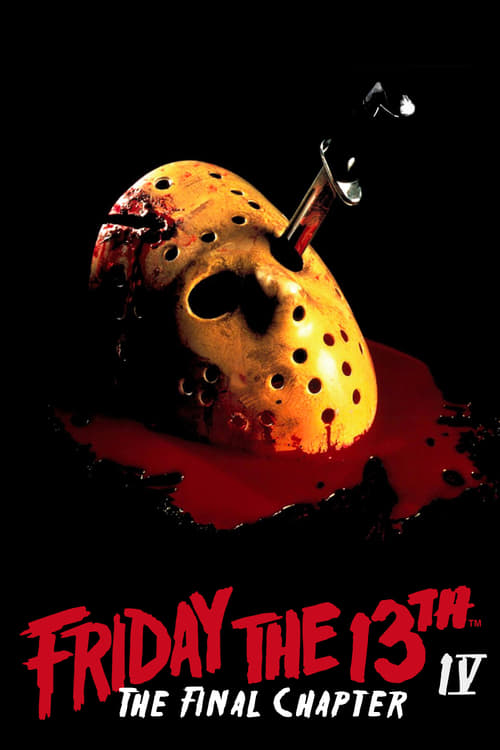
Friday the 13th: The Final Chapter (1984)
Directed by Joseph Zito
No — Friday the 13th: The Final Chapter is not woke, scoring 0 out of 100 on our wokeness meter.
Friday the 13th: The Final Chapter arrives as the fourth installment of a franchise that had, by 1984, already exhausted the patience of critics and the goodwill of almost nobody.
Consciousness Markers
The cast is overwhelmingly white and the film makes no effort at inclusive representation as a thematic or casting priority.
There are no LGBTQ+ characters, themes, or subtext.
The film features a final girl and a child survivor, but this is generic slasher survival rather than a modern feminist agenda.
The film has no engagement with racial politics or racial consciousness.
There are no environmental or climate-related themes.
The film contains no critique of capitalism, wealth, or class hierarchy.
There are no body-positive themes; the film uses conventional slasher exploitation and violence.
Tommy's trauma and macabre interests are not framed as neurodivergence.
The film does not engage in historical revisionism.
The film has no preachy messaging or lecture-like moral instruction.
Why it received this score
Friday the 13th: The Final Chapter arrives as the fourth installment of a franchise that had, by 1984, already exhausted the patience of critics and the goodwill of almost nobody. The title is a lie, as the subsequent seven sequels attest, and the film itself is a brisk, businesslike exercise in lakefront slaughter. Jason escapes the morgue, murders a coroner with a hacksaw, and returns to Crystal Lake to dispatch a fresh set of teenagers and, eventually, the Jarvis family. It is horror of the old school, which is to say it wants to frighten and titillate and sell tickets, and it has no interest whatsoever in instructing anyone about anything.
The cast is white, the politics are absent, and the film's treatment of its characters is openly exploitative. Two twin sisters are introduced chiefly as skinny-dipping equipment. A hitchhiker dies for the crime of being convenient. The lone survivor of the teenage cohort is a woman, and a twelve-year-old boy joins her in the final act, but this is the ordinary grammar of the slasher, not a thesis. The production's own history reinforces the point. An actress developed hypothermia in a freezing lake. An actor was genuinely slammed against a shower wall. Whatever the film's defenders say about characterization, its sympathies lie with the kill, not the killed.
There is no environmental sermon, no class critique, no examination of race, no celebration of body diversity, no neurodivergent framing for young Tommy's masks and macabre enthusiasms, and no lecture at the end. The film's only ideology is the box office, and it does not critique that arrangement so much as embody it. The ledger comes back empty. A clean vintage, and I mean that as a compliment.
Analysis generated by our Consciousness Algorithm
Part of


Synopsis
After his revival in a hospital morgue, Jason fixes his vengeful attention on the Jarvis family and a group of hitherto carefree teenagers.
Questions about Friday the 13th: The Final Chapter
Is Friday the 13th: The Final Chapter woke?
No — Friday the 13th: The Final Chapter is not woke, scoring 0 out of 100 on our wokeness meter. That earns it a verdict of Ultra Based.
Does Friday the 13th: The Final Chapter have any woke elements?
No. All 10 markers score zero.
How does Friday the 13th: The Final Chapter compare to other 1984 movies?
It ranks #43 of the 51 films from 1984 we've scored; their average is 7. The wokest is Revenge of the Nerds (30).
Is Friday the 13th: The Final Chapter the most woke Friday the 13th movie?
No. It ranks #8 of the 11 Friday the 13th films we've scored; the wokest is Friday the 13th Part VIII: Jason Takes Manhattan (8).