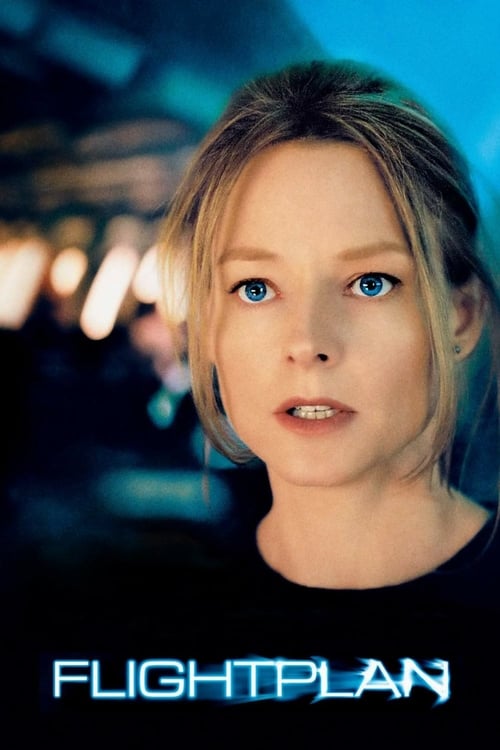
Flightplan (2005)
Directed by Robert Schwentke
No — Flightplan is not woke, scoring 17 out of 100 on our wokeness meter.
Flightplan arrives from 2005, a year when a thriller could still solve its problems with a fire extinguisher and a locked cockpit door.
Consciousness Markers
The film deliberately invokes post-9/11 paranoia by having Kyle accuse two Arab passengers, who prove innocent and are ultimately sympathetic, subverting the 'Arab terrorist' trope without overt sermonizing.
Jodie Foster anchors the film as a competent female aviation engineer who single-handedly outwits the conspirators and rescues her daughter, a capable-woman-lead dynamic that predates but does not explicitly espouse feminist messaging.
The cast is overwhelmingly white, with only a handful of minority performers in supporting roles (notably Michael Irby as an Arab passenger). Diversity is incidental rather than a deliberate representational statement.
The film is a taut suspense thriller that prioritizes tension over messaging; any social commentary (the racial-profiling subversion) is embedded in plot rather than delivered as a lecture.
No LGBTQ+ characters, relationships, or themes appear anywhere in the film.
No environmental or climate-related content exists in the film.
The villains are motivated by a $50 million ransom scheme, not by corporate greed or class critique; there is no eat-the-rich framing.
No body-positivity themes or messaging are present.
Kyle is briefly suspected of being delusional, but the film treats this as a gaslighting plot device rather than engaging with neurodivergence as a theme.
The film is a contemporary thriller with no historical revisionism or reframing of past events.
Why it received this score
Flightplan arrives from 2005, a year when a thriller could still solve its problems with a fire extinguisher and a locked cockpit door. Jodie Foster plays Kyle Pratt, an aviation engineer who helped design the very aircraft on which her daughter vanishes. She spends the middle act doubted by every flight attendant and pilot aboard, then spends the final act dismantling their aircraft from the inside. The film hands her competence without commentary, which is a modest form of progress and nothing more. No speeches accompany it. She simply knows how the plane works, and the plane is the point.
The screenplay carries a distinct residue of post-September 11 anxiety. Kyle accuses two Arab passengers of stalking her child, a scuffle follows, and the film later reveals those men to be innocent and even helpful. The gesture subverts a trope, though it does so through plot mechanics instead of a monologue, which keeps the sermonizing to a minimum. The original draft featured terrorists; the rewrite removed them and left the paranoia floating free. What remains is a thriller that trusts its own suspense. The villains want fifty million dollars, not a better world or a worse one.
The production is sleek, the pacing deliberate, the resolution absurd in the way that late-period potboilers often are. Foster anchors it with a performance of clenched, unglamorous fury. There is little here that speaks to the contemporary cultural moment, and the film seems content with that. It wants to frighten us about overhead bins. It succeeds, briefly, and then the credits roll over a Newfoundland runway and we are left to file it accordingly: a competent exercise with almost no ideological freight to declare at customs.
Such films are increasingly rare, and their modesty deserves a note in the ledger before we move along to the next specimen that insists on teaching us something. Flightplan teaches nothing. It merely locks the door and turns out the lights, which, on its own terms, is enough. The classification committee can rest easy on this one. So can the flight attendants, who need not have worried so loudly after all. The ransom was paid, the daughter survived, and the sommelier finds the vintage thin but drinkable, with no lingering aftertaste of agenda. We move on to the next bottle.
Thematic tags: box_office_number_one. The film opened at number one in the United States and Canada, grossing twenty-four point six million dollars in its opening weekend, a fact that history has recorded without editorial comment. It is not a sequel, not a remake in any official sense despite its debts to Hitchcock, not a true story, not adapted from a book, and contains no superheroes. Its Oscars remain absent.
Analysis generated by our Consciousness Algorithm


Synopsis
Flying at 40,000 feet in a state-of-the art aircraft that she helped design, Kyle Pratt's 6-year-old daughter Julia vanishes without a trace. Or did she? No one on the plane believes Julia was ever onboard. And now Kyle, desperate and alone, can only count on her own wits to unravel the mystery and save her daughter.
Questions about Flightplan
Is Flightplan woke?
No — Flightplan is not woke, scoring 17 out of 100 on our wokeness meter. That earns it a verdict of Ultra Based.
Does Flightplan have any woke elements?
1 of the 10 markers register at 30 or above, led by Racial Consciousness (35). On Racial Consciousness: The film deliberately invokes post-9/11 paranoia by having Kyle accuse two Arab passengers, who prove innocent and are ultimately sympathetic, subverting the 'Arab terrorist' trope without overt sermonizing.
How does Flightplan compare to other 2005 movies?
It ranks #46 of the 181 films from 2005 we've scored; their average is 13. The wokest is The Constant Gardener (72).
How is the Woke Score calculated?
An AI-assisted process researches the film and its reception, scores it 0–100 on ten markers, then combines those into one 0–100 Woke Score. It measures a specific set of 2020s cultural themes, not film quality.