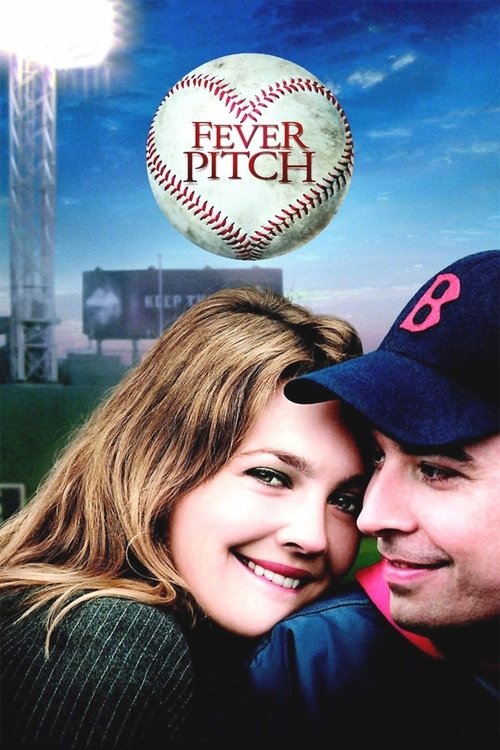
Fever Pitch (2005)
Directed by Bobby Farrelly
No — Fever Pitch is not woke, scoring 8 out of 100 on our wokeness meter.
This romantic comedy operates within a remarkably predictable cultural framework.
Consciousness Markers
Lindsey is a driven corporate executive whose career and promotion matter to the plot, giving a mild career-woman-versus-man-child tension, but the film resolves this in conventional rom-com fashion rather than as a feminist statement.
The cast is overwhelmingly white, led by Drew Barrymore and Jimmy Fallon, with only incidental background diversity and no deliberate inclusive casting effort.
The film is a light romantic comedy with no preachy messaging; the only didacticism is Ben's friends explaining the Curse of the Bambino, which is exposition rather than moral instruction.
There are no LGBTQ+ characters, themes, or subtext anywhere in the film.
Race is never addressed or thematized; the story is entirely about a white couple and baseball fandom.
No environmental or climate themes appear in the film.
The film has no critique of wealth, capitalism, or class; Lindsey's corporate promotion is celebrated rather than interrogated.
Body image and body positivity are not themes in the film.
Ben's Red Sox obsession is played for comedy as a man-child quirk, never framed as neurodivergence or a diagnosable condition.
The film dramatizes the real 2004 Red Sox championship but does not revise or reinterpret history for ideological purposes.
Why it received this score
This romantic comedy operates within a remarkably predictable cultural framework. The central conflict relies entirely on the clash between corporate ambition and a singular obsession with Major League Baseball. The narrative is entirely devoid of modern social commentary, focusing instead on the interpersonal dynamics of a white couple in a specific Northeast setting. The progressive sensibilities one might expect in contemporary cinema are conspicuously absent. The film treats a deeply entrenched, highly specific cultural fixation with affectionate whimsy, never elevating it into a socio-economic critique or a serious psychological study of the individual. It remains a light, pleasant diversion, which is perhaps its greatest cultural failing.
The portrayal of the corporate climber, Lindsey, offers only a mild tension against the protagonist’s fanaticism. Her drive is a common rom-com trope, resolved in the expected manner without demanding any kind of radical re-evaluation of gender roles or professional success. The film’s limited foray into social consciousness is purely superficial. It is a narrative that simply wants the audience to enjoy a charming sports romance and nothing more. The overall experience is comfortably traditional, presenting its themes with a gentle hand.
We are left with a confection of nostalgic longing and predictable resolution. The film does not attempt to revise history or redefine personal identity through a progressive lens. Instead, it celebrates a specific cultural moment, the breaking of a long-held sporting myth, through the conventional lens of falling in love. It is a pleasant, if entirely unchallenging, piece of Americana that refuses to engage with the complexities of the modern cultural landscape.
Analysis generated by our Consciousness Algorithm


Synopsis
Lindsay is stuck in the middle of her relationship with Ben and his passion for the Boston Red Sox.
Questions about Fever Pitch
Is Fever Pitch woke?
No — Fever Pitch is not woke, scoring 8 out of 100 on our wokeness meter. That earns it a verdict of Ultra Based.
Does Fever Pitch have any woke elements?
Very few. None of the 10 markers reaches 30, the level where a marker counts as present; the highest is Feminist Agenda at 18.
How does Fever Pitch compare to other 2005 movies?
It ranks #90 of the 181 films from 2005 we've scored; their average is 13. The wokest is The Constant Gardener (72).
How is the Woke Score calculated?
An AI-assisted process researches the film and its reception, scores it 0–100 on ten markers, then combines those into one 0–100 Woke Score. It measures a specific set of 2020s cultural themes, not film quality.