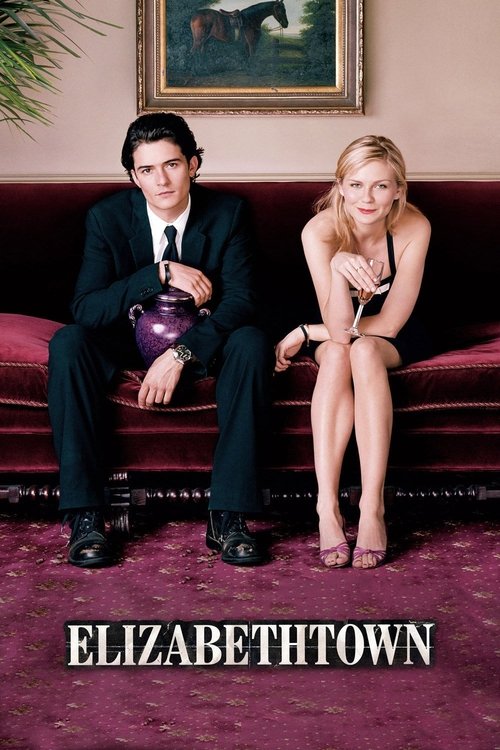
Elizabethtown (2005)
Directed by Cameron Crowe
No — Elizabethtown is not woke, scoring 6 out of 100 on our wokeness meter.
Cameron Crowe's Elizabethtown arrived in 2005 with a $45 million budget, a Venice premiere, and the distinct misfortune of being the film that gave Nathan Rabin the occasion to coin the term Manic Pixie Dream Girl.
Consciousness Markers
There is mild satire of soulless global sportswear corporations and the shame of commercial failure, but it is a backdrop to a personal redemption story rather than an eat-the-rich polemic.
Crowe's film is sentimental and meandering rather than preachy; it offers no sustained social lecture.
The cast is overwhelmingly white, led by Orlando Bloom, Kirsten Dunst, Susan Sarandon, and Alec Baldwin, with no meaningful diverse representation or commentary on it.
There are no LGBTQ+ characters, relationships, or themes anywhere in the film.
The film is the origin point of the 'Manic Pixie Dream Girl' critique, with Claire existing largely to shepherd Drew's emotional arc — the opposite of a feminist agenda.
Race is entirely absent as a subject; the Kentucky family drama unfolds in a uniformly white milieu with no racial consciousness.
No environmental or climate themes appear in the film.
No body positivity themes or messaging are present.
Depression and suicidal ideation are depicted, but not framed through a neurodivergence lens or advocacy.
The film is a contemporary romantic tragicomedy with no historical revisionism.
Why it received this score
Cameron Crowe's Elizabethtown arrived in 2005 with a $45 million budget, a Venice premiere, and the distinct misfortune of being the film that gave Nathan Rabin the occasion to coin the term Manic Pixie Dream Girl. The plot concerns Drew Baylor, a shoe designer who costs his employer $972 million, contemplates ending his life, and is saved from that plan by a phone call about his father's death. He flies to Kentucky. He meets a flight attendant named Claire who talks at him for the length of a nearly empty 747. The rest is a funeral, an urn, and a road trip with customized mix CDs.
There is a faint whiff of corporate satire here. Mercury is a global sportswear concern, its executives are smug, and Drew's public shaming carries the queasy texture of real boardroom theater. But the film has no interest in following that thread anywhere uncomfortable. The corporation is a plot device, not a target. The rich are not eaten. A man simply feels bad about disappointing them.
The result is a long, moist meditation on grief, small towns, and the redemptive power of a woman who exists to fix a man's mood. Claire has no interior life worth the runtime; she has itineraries. The Kentucky relatives are white, the Oregon colleagues are white, and the film never once notices this, which is its own kind of innocence. There is no sermonizing to be found, no social instruction, no ideological project beyond the therapeutic. Crowe wants us to cry at a farmer's market in Nebraska. Some of us did. Most of us checked the time.
Analysis generated by our Consciousness Algorithm
Part of


Synopsis
Drew Baylor is fired after causing his shoe company to lose hundreds of millions of dollars. To make matters worse, he's also dumped by his girlfriend. On the verge of ending it all, Drew gets a new lease on life when he returns to his family's small Kentucky hometown after his father dies. Along the way, he meets a flight attendant with whom he falls in love.
Questions about Elizabethtown
Is Elizabethtown woke?
No — Elizabethtown is not woke, scoring 6 out of 100 on our wokeness meter. That earns it a verdict of Ultra Based.
Does Elizabethtown have any woke elements?
Very few. None of the 10 markers reaches 30, the level where a marker counts as present; the highest is Eat the Rich at 10.
How does Elizabethtown compare to other 2005 movies?
It ranks #112 of the 181 films from 2005 we've scored; their average is 13. The wokest is The Constant Gardener (72).
How is the Woke Score calculated?
An AI-assisted process researches the film and its reception, scores it 0–100 on ten markers, then combines those into one 0–100 Woke Score. It measures a specific set of 2020s cultural themes, not film quality.