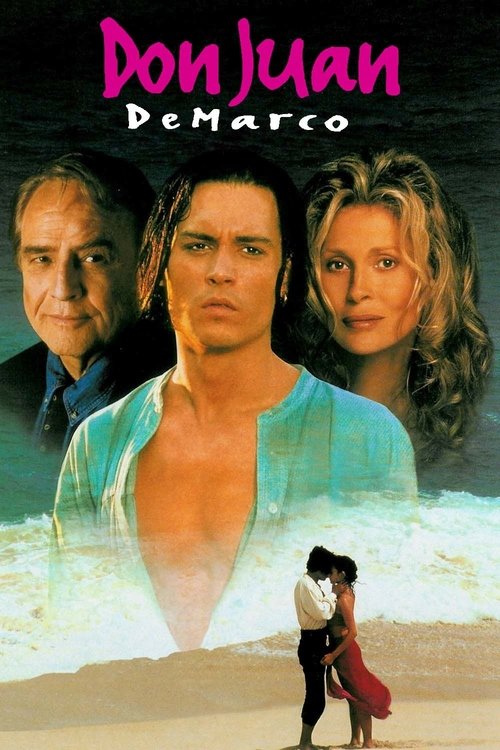
Don Juan DeMarco (1994)
Directed by Jeremy Leven
No — Don Juan DeMarco is not woke, scoring 6 out of 100 on our wokeness meter.
Don Juan DeMarco arrives from 1994, a year when a man in a cape and domino mask could still be taken seriously as a romantic proposition.
Consciousness Markers
The cast includes Latino and Black performers (Rachel Ticotin, Talisa Soto, Gilbert Lewis, Tiny Lister), but they exist naturally within the story rather than as a self-conscious diversity statement. No modern representation-casting agenda is present.
The film is set in a psychiatric institution and treats its patient's delusion with sympathy, but it frames this as romantic fantasy rather than as neurodivergence advocacy or identity.
The film is built around the Don Juan legend of the 'greatest lover,' with women largely functioning as romantic conquests and muses. There is no feminist reframing of the material.
A brief moment has John dancing with a male attendant on the institution lawn, but this is a passing comic beat, not an LGBTQ+ theme or statement.
Latino identity is present through the Don Juan persona and Mexican backstory, but the film makes no commentary on race or racial justice.
The film is a gentle romantic fable that invites the audience to embrace passion; it does not lecture or moralize about social issues.
No environmental or climate themes appear anywhere in the film.
No critique of wealth, capitalism, or class structures is present.
No body-positivity themes or messaging are present.
The film draws on the Don Juan legend and a modern short story, but it makes no revisionist claims about historical events or figures.
Why it received this score
Don Juan DeMarco arrives from 1994, a year when a man in a cape and domino mask could still be taken seriously as a romantic proposition. Johnny Depp plays John Arnold DeMarco, a young man who believes himself the greatest lover who ever lived, and Marlon Brando plays the retiring psychiatrist who declines to medicate him and instead listens. The sessions revive the doctor's marriage, the staff grows wistful, and the whole enterprise drifts toward a Greek island where everyone dances. It is a slight story, as the reviews of the day conceded, and it is told with a gentleness that borders on the soporific.
For the purposes of cultural classification, the film is nearly barren. The cast includes Latino and Black performers, among them Rachel Ticotin, Talisa Soto, and Gilbert Lewis, but they occupy their roles without ceremony or announcement, which is to say they are simply present. A brief moment finds the patient dancing with a male attendant on the institution lawn, a comic beat that passes in seconds and carries no argument. The Don Juan legend supplies the framework, and women arrive as tutors, sultans' consorts, and one true love, none of them invited to revise the arrangement. The psychiatric setting gestures at questions of delusion and identity, though the film treats them as material for a fable about passion, not as a condition to be advocated for or named.
There is no environmental sermon, no indictment of wealth, no discourse on the body, and no rewriting of the historical record. The film wants only to persuade us that ardor is worth the trouble, and it makes that case in a soft voice. As a document of its era, it is a museum piece: pleasant, well-acted, and entirely untroubled by the concerns that would later consume the culture.
Analysis generated by our Consciousness Algorithm


Synopsis
John Arnold DeMarco is a man who believes he is Don Juan, the greatest lover in the world. Clad in a cape and mask, DeMarco undergoes psychiatric treatment with Dr. Jack Mickler to cure him of his apparent delusion. But the psychiatric sessions have an unexpected effect on the psychiatric staff and, most profoundly, Dr Mickler, who rekindles the romance in his complacent marriage.
Questions about Don Juan DeMarco
Is Don Juan DeMarco woke?
No — Don Juan DeMarco is not woke, scoring 6 out of 100 on our wokeness meter. That earns it a verdict of Ultra Based.
Does Don Juan DeMarco have any woke elements?
Very few. None of the 10 markers reaches 30, the level where a marker counts as present; the highest is Representation Casting at 18.
How does Don Juan DeMarco compare to other 1994 movies?
It ranks #44 of the 86 films from 1994 we've scored; their average is 10. The wokest is On Deadly Ground (75).
How is the Woke Score calculated?
An AI-assisted process researches the film and its reception, scores it 0–100 on ten markers, then combines those into one 0–100 Woke Score. It measures a specific set of 2020s cultural themes, not film quality.