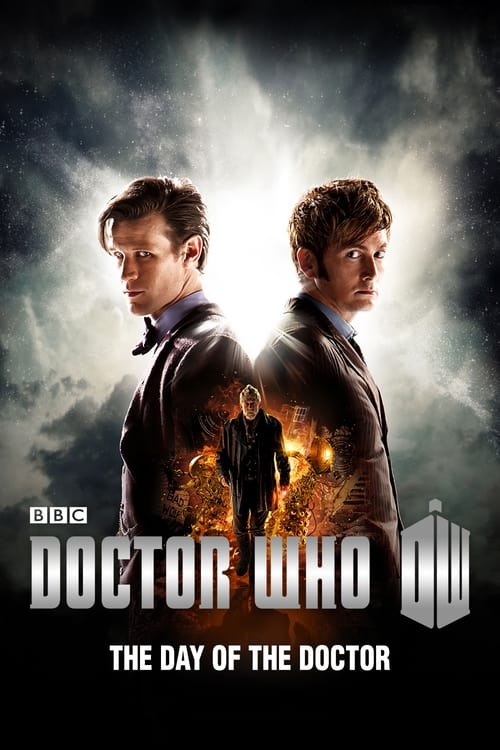
Doctor Who: The Day of the Doctor (2013)
Directed by Nick Hurran
No — Doctor Who: The Day of the Doctor is not woke, scoring 11 out of 100 on our wokeness meter.
Anniversary specials exist to flatter the faithful, and this one flatters them at feature length, in 3D, across ninety-four countries simultaneously.
Consciousness Markers
Female characters such as Clara, Kate Stewart, Osgood, and Elizabeth I hold authority and drive the moral resolution, but the special does not advance an explicit feminist agenda.
The cast is predominantly white, with a few non-white actors in minor roles. There is no overt modern diversity casting agenda.
The special includes moral speeches about war, genocide, and finding a peaceful solution, but these are generic humanist themes rather than modern woke lecturing.
No LGBTQ+ themes, characters, or subtext are present in the special.
Race is not a theme, and no racial consciousness or commentary appears in the story.
There is no climate change or environmentalist messaging in the special.
The special contains no critique of capitalism, wealth inequality, or economic systems.
No body positivity themes or messaging are present.
The Doctor's eccentricity is framed as alien and time-lord behavior, not as neurodivergence.
The Elizabethan setting and Zygon plot are science-fiction alternate history, not progressive historical revisionism.
Why it received this score
Anniversary specials exist to flatter the faithful, and this one flatters them at feature length, in 3D, across ninety-four countries simultaneously. Three Doctors bicker in a forest, a Zygon plot unfolds in Elizabethan England, and a war criminal with a conscience debates whether to press the button. The machinery is elegant. The sentiment is sincere. It is, by any measure, a competent piece of television built for a specific audience on a specific night in November 2013.
On the matter of social consciousness, the record is thin. The cast is overwhelmingly white, with a handful of non-white performers in functional supporting roles, and no effort is made to comment on the arrangement. Race goes unmentioned. Queerness goes unmentioned. The economy goes unmentioned, which is notable given that the plot hinges on a military organization hoarding alien technology beneath the Tower of London. Women do hold authority here: Kate Stewart runs UNIT, Osgood does the science, Elizabeth I governs, and Clara supplies the moral spine of the climax. That is competent casting, not a program. Four women with jobs is not an argument.
The moralizing arrives in the final act, when the Doctors speechify about war, genocide, and the possibility of a better ending. These are the old humanist pieties, delivered with the confidence of a series that has been doing this since 1963. Nothing here lectures the viewer about contemporary politics, identity, or consumption. It is a heritage production, fond of its own history, mildly sentimental, and largely innocent of the cultural preoccupations that would dominate the decade to come. We file it accordingly.
Analysis generated by our Consciousness Algorithm
Synopsis
In 2013, something terrible is awakening in London's National Gallery; in 1562, a murderous plot is afoot in Elizabethan England; and somewhere in space an ancient battle reaches its devastating conclusion. All of reality is at stake as the Doctor's own dangerous past comes back to haunt him.
Questions about Doctor Who: The Day of the Doctor
Is Doctor Who: The Day of the Doctor woke?
No — Doctor Who: The Day of the Doctor is not woke, scoring 11 out of 100 on our wokeness meter. That earns it a verdict of Ultra Based.
Does Doctor Who: The Day of the Doctor have any woke elements?
Very few. None of the 10 markers reaches 30, the level where a marker counts as present; the highest is Feminist Agenda at 20.
How does Doctor Who: The Day of the Doctor compare to other 2013 movies?
It ranks #111 of the 274 films from 2013 we've scored; their average is 14. The wokest is Belle (76).
How is the Woke Score calculated?
An AI-assisted process researches the film and its reception, scores it 0–100 on ten markers, then combines those into one 0–100 Woke Score. It measures a specific set of 2020s cultural themes, not film quality.