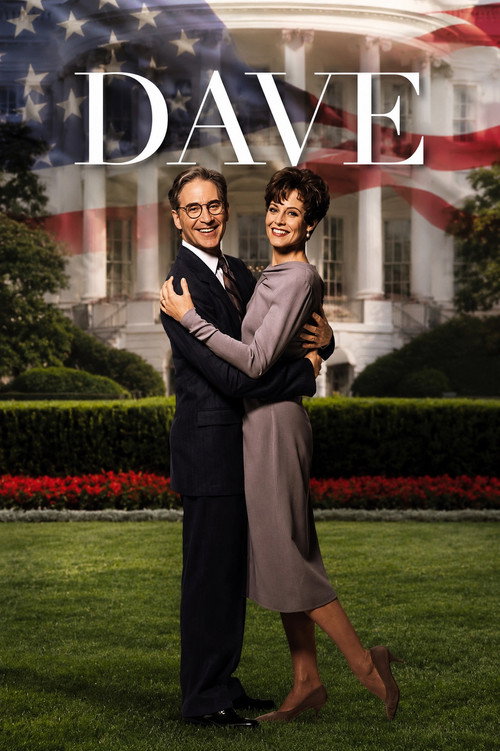
Dave (1993)
Directed by Ivan Reitman
No — Dave is not woke, scoring 10 out of 100 on our wokeness meter.
Dave arrives from 1993, a gentler country, and a gentler studio comedy.
Consciousness Markers
The cast includes Ving Rhames as a Secret Service agent and Ben Kingsley as the Vice President, providing some racial diversity in supporting roles, but without any explicit commentary or modern inclusive casting agenda.
Sigourney Weaver's First Lady is intelligent and has her own advocacy for the homeless, but the film does not push a feminist agenda.
The film has a mild idealistic message about government serving the people, but it remains lighthearted and avoids preachy lecturing.
The film critiques political corruption and includes a populist jobs plan, but it is not anti-capitalist in a systemic sense.
No LGBTQ+ characters or themes are present.
Race is not a theme; minority characters exist without racial commentary.
No environmental or climate themes.
No body positivity themes.
No neurodivergence themes.
The film is a fictional political comedy, not a revisionist take on real history.
Why it received this score
Dave arrives from 1993, a gentler country, and a gentler studio comedy. Kevin Kline plays both a temp agency operator and the President of the United States, a man whose resemblance to power is entirely cosmetic until a stroke leaves the real commander in chief comatose and the double installed in the Oval Office. Ivan Reitman directs with the light touch of a man who knows the audience has already bought the ticket. The film wants to be liked. It is, mostly.
The social consciousness on display is of the softest, most pre-2010 variety. Ving Rhames appears as a Secret Service agent and Ben Kingsley as the Vice President, minority faces placed in supporting roles without a syllable of comment. Sigourney Weaver's First Lady is intelligent and quietly devoted to a homeless shelter, an advocacy that drives the plot's central crisis without ever announcing itself as a statement. The villains are corrupt operators, and the hero ends by proposing a job for every American who wants one, a populist flourish that gestures toward economic grievance while keeping both feet planted in the free market. No romantic configuration beyond the conventional is entertained. The environment goes unmentioned.
What remains is a film that preaches only faintly, and always with a smile. Its message, that government might serve the people, is delivered as a warmhearted sentiment instead of a sermon. We are left with a pleasant artifact of a less anxious moment, agreeable, well behaved, and entirely at ease with itself. It classifies cleanly, which is its own small mercy in this line of work, and the file can be closed without further deliberation.
It reached the top of the domestic box office in its second weekend, a fact of no interpretive weight but worth recording for the ledger. The whole affair is amiable, competent, and innocent of the cultural currents that would later come to dominate the form. A relic, then, but a tidy one. Few films pass through this office with so little to argue about, and we confess to a certain quiet gratitude for that, however professionally suspicious we remain of any picture this eager to please.
We find no evidence of the more recent progressive markers anywhere in the frame, and we say so plainly: an absence is a finding, not a failure of research. The film has no interest in identity, no interest in the climate, no interest in the body as a site of discourse. It simply wants Dave to be president for a while, and for us to enjoy it. We did, and we move on to the next specimen on the docket, pen uncapped, judgment reserved for whoever wanders in next.
The casting of minority performers in supporting roles reflects the ordinary practice of the period, offering diversity without commentary and without a modern inclusive agenda. The First Lady possesses intelligence and a cause of her own, though the film never advances a feminist argument on her behalf. The critique of political corruption and the closing jobs plan gesture toward economic grievance without challenging the market itself, and the idealistic note about government serving the people lands softly, more pleasantry than sermon. On every other marker, the record is silent, and we record it as such. The verdict is a mild one, and the docket clears accordingly, without incident and without complaint, as the afternoon light fades over the archive and the next reel waits its turn in the dark.
We therefore close the file with a shrug and a stamp, noting for the record that charm is not the same as a thesis, and that a film may be kind without being instructive. Dave is kind. That is the whole of it. We note it, we file it, and we reach for the next envelope, mildly fatigued, as ever, by the sheer volume of things that must be classified before the day is done and the lights go out over the stacks once more, quietly, without ceremony, without applause, and without any particular urgency to return to this particular shelf again.
The secretary will show you out. Mind the corgi on the way.
Thematic tags: box_office_number_one. No Academy Award was won, no sequel or remake is involved, the story is invented, no book precedes it, no superhero appears, and the only superlative it claims is a single weekend at the top, which we have duly entered into the permanent record and now lay to rest, satisfied that the matter has been handled with the gravity it does not quite deserve but shall receive regardless, as all things do in this office, in time, and without exception, until the shelves are full and the ledger is closed and the reviewer finally, mercifully, goes home.
The remaining markers sit at zero, and we leave them there without apology. The environment goes unmentioned. No character grapples with identity in the contemporary sense. The body is not a battleground here, nor is the mind's wiring examined. History is not rewritten, only gently borrowed for a joke about the presidency. And the lecturing, such as it is, amounts to a fond wish that the government might do right by its citizens, delivered with a grin and a handshake and no desire whatsoever to scold us. We accept the handshake, we record the finding, and we turn, at last, to the door.
Good night. The office is closed. The review is filed. There is nothing further to add, and nothing further shall be added, no matter how long we stand here waiting for the elevator, which is, as always, slow, and which will, as always, eventually arrive, carrying someone else's picture to someone else's desk, while ours stays put, catalogued, dormant, and, in its small amiable way, complete.
Analysis generated by our Consciousness Algorithm
Part of


Synopsis
A sweet-natured Temp Agency operator and amateur Presidential look-alike is recruited by the Secret Service to become a temporary stand-in for the President of the United States.
Questions about Dave
Is Dave woke?
No — Dave is not woke, scoring 10 out of 100 on our wokeness meter. That earns it a verdict of Ultra Based.
Does Dave have any woke elements?
Very few. None of the 10 markers reaches 30, the level where a marker counts as present; the highest is Feminist Agenda at 15.
How does Dave compare to other 1993 movies?
It ranks #35 of the 97 films from 1993 we've scored; their average is 11. The wokest is Bound by Honor (60).
How is the Woke Score calculated?
An AI-assisted process researches the film and its reception, scores it 0–100 on ten markers, then combines those into one 0–100 Woke Score. It measures a specific set of 2020s cultural themes, not film quality.