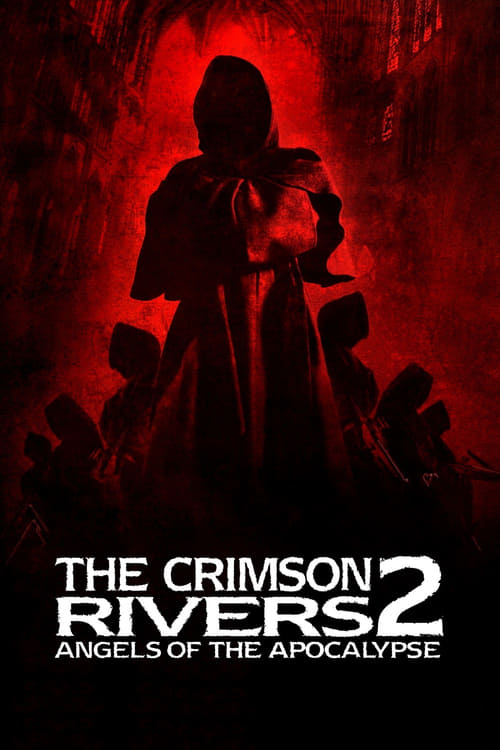
Crimson Rivers II: Angels of the Apocalypse (2004)
Directed by Olivier Dahan
No — Crimson Rivers II: Angels of the Apocalypse is not woke, scoring 3 out of 100 on our wokeness meter.
We find ourselves once again in the muddy, morally gray landscapes of a European crime thriller, a genre that has long prioritized kinetic action over any kind of meaningful social commentary.
Consciousness Markers
The cast is overwhelmingly European, and the plot does not feature any significant focus on diverse representation.
The female character, Marie, is a supporting religious expert, but her role does not challenge traditional power structures or advance a feminist agenda.
No evidence of LGBTQ+ themes or characters within the provided synopsis or cast list.
The film focuses on European crime and religious conspiracy, showing no discernible racial consciousness or commentary.
The film's focus is entirely on crime and religious mystery, with no reference to environmental concerns.
The plot revolves around a historical treasure hunt and religious conspiracy, lacking any modern anti-capitalist critique.
There is no thematic focus on body positivity or diverse body types in the film's narrative.
No characters are portrayed with neurodivergent traits or discussed in relation to mental health spectrums.
While it uses historical motifs, the film does not engage in revisionist history or challenge established historical narratives.
The film maintains a standard thriller pace and does not feature any characters delivering lengthy, didactic social commentary.
Why it received this score
We find ourselves once again in the muddy, morally gray landscapes of a European crime thriller, a genre that has long prioritized kinetic action over any kind of meaningful social commentary. Crimson Rivers II: Angels of the Apocalypse presents a meticulously crafted tapestry of serial killings and religious conspiracy, yet it manages to remain entirely unburdened by modern progressive sensibilities. The narrative relies heavily on established genre tropes, featuring a cast of seasoned European actors navigating a plot centered on historical treasure and apocalyptic violence. The thematic scope remains firmly rooted in the 20th century, offering little in the way of contemporary cultural awareness. We observe a supporting female character, Marie, whose expertise serves primarily to advance the central mystery rather than to challenge any existing power dynamics or advocate for a feminist agenda.
The film's focus remains exclusively on the mechanics of its chase, the mystery of the murders, and the sweep of the religious underworld. There is no discernible engagement with racial issues, environmental concerns, or the complexities of modern identity politics. The plot operates on a level of pure, high-stakes suspense, which is fine, but it is ultimately limited. The director maintains a standard pace for the genre. It does not attempt to lecture the audience on anything. We find the film to be a technically proficient piece of cinema, but its commitment to the genre means it avoids the kind of heavy-handed social critique that defines a particular segment of modern filmmaking. It is a movie that simply exists within its own established framework.
Ultimately, this sequel delivers on the promise of a bloody, historical thriller. It utilizes familiar iconography and a well-worn investigative structure. It does not push boundaries. It requires nothing from the viewer beyond a willingness to follow a series of escalating murders across a European setting. We see no attempt to revise established history or incorporate diverse voices into the core of the narrative. It is a solid entry for fans of the genre, though its lack of any progressive sensibility renders it entirely unremarkable in a contemporary cultural context.
Analysis generated by our Consciousness Algorithm


Synopsis
No one is safe when seemingly random killings emerge as a deadly pattern intended to usher in the end of the world. A murder victim with the same DNA as Christ. A serial killer mimicking the deaths of the 12 Apostles. Inspector Niemans and a young, rebellious detective team up with a beautiful expert in religion to crack the case before their elusive suspect completes the cycle of terror, paving the way to an even bigger bloody catastrophe.
Questions about Crimson Rivers II: Angels of the Apocalypse
Is Crimson Rivers II: Angels of the Apocalypse woke?
No — Crimson Rivers II: Angels of the Apocalypse is not woke, scoring 3 out of 100 on our wokeness meter. That earns it a verdict of Ultra Based.
Does Crimson Rivers II: Angels of the Apocalypse have any woke elements?
Very few. None of the 10 markers reaches 30, the level where a marker counts as present; the highest is Feminist Agenda at 5.
How does Crimson Rivers II: Angels of the Apocalypse compare to other 2004 movies?
It ranks #141 of the 178 films from 2004 we've scored; their average is 12. The wokest is Tropical Malady (62).
How is the Woke Score calculated?
An AI-assisted process researches the film and its reception, scores it 0–100 on ten markers, then combines those into one 0–100 Woke Score. It measures a specific set of 2020s cultural themes, not film quality.