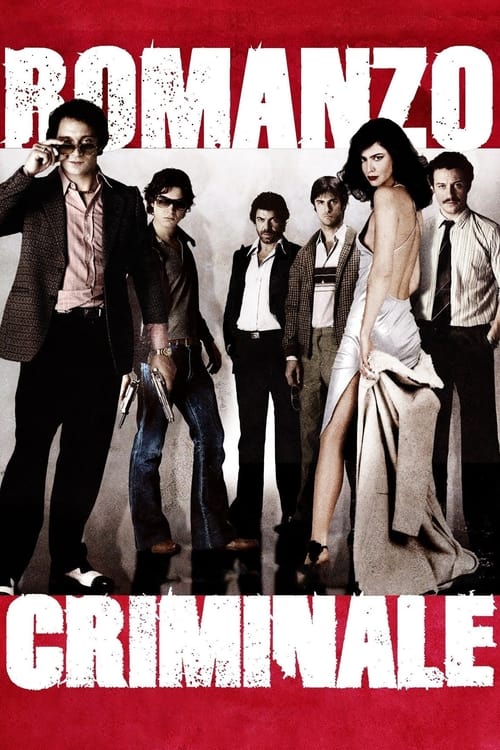
Crime Novel (2005)
Directed by Michele Placido
No — Crime Novel is not woke, scoring 0 out of 100 on our wokeness meter.
Romanzo Criminale arrives from 2005, trailing fifteen awards and a source novel by Giancarlo De Cataldo, itself drawn from the actual misdeeds of the Banda della Magliana.
Consciousness Markers
The cast is entirely white Italian actors playing white Italian gangsters; no diversity-conscious casting is present or attempted.
No LGBTQ+ characters, themes, or subtext appear anywhere in the film.
Women appear as prostitutes, tutors, and girlfriends in service of the male gangsters' stories; no feminist critique or agency-driven framing is present.
The film concerns intra-Italian criminal politics with no engagement of race or racial justice themes.
No environmental or climate themes whatsoever.
The gang's crimes are depicted as personal ambition and power-seeking, not as a critique of capitalism or class exploitation.
No body-positivity themes or messaging.
No neurodivergent characters or themes are present.
The film dramatizes the real Banda della Magliana without reinterpreting history through a modern ideological lens.
The film is a straightforward crime saga that shows rather than preaches; no didactic messaging is delivered to the audience.
Why it received this score
Romanzo Criminale arrives from 2005, trailing fifteen awards and a source novel by Giancarlo De Cataldo, itself drawn from the actual misdeeds of the Banda della Magliana. Michele Placido directs a cast of Italy's most employable young men as they kidnap a baron, seize the drug trade, and spend two decades learning that paranoia is a more reliable assassin than any rival. It is a saga of ambition, betrayal, and the slow corrosion of friendship. Nothing in it is engineered to instruct us.
Consider the women. Patrizia is a prostitute who receives a brothel as a gesture of possession. Roberta is a tutor who becomes a gangster's reason to dream of England. They are furnishings in a house built by men, and the film never pauses to regret this. The gang's crimes are personal appetites dressed as strategy, not an indictment of markets or class. Rome's underworld is not examined for structural sin. It is simply where the money lives.
The cast is uniformly Italian, playing Italians, in a story about Italians. No racial reckoning interrupts the score-settling. No character announces a pronoun preference or a carbon footprint. The film prefers to show a man stabbed over a poker game and let the audience draw its own conclusions, an approach that has fallen from fashion. It does not explain itself. It does not apologize. It does not tell us how to feel, and for that restraint it registers a clean zero on every index of contemporary virtue maintained in this office. We record the figure without complaint.
Analysis generated by our Consciousness Algorithm
Synopsis
After serving prison time for a juvenile offense, Freddo gathers his old buddies Libano and Dandi and embarks on a crime spree that makes the trio the most powerful gangsters in Rome. Libano loves their new status, and seeks to spread their influence throughout the underworld, while the other two pursue more fleshly desires. For decades, their gang perpetrates extravagant crimes, until paranoia threatens to split the friends apart.
Questions about Crime Novel
Is Crime Novel woke?
No — Crime Novel is not woke, scoring 0 out of 100 on our wokeness meter. That earns it a verdict of Ultra Based.
Does Crime Novel have any woke elements?
No. All 10 markers score zero.
How does Crime Novel compare to other 2005 movies?
It ranks #160 of the 181 films from 2005 we've scored; their average is 13. The wokest is The Constant Gardener (72).
How is the Woke Score calculated?
An AI-assisted process researches the film and its reception, scores it 0–100 on ten markers, then combines those into one 0–100 Woke Score. It measures a specific set of 2020s cultural themes, not film quality.