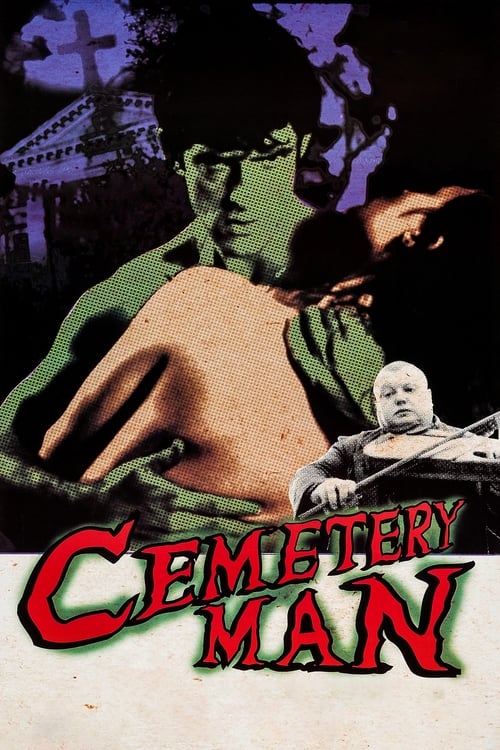
Cemetery Man (1994)
Directed by Michele Soavi
No — Cemetery Man is not woke, scoring 0 out of 100 on our wokeness meter.
Cemetery Man arrives from 1994 as an Italian, French, and German co-production directed by Michele Soavi and adapted from Tiziano Sclavi's novel.
Consciousness Markers
The cast is a European ensemble (Italian, French, British) assembled for a genre production with no discernible representation agenda; characters exist as written without comment on identity.
No LGBTQ+ characters, themes, or subtext are present in the film.
Women are largely objects of Dellamorte's obsessive desire or victims of violence; the film offers no feminist critique or agency-driven framing.
No engagement with racial politics or consciousness; the film is a surreal Italian horror-comedy with no racial themes.
No environmental or climate themes appear in the film.
The mayor's reelection vanity is mocked lightly, but there is no systemic anti-capitalist or class-warfare message.
No body-positivity themes; the film's treatment of bodies is grotesque and macabre rather than affirming.
Gnaghi is depicted as mentally disabled, but this is a character trait played for pathos and dark comedy, not a neurodivergence advocacy framing.
No historical revisionism; the film is a fantastical, surreal fiction with no engagement with real historical narratives.
The film is a moody, surreal genre piece with no didactic messaging or moralizing lecture directed at the audience.
Why it received this score
Cemetery Man arrives from 1994 as an Italian, French, and German co-production directed by Michele Soavi and adapted from Tiziano Sclavi's novel. Rupert Everett plays Francesco Dellamorte, a cemetery caretaker who shoots the dead when they return, falls for a widow, and slowly loses his grip. The film has no interest in contemporary representation. Its European cast was assembled for a genre production, and the characters exist as written, without comment on identity. There are no LGBTQ themes, no feminist critique, no racial consciousness. Women function as objects of Dellamorte's obsession or as victims of his violence. The film does not pause to interrogate this. It simply proceeds to the next corpse.
The political content is close to nonexistent. A mayor's reelection vanity is mocked for a scene or two, but no systemic anti-capitalist argument follows. The climate is not a concern. Bodies are treated as grotesque and macabre, not affirmed. Gnaghi's mental disability is played for pathos and dark comedy, not as neurodivergence advocacy. History is not revised because history barely enters the frame. The film is a fantastical, surreal fiction about returners, skull puzzles, outdated telephone directories, and a snowglobe. It has no sermon to deliver. The audience is never scolded. It is too busy being strange.
The film leaves us with atmosphere. Soavi builds a mood of decay, black humor, and dream logic. The result frustrates anyone seeking coherence, and it rewards anyone seeking a cult curio. Martin Scorsese called it one of the best Italian films of the 1990s, a useful reminder that seriousness and social messaging are separate currencies. Cemetery Man is serious about death, love, and the absurd. It is not serious about improving society. The film carries no modern progressive charge. It does not lecture. It decomposes.
Analysis generated by our Consciousness Algorithm


Synopsis
Francesco Dellamorte is the groundskeeper at a cemetery where the dead just won’t stay dead—and it’s up to him to deal with those who come back to life with a hunger for human flesh. But Dellamorte’s job soon becomes much more complicated when he falls for an enigmatic young woman whose husband has recently died.
Questions about Cemetery Man
Is Cemetery Man woke?
No — Cemetery Man is not woke, scoring 0 out of 100 on our wokeness meter. That earns it a verdict of Ultra Based.
Does Cemetery Man have any woke elements?
No. All 10 markers score zero.
How does Cemetery Man compare to other 1994 movies?
It ranks #77 of the 86 films from 1994 we've scored; their average is 10. The wokest is On Deadly Ground (75).
How is the Woke Score calculated?
An AI-assisted process researches the film and its reception, scores it 0–100 on ten markers, then combines those into one 0–100 Woke Score. It measures a specific set of 2020s cultural themes, not film quality.